
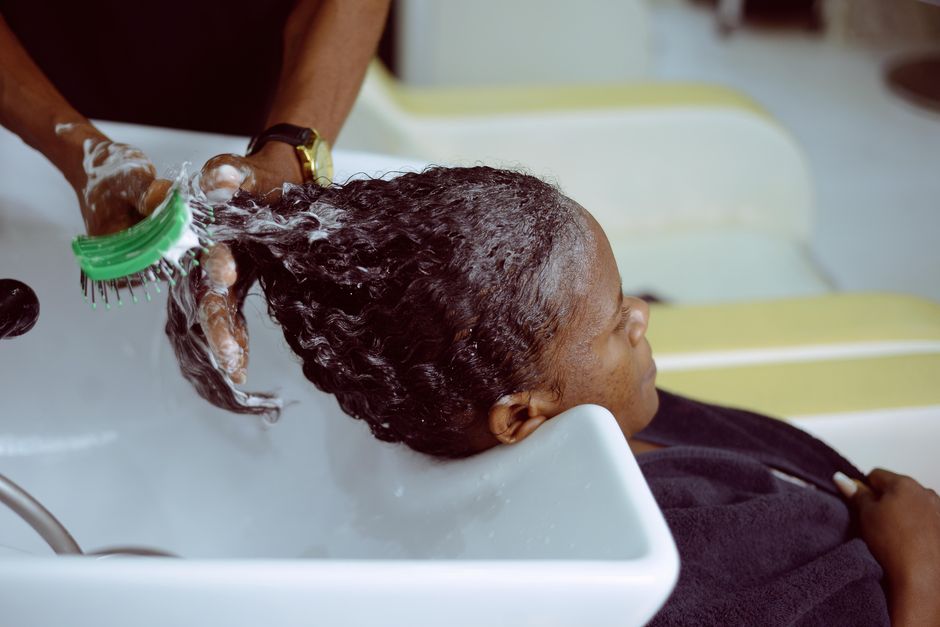
Relaxed hair is hair that has been chemically treated to break down its natural curl pattern, making it straight and easier to manage. The process uses strong alkaline chemicals, usually sodium hydroxide or calcium hydroxide, to permanently alter the hair’s protein structure. While the results are predictable and popular, the process carries real risks including scalp burns, hair breakage, and permanent hair loss that anyone considering it should understand before booking an appointment.
How Does The Hair Relaxing Process Work?
Your hair is made of a protein called keratin. The shape of your hair — straight, wavy, or curly — is determined by the bonds between these protein chains. Disulfide bonds are the strongest of these bonds, and they are what give curly hair its tight spiral shape.
A relaxer works by breaking these disulfide bonds. The chemicals in the relaxer penetrate the hair shaft and split these bonds apart. Once broken, the hair is soft and pliable. The stylist then smooths the hair flat, and the bonds reform in a straightened position as the relaxer is neutralized and rinsed out. This process is permanent. The hair that grows out afterward will be naturally curly again, which is why touch-ups are needed every 6 to 8 weeks.
The two main types of relaxers are lye and no-lye. Lye relaxers use sodium hydroxide. They are strong and effective but can burn the scalp. No-lye relaxers use calcium hydroxide mixed with guanidine carbonate. They are often marketed as gentler because they do not contain lye, but they can still cause damage and are actually more drying to the hair fiber itself.
What Are The Immediate Risks Of Relaxing Hair?
Chemical burns are the most immediate and painful risk. The scalp is living tissue, and relaxers are strong enough to break down protein. If left on too long, or applied to an irritated scalp, the chemical can burn the skin. This can cause redness, blistering, and in severe cases, permanent scarring that prevents hair from growing back in that area.
Hair breakage is another immediate concern. Relaxers weaken the hair shaft. If the relaxer is left on too long, or if it is applied to hair that has already been chemically processed, the hair can become mushy and snap off. This is not always visible right away. Sometimes the breakage appears days later when the hair is washed or brushed.
Overlapping is a common mistake that leads to breakage. This happens when a touch-up relaxer is applied to hair that has already been relaxed, instead of only to the new growth at the roots. The previously treated hair is already fragile, and exposing it to more chemicals causes it to break off.
What Are The Long-Term Risks And Complications?
The most serious long-term risk is central centrifugal cicatricial alopecia, or CCCA. This is a form of permanent hair loss that starts at the crown of the scalp and spreads outward. It is strongly associated with long-term use of chemical relaxers. The hair follicles become inflamed and are eventually replaced by scar tissue. Once scarring occurs, the hair cannot grow back.
Early signs of CCCA include itching, burning, or tenderness at the crown of the scalp. Hair thinning at the top of the head is another warning sign. Many women dismiss this as breakage, but it is actually a progressive medical condition that requires a dermatologist’s evaluation. Early treatment can slow the progression, but it cannot reverse scarring that has already occurred.
Relaxers also cause cumulative damage to the hair fiber itself. Over years of relaxing and re-touching, the hair becomes thinner, drier, and more fragile. The cuticle — the protective outer layer of the hair — is worn away. Without this protective layer, the hair loses moisture quickly and is prone to split ends and breakage.




How Can You Minimize Damage During The Relaxing Process?
If you choose to relax your hair, the process should be done with care to reduce risks. The most important rule is to never relax hair that is already damaged, broken, or shedding excessively. Healthy hair is the only safe starting point.
Preparation matters. The scalp should be healthy with no open sores, scratches, or irritation. Many stylists recommend not washing the hair for 24 to 48 hours before relaxing. The natural oils on the scalp act as a mild protective barrier against the chemicals. A protective base, like petroleum jelly, is often applied to the scalp and along the hairline to reduce the risk of burns.
The relaxer should only be applied to new growth during touch-ups. Never apply it to the entire length of the hair. The application time should be strictly followed according to the product instructions, and the stylist should check the hair frequently to see how it is processing. Timing depends on hair texture, porosity, and the specific product used, so there is no universal safe time.
Neutralizing is just as important as applying. The neutralizer stops the chemical process and helps the bonds reform in their straightened position. If the hair is not fully neutralized, the relaxer keeps working and can cause severe damage. Rinsing thoroughly and applying the neutralizer completely are critical steps.
What Does Aftercare Look Like For Relaxed Hair?
Relaxed hair is weaker than natural hair and requires careful handling. The hair should be kept moisturized, since the relaxing process strips away natural oils. Water-based moisturizers and leave-in conditioners are commonly recommended. Heavy oils and butters can coat the hair but do not add real moisture to the hair shaft.
Heat styling adds extra risk. Flat irons and blow dryers further weaken already fragile hair. If heat is used, a heat protectant product should be applied first, and the temperature should be kept low. Regular trims are necessary to remove split ends before they travel up the hair shaft and cause more breakage.
Nighttime care is a simple but effective way to reduce friction damage. Sleeping on a satin or silk pillowcase, or wrapping the hair in a satin scarf, reduces rubbing against cotton fabrics. Cotton absorbs moisture and creates friction that can cause breakage.
Washing frequency is a matter of debate, but most stylists recommend washing relaxed hair no more than once a week. The hair should be detangled gently with a wide-tooth comb while wet, and never brushed aggressively when dry.
What Are The Alternatives To Chemical Relaxers?
If you want straight hair without the chemical risks, there are alternatives. Heat styling with a flat iron gives temporary straightening that lasts until the next wash. This avoids chemical damage entirely, though repeated high-heat styling carries its own risk of heat damage.
Thermal reconditioning, also called Japanese straightening, is a different chemical process. It uses a keratin treatment followed by flat ironing to permanently straighten the hair. It is expensive and time-consuming, and it is not suitable for everyone. Hair that is already damaged or color-treated may not tolerate the process.
Keratin treatments are often marketed as a smoothing or straightening option. These treatments coat the hair with a protein-based solution that is sealed in with heat. They reduce frizz and loosen curl, but they are not the same as a relaxer. Results last a few months and fade gradually. Some keratin treatments contain formaldehyde or formaldehyde-releasing chemicals, which raise concerns about inhalation exposure during application. The evidence on the long-term health effects of these products in salon settings is limited, and the FDA has restricted some of these products.
Wearing natural hair is always an option. This means accepting the natural curl pattern and caring for it without chemical straightening. It requires a different routine but eliminates the risks associated with relaxers completely.
How Do You Know If Relaxing Is Right For You?
There is no medical requirement to relax hair. It is a cosmetic choice. The decision should be based on your hair’s current condition, your scalp health, and your willingness to maintain the routine.
You should avoid relaxing if you have any of the following: open sores or scratches on the scalp, a history of allergic reactions to hair chemicals, hair that is already breaking or shedding noticeably, or a diagnosis of a scalp condition like psoriasis or eczema. Pregnant women should discuss hair treatments with their obstetrician. There is no strong evidence that relaxers harm a developing fetus, but the hormonal changes of pregnancy can make the scalp more sensitive, and some women choose to postpone chemical treatments as a precaution.
If you are considering relaxing for the first time, it is worth seeing a professional who specializes in textured hair. A consultation should include an examination of your scalp and hair density. A responsible stylist will tell you if your hair is not a good candidate for relaxing.
If you have been relaxing for years and are noticing thinning at the crown, see a dermatologist before your next touch-up. Hair loss is not normal, and it should not be ignored. A scalp biopsy may be needed to diagnose whether scarring has occurred.
Frequently Asked Questions
How long does a relaxer last?
A relaxer is permanent on the hair it is applied to, but results last until new growth appears, usually 6 to 8 weeks. Touch-ups are needed on the new growth only, not the entire head.
Can relaxed hair go back to curly?
No. The relaxed portion of the hair will stay straight permanently. Only the new hair growing from the scalp will be naturally curly, and the only way to return to fully natural hair is to cut off the relaxed length.
Is a no-lye relaxer safer than a lye relaxer?
No-lye relaxers are less likely to burn the scalp, but they are more drying to the hair fiber itself. Both types carry a risk of breakage and permanent hair loss, and neither is considered safe for damaged hair.
Can relaxers cause permanent hair loss?
Yes. Long-term relaxer use is linked to central centrifugal cicatricial alopecia, a condition where hair follicles are replaced by scar tissue. This hair loss is permanent and requires evaluation by a dermatologist.
