
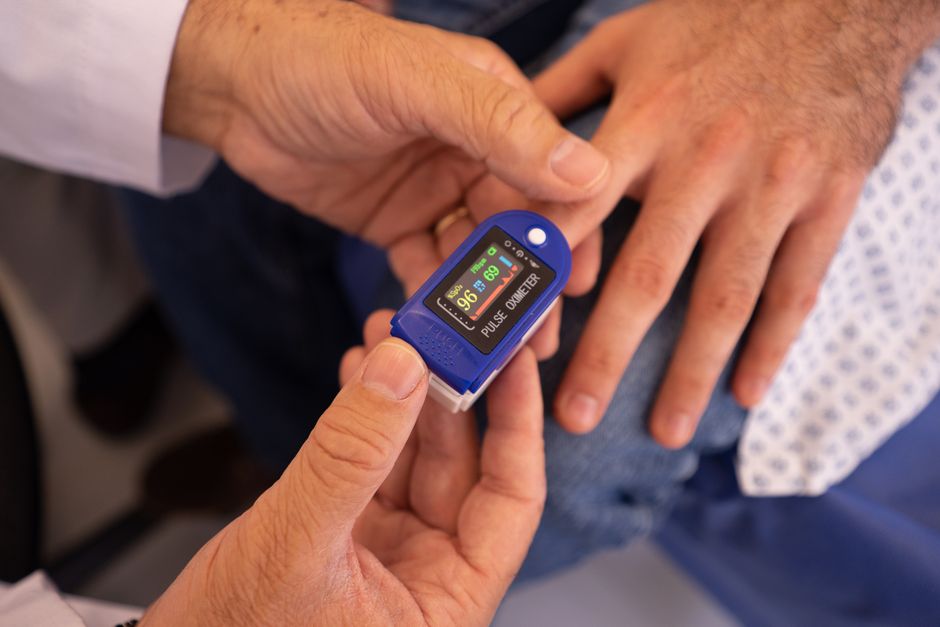
A regular pulse is the steady rhythm of your heartbeat felt in an artery, most often at the wrist. A normal resting heart rate for most adults falls between 60 and 100 beats per minute. “Regular” describes the even spacing between beats, which is a separate thing from how fast those beats are.
What Is Regular Pulse Rate?
Pulse rate is the number of times your heart beats in one minute. When you press two fingers against an artery, you feel the pressure wave each time the heart pumps blood out. Counting those waves gives you your pulse rate.
The word “regular” refers to rhythm. A regular pulse has beats that arrive at even intervals, like a metronome. An irregular pulse has beats that come early, late, or unevenly spaced. You can have a fast pulse that is perfectly regular, or a normal-rate pulse that skips around.
For most healthy adults at rest, the normal range is 60 to 100 beats per minute. That range comes from established clinical reference values. Well-trained endurance athletes often sit below 60 at rest, sometimes in the 40s, and that can be normal for them. For everyone else, a resting rate under 60 is called bradycardia, and over 100 is called tachycardia.
How Do You Check Your Pulse Correctly?
You can check your pulse at the wrist or the side of your neck. The wrist spot, called the radial artery, is the easiest and safest place to start.
- Place your index and middle fingers on the thumb side of your inner wrist.
- Press lightly until you feel a steady beat. Pressing too hard can flatten the pulse.
- Count the beats for 30 seconds and multiply by two, or count for a full 60 seconds for accuracy.
- Note whether the spacing between beats feels even or uneven.
Do not use your thumb. It has a pulse of its own, and you can end up counting your thumb instead of your wrist. If you use the neck, press on one side only. Pressing both sides at once can slow your heart rate and make you lightheaded.
For a resting rate, sit quietly for a few minutes first. Caffeine, stress, a recent workout, or even standing up can push the number higher than your true resting baseline.
What Affects Your Pulse Rate?
Many ordinary things move your pulse rate up and down through the day. Your heart responds to what your body needs in the moment.
Things that tend to raise it include exercise, anxiety, fever, dehydration, pain, caffeine, nicotine, and some medications. Things that tend to lower it include rest, sleep, cool temperatures, and good cardiovascular fitness. A medication called a beta blocker, commonly used for blood pressure and heart conditions, slows the heart rate as part of how it works.
Age matters too. Newborns have resting heart rates far higher than adults, often well over 100 beats per minute, and the rate gradually falls through childhood. This is normal development, not a sign of a problem.
Fitness has a large effect. A heart that pumps more blood with each beat does not need to beat as often to move the same volume. That is why trained athletes often have low resting rates. Their hearts are working efficiently, not sluggishly.





What Is the Difference Between Pulse Rate and Heart Rate?
In most people, these two numbers are the same. Heart rate is how often the heart beats. Pulse rate is how often you feel that beat in an artery. Each heartbeat normally produces one pulse wave.
They can differ in certain heart rhythm problems. If the heart beats too weakly or too early, that beat may not push enough blood to create a pulse you can feel. In that case the pulse rate can be lower than the actual heart rate. This is one reason a clinician may listen to the heart directly while also feeling the pulse.
For everyday self-checking, the two are close enough to treat as the same number. The distinction mainly matters when a doctor is evaluating a possible rhythm disturbance.
When Is an Irregular Pulse a Concern?
An occasional skipped or extra beat is common and often harmless in a healthy heart. Many people notice a brief flutter or pause now and then, especially with caffeine, stress, or poor sleep. The key question is whether the irregularity is frequent, sustained, or comes with other symptoms.
Seek medical attention if an irregular pulse comes with chest pain, shortness of breath, fainting or near-fainting, dizziness, or unusual fatigue. These symptoms suggest the heart may not be pumping effectively, and they deserve prompt evaluation.
One specific pattern worth knowing is a pulse that is irregularly irregular, meaning the beats are unevenly spaced with no repeating pattern. This can be a sign of atrial fibrillation, a common heart rhythm condition that raises the risk of stroke. Atrial fibrillation is not always felt. Some people have it without noticing any symptoms. Diagnosis requires an electrocardiogram or another heart rhythm monitor, so a pulse check alone cannot confirm it.
If you are unsure whether your pulse is regular, a clinician can check it in minutes. Do not try to diagnose a rhythm problem yourself based on how your pulse feels.
What Is a Healthy Resting Pulse Rate by Age?
Resting heart rate changes across the lifespan. The table below gives the general resting ranges used in clinical practice. Individual variation is normal, and a rate outside these ranges is not automatically a problem.
| Age group | Typical resting pulse (beats per minute) |
|---|---|
| Newborns | 100 to 160 |
| Children (1 to 10 years) | 70 to 120 |
| Children over 10 and teens | 60 to 100 |
| Adults | 60 to 100 |
| Trained endurance athletes | Often below 60 |
These are general reference ranges, not strict cutoffs. A child’s rate also shifts with activity, fever, and emotion, so a single reading does not tell the whole story. For children and infants, always rely on a pediatric clinician rather than a home reading to judge what is normal.
Does a Lower Resting Pulse Mean Better Health?
A lower resting pulse often reflects better cardiovascular fitness, and fitness is linked to better heart health. But a low number on its own is not proof of health. Context decides what it means.
In a fit person with no symptoms, a resting rate in the 50s or even lower can be entirely normal. In someone who is not fit and feels dizzy, tired, or faint, a low rate can point to a problem such as an underactive thyroid, an electrical issue in the heart, or a medication effect.
This is a good place to be careful about assumptions. A slow pulse is not automatically good, and a fast one is not automatically bad. What matters is the whole picture: your fitness, your symptoms, your medications, and what your doctor finds on examination.
If you want to track your resting pulse over time, measure it the same way each day, ideally right after waking and before getting out of bed. Trends over weeks are more useful than any single reading.
Frequently Asked Questions
What is a normal resting pulse rate for adults?
For most adults, a normal resting pulse is 60 to 100 beats per minute. Well-trained athletes are often lower, sometimes below 60, and that can be normal for them.
Is an irregular pulse always dangerous?
No. An occasional skipped or extra beat is common and often harmless in a healthy heart. Frequent or sustained irregularity, or irregularity with chest pain, shortness of breath, or fainting, should be checked by a doctor.
Can I check my pulse with my thumb?
No. Your thumb has its own pulse, so you may count that instead of your wrist beat. Use your index and middle fingers instead.
Does a low pulse rate mean I am healthy?
Not by itself. A low resting rate often reflects good fitness, but a low rate with dizziness, fatigue, or fainting can signal a problem that needs medical evaluation.
