
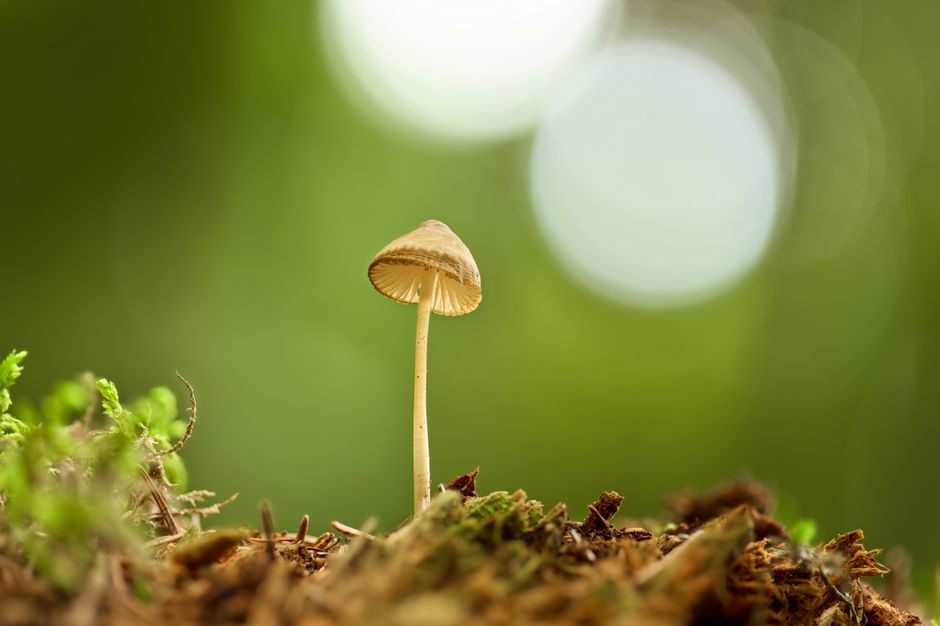
Psilocybin is a naturally occurring psychedelic compound found in more than 100 species of mushrooms. It is a prodrug — the body converts it into psilocin, which acts mainly on serotonin receptors in the brain. It is classified as a Schedule I controlled substance in the United States, though research into its use for depression and other conditions has expanded significantly over the past two decades.
Interest in psilocybin has moved from counterculture curiosity to controlled clinical trials. That shift has produced real data — and also a great deal of hype. Here is what the chemistry, the pharmacology, and the trials actually show.
Where Does Psilocybin Come From?
Psilocybin is produced by mushrooms in several genera, most notably Psilocybe. The compound is not unique to one species. It has been identified in well over 100 species across the world, found on every continent except Antarctica.
These mushrooms typically grow in moist environments — decaying wood, rich soil, and animal dung. Many are small, brownish, and unremarkable in appearance. That matters for safety: psilocybin-containing mushrooms can closely resemble toxic species, including some Galerina mushrooms that contain deadly amatoxins.
Humans have used these mushrooms for centuries. Anthropological and historical evidence points to ceremonial use in Mesoamerica before European contact. The modern scientific story begins in 1958, when the Swiss chemist Albert Hofmann — the same chemist who first synthesized LSD — isolated psilocybin and psilocin from Psilocybe mexicana. Synthetic psilocybin was produced shortly afterward, which made controlled research possible.
Early clinical interest in the 1960s was substantial. Then it stopped. Psilocybin was classified as Schedule I under the US Controlled Substances Act in 1970, and research largely went dormant for decades. It resumed in the 1990s and 2000s as researchers in the United States and Europe received regulatory approval for carefully monitored human studies.
How Does Psilocybin Affect the Brain?
Psilocybin itself is pharmacologically inactive. Once swallowed, it is rapidly converted by the liver into psilocin, which is the molecule that produces effects. This conversion is why psilocybin is described as a prodrug.
Psilocin is structurally similar to serotonin. It binds to serotonin receptors, with particularly strong affinity for the 5-HT2A receptor. Activation of that receptor is understood to be the primary driver of the psychedelic experience. Research using brain imaging has found that psilocybin changes activity in the default mode network — a set of brain regions linked to self-referential thinking — and appears to increase communication between brain networks that are usually more separate.
Exactly how those brain changes translate into reported therapeutic effects is still an open question. Researchers have proposed several explanations, and no single mechanism is established.
What does a psilocybin experience feel like?
Effects typically begin within 20 to 60 minutes of ingestion and can last four to six hours. Common reported experiences include:
- Visual and perceptual changes — colors seem brighter, patterns appear, objects may distort
- Altered sense of time, often feeling that time has slowed
- Changes in mood, ranging from euphoria to anxiety
- Altered thinking, including unusual connections between ideas
- Physical effects such as dilated pupils, mild increases in heart rate and blood pressure, nausea, and dizziness
Not every experience is pleasant. Anxiety, fear, and confusion are well documented, particularly at higher doses. The term “bad trip” is informal, but the phenomenon is real and is one reason supervised settings matter in clinical research.
Tolerance to psilocybin develops quickly with repeated use — often within days — and then fades over a similar period. This is a well-established pharmacological pattern, not a reason to use more.
What Are the Risks of Psilocybin?
Psilocybin is not considered physically addictive. Animal and human studies have not shown the compulsive use pattern seen with opioids, alcohol, or nicotine. It also does not cause the kind of direct chemical dependence that requires medical withdrawal management.
The real risks are psychological and situational. These include:
- Acute anxiety and panic during an experience, sometimes intense
- Impaired judgment during the hours of effects, which creates physical danger if a person is unsupervised or tries to drive
- Psychotic symptoms in people with a personal or family history of schizophrenia or bipolar disorder. This is a recognized concern, and most clinical trials exclude people with these histories for that reason.
- Persisting perceptual symptoms — sometimes called hallucinogen persisting perception disorder — reported by a small number of users. It is poorly understood and the evidence base is limited.
- Poisoning from misidentification when wild mushrooms are foraged. This is a genuine and serious danger.
There is no documented lethal overdose from psilocybin itself in humans, but that is not the same as “safe.” The psychological risks, the risk of dangerous behavior while intoxicated, and the risk of taking the wrong mushroom are all real. Psilocybin is also illegal at the federal level in the United States, though some states and cities have decriminalized or created regulated access programs. Legal status varies widely and continues to change.
What Does the Research Say About Psilocybin Therapy?
The strongest evidence involves treatment-resistant depression and distress in people with serious illness. Several randomized controlled trials have found meaningful reductions in depressive symptoms after one or two supervised doses combined with psychological support. The results are promising and have been replicated in more than one setting.
That said, the field has real limitations, and honest reporting requires naming them:
- Small sample sizes. Most trials involve dozens of participants, not thousands.
- Blinding is difficult. Participants usually know whether they received psilocybin or a placebo, which can inflate reported benefits.
- Short follow-up. Many studies track participants for weeks to a few months. Long-term outcomes are not well established.
- Intensive support. Trials typically include preparation sessions, a monitored dosing session with trained staff, and integration therapy afterward. The drug is not given alone, and results may not transfer to unsupervised use.
Regulatory agencies have granted special designations to some psilocybin-based treatments to speed review, but as of this writing no psilocybin therapy has received full approval from the US Food and Drug Administration for any medical condition. One application for use in post-traumatic stress-related and treatment-resistant depression was reviewed and declined in 2024, with the agency asking for more data. That decision does not mean the treatment does not work — it means the evidence package was judged insufficient for approval.
Other areas under study include alcohol use disorder, smoking cessation, obsessive-compulsive disorder, and end-of-life anxiety. Some early results are encouraging. None of these have reached the standard of care, and none should be described as proven.
Is Microdosing Psilocybin Supported by Evidence?
Microdosing means taking very small amounts of psilocybin — below the threshold that produces noticeable effects — on a repeating schedule. It has become widely discussed online, often with claims about mood, focus, and creativity.
The evidence does not support those claims. The largest controlled studies so far have found that people who microdose often report benefits, but participants given a placebo report similar improvements. In other words, expectation appears to explain much of the effect. Some small studies have hinted at subtle changes in mood or cognition, but the results are inconsistent and the trials are small.
No clinical guidelines exist for microdosing. There is no established dose, no established schedule, and no regulatory oversight of the products sold for this purpose. That last point matters: psilocybin-containing products sold online or in unregulated markets have been found to contain inconsistent amounts, and some contain no psilocybin at all.
What Should You Know Before Considering Psilocybin?
Psilocybin remains illegal under US federal law, and possession carries legal risk that varies by jurisdiction. Anyone considering it should understand that legal picture before anything else.
From a health standpoint, the situations that warrant the most caution are well defined. People with a personal or family history of psychosis, schizophrenia, or bipolar disorder face elevated risk of serious psychiatric effects. People taking serotonergic medications — including SSRIs, SNRIs, and MAOIs — should know that interactions are possible, though the evidence on serotonin syndrome risk with psilocybin specifically is limited and the topic is debated among clinicians. Anyone with heart conditions should be aware that psilocybin can raise heart rate and blood pressure.
For those interested in therapeutic use, the responsible path is through a clinical trial or, where legally available, a licensed program with medical screening and supervised dosing. Self-treatment with foraged mushrooms carries the added risk of misidentification, which has caused serious poisonings.
The bottom line: psilocybin is a well-characterized compound with a long history, a clear pharmacological mechanism, and genuinely promising but incomplete clinical evidence. It is neither the miracle that advocates describe nor the danger that decades of prohibition implied. The research is worth watching closely — and worth reading carefully.
Frequently Asked Questions
Is psilocybin legal in the United States?
No, psilocybin is a Schedule I controlled substance under federal law. Some states and cities have decriminalized it or created regulated programs, so legal status depends on where you live.
How long do psilocybin effects last?
Effects usually begin within 20 to 60 minutes and typically last four to six hours. Individual experiences vary with dose, body weight, and other factors.
Can psilocybin treat depression?
Several controlled trials have found reductions in depressive symptoms after supervised psilocybin sessions, particularly in treatment-resistant depression. No psilocybin therapy has received full FDA approval for any condition, and trials have involved small numbers of participants with limited long-term follow-up.
Is microdosing psilocybin proven to work?
No. Controlled studies have found that people given a placebo report benefits similar to those who microdose, suggesting expectation explains much of the effect. No clinical guidelines exist for microdosing.
