
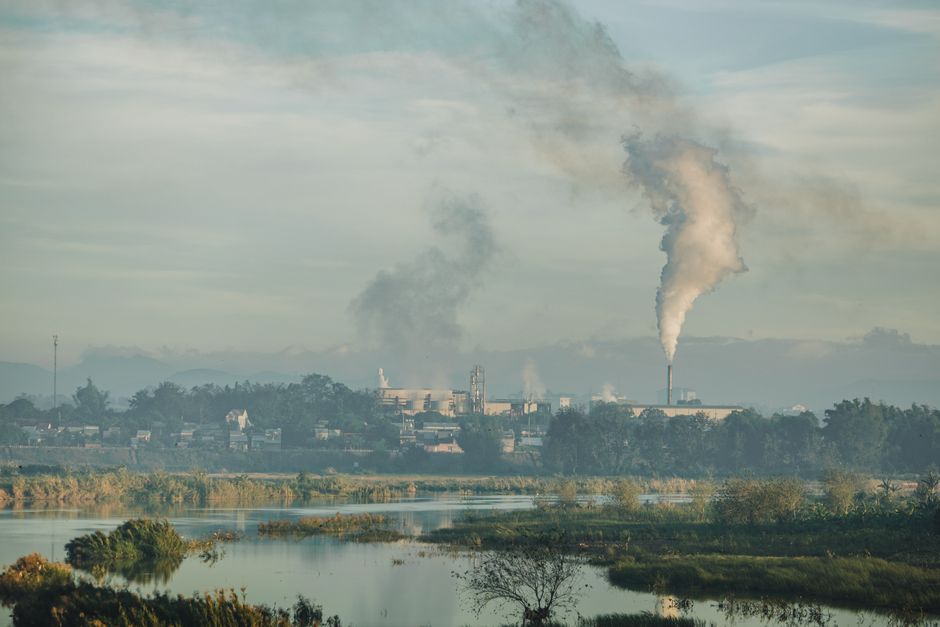
Air pollution is not one substance. It is a shifting mix of gases and particles, and the way that mix forms matters for your health. Primary air pollution is released directly into the air from a source, while secondary air pollution forms in the air when those released chemicals react with each other, with sunlight, or with water vapor. The difference is not academic. It affects where pollution ends up, when you are exposed to it, and how hard it is to control.
What Is Primary And Secondary Air Pollution?
Primary air pollution comes out of a source as-is. Think of soot from a diesel truck, sulfur dioxide from a coal plant, or carbon monoxide from a gas stove. These substances are emitted and travel through the air in roughly the same chemical form.
Secondary air pollution is made in the atmosphere. It is not emitted by a smokestack or a tailpipe. Instead, chemicals that were emitted react with sunlight, oxygen, or water vapor to create new pollutants. Ground-level ozone is the classic example. So is much of the fine particulate matter that hangs over cities.
Here is the part many people miss. The haze you see over a city on a hot afternoon is often mostly secondary pollution. The original emissions may have happened miles away and hours earlier. That is why air quality can worsen on a clear, sunny day even when traffic and industry seem unchanged.
What Are the Main Sources of Primary Air Pollution?
Primary pollutants come from combustion, industrial processes, and natural events. The specific sources determine which chemicals enter the air and in what amounts.
- Motor vehicles emit nitrogen oxides, carbon monoxide, and fine particles, especially diesel engines.
- Power plants and factories burning fossil fuels release sulfur dioxide and nitrogen oxides.
- Residential heating and cooking, including wood stoves and gas appliances, produce carbon monoxide, nitrogen dioxide, and particles.
- Agriculture releases ammonia from fertilizer and livestock waste.
- Natural sources include wildfire smoke, dust storms, and volcanic emissions.
These emissions are the raw ingredients. What happens next depends on weather, sunlight, and the chemical mix already present in the air.
How Does Secondary Air Pollution Form?
Secondary pollution forms through chemical reactions in the atmosphere. Sunlight often drives these reactions, which is why pollution patterns change with the time of day and the season.
Ground-level ozone forms when nitrogen oxides and volatile organic compounds react in the presence of sunlight. Volatile organic compounds come from vehicle exhaust, industrial solvents, and even vegetation. This is why ozone tends to peak on hot, sunny afternoons in summer. Ozone in the upper atmosphere protects us from ultraviolet radiation, but ozone at ground level is a lung irritant. Same molecule, very different effect depending on where it sits.
Secondary particles form differently. Sulfur dioxide and nitrogen oxides can convert into sulfate and nitrate particles. Ammonia reacts with acids to form ammonium salts. These particles can be very small, which matters because small particles penetrate deeper into the lungs.
The reactions are not instant. They can take hours or days, which means secondary pollution often forms far from the original source. A city can have clean local emissions and still face poor air quality from pollution that drifted in and then transformed.
How Are Primary and Secondary Pollutants Different?
The clearest way to separate them is by origin and by how they respond to control measures. Primary pollutants respond directly to emission reductions at the source. Secondary pollutants are harder, because cutting one ingredient does not always lower the final product.
| Feature | Primary Pollutants | Secondary Pollutants |
|---|---|---|
| Origin | Emitted directly from a source | Formed in the atmosphere by reactions |
| Examples | Carbon monoxide, sulfur dioxide, soot | Ground-level ozone, sulfate and nitrate particles |
| Timing | Present soon after emission | Forms hours to days later |
| Location | Highest near the source | Can peak far from the source |
| Control | Reducing emissions works directly | Requires managing the ingredients and conditions |
That last row is the practical heart of the issue. Reducing nitrogen oxides does not always reduce ozone in a straight line. In some chemical conditions, cutting nitrogen oxides can temporarily raise ozone in certain areas. This is why air quality management is complicated and why regulators study local chemistry rather than applying one rule everywhere.
Why Does the Difference Matter for Your Health?
Both types harm health, but the way they reach you differs. Primary pollutants tend to be highest close to their sources, such as near busy roads or industrial sites. Secondary pollutants can affect entire regions, so exposure is less tied to a single nearby source.
Fine particulate matter, whether primary or secondary, is linked to heart and lung problems. Research consistently shows associations between fine particle exposure and increased risks of cardiovascular and respiratory illness. Ground-level ozone is linked to reduced lung function, airway inflammation, and worsened asthma. These are well-established findings, not fringe claims.
Short-term effects include eye and throat irritation, coughing, and shortness of breath, particularly in people with asthma or other lung conditions. Long-term exposure is associated with more serious outcomes, including heart disease and reduced lung function. The evidence for these associations is strong, though individual risk depends on many factors including exposure level, duration, and personal health.
Some people are more vulnerable. Children, older adults, pregnant women, and people with existing heart or lung disease face higher risk. Outdoor workers and people who exercise outdoors during high-pollution periods also take in more polluted air.
How Can You Reduce Your Exposure?
You cannot control regional air chemistry, but you can change when and where you breathe polluted air. The most effective steps rest on well-established exposure principles.
- Check the Air Quality Index for your area before outdoor activity. It reflects both primary and secondary pollutants.
- Shift strenuous outdoor exercise to mornings or evenings when ozone tends to be lower. Ozone typically peaks in the afternoon on hot, sunny days.
- Avoid exercising near busy roads, where primary pollutants concentrate.
- Keep windows closed on high-pollution days and use indoor air filtration, which reduces indoor particle levels.
- Pay attention to wildfire smoke events, which bring high levels of primary particles.
Indoor air is not automatically safe. Gas stoves and unvented heaters can raise indoor levels of nitrogen dioxide and carbon monoxide. Proper ventilation and working carbon monoxide detectors are basic safety measures, not optional extras.
How Is Air Pollution Monitored and Controlled?
Regulators monitor both types because they behave differently. Networks of sensors track pollutants like ozone, nitrogen dioxide, sulfur dioxide, and fine particles in real time. That data feeds the daily air quality forecasts many people check on their phones.
Controlling secondary pollution is the harder problem. Because it forms from reactions among multiple ingredients, effective management means reducing the precursor emissions, not just one pollutant. Vehicle standards, power plant controls, and industrial regulations target those precursors. Success varies by region and by the local chemical mix.
One honest limitation: the science of secondary particle formation is still developing. Researchers understand the main pathways, but predicting exactly how much secondary pollution will form in a given place and time remains difficult. Models improve over time but are not perfect. That uncertainty is real and is acknowledged in the field.
What Is the Bottom Line?
Primary air pollution is emitted directly. Secondary air pollution forms in the air from chemical reactions, often driven by sunlight. Both affect health, but secondary pollution is harder to see, harder to trace to a source, and harder to control. Understanding the difference helps explain why air quality can change quickly and why a clean-looking sky does not always mean clean air.
Frequently Asked Questions
What is the difference between primary and secondary air pollution?
Primary air pollution is released directly from a source, while secondary air pollution forms in the atmosphere when emitted chemicals react with sunlight, oxygen, or water vapor. Ground-level ozone is a common example of a secondary pollutant.
Is ground-level ozone a primary or secondary pollutant?
Ground-level ozone is a secondary pollutant because it is not emitted directly. It forms when nitrogen oxides and volatile organic compounds react in sunlight.
Can secondary air pollution form far from its source?
Yes. Secondary pollutants can form hours to days after the original emissions and often peak far from where those emissions occurred. This is why regional air quality can worsen even when local sources are unchanged.
Which type of air pollution is worse for health?
Both can harm health, and the risk depends on the specific pollutant, the exposure level, and a person’s health. Fine particles and ground-level ozone are both linked to heart and lung problems, whether they are primary or secondary.
