
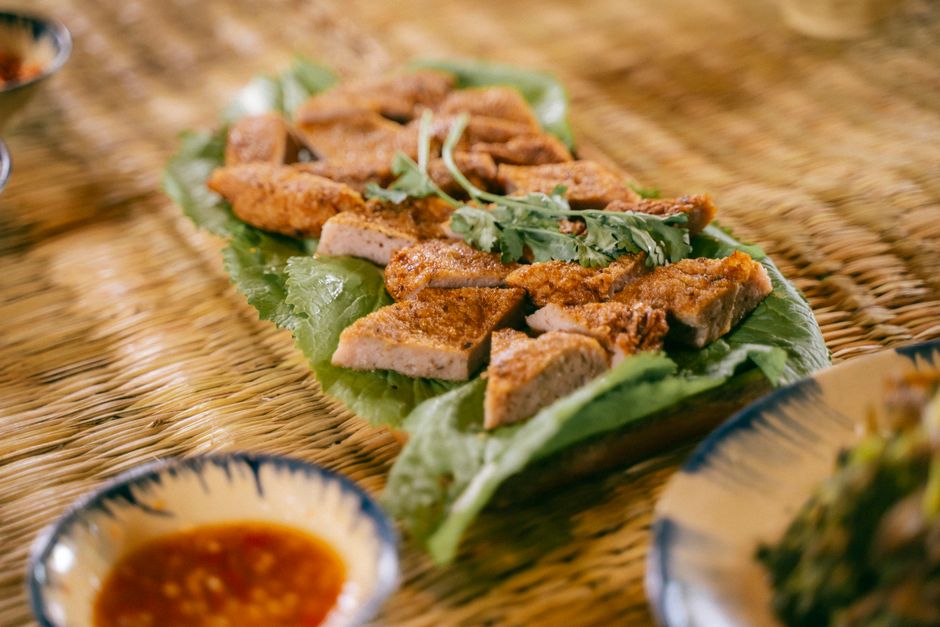
Pork belly is the boneless cut of meat taken from the belly of a pig — the underside between the front legs and the hind legs. It is a layered cut, and those layers are the point: bands of fat alternating with bands of lean muscle, sometimes with visible streaks of connective tissue running through them. That structure is why pork belly behaves the way it does in a pan, on a grill, or in a slow oven. It is also why the same cut shows up as bacon in one aisle of the store and as a slab of braising meat in another.
What Is Pork Belly Exactly?
Pork belly is the underside muscle and fat layer of the pig, sold either fresh or cured. Fresh pork belly is raw meat. Bacon is pork belly that has been cured, usually with salt and often with nitrates or nitrites, and sometimes smoked. Same starting cut, different processing.
The cut sits below the loin and runs the length of the animal’s underside. Because the pig does not use that area for heavy lifting the way it uses the shoulder or hind leg, the muscle there stays relatively soft while the fat accumulates in distinct bands. A good pork belly shows clear striping — the fat and lean do not blend into each other.
Skin-on pork belly includes the rind, which is the pig’s skin. Skinless pork belly is just the meat and fat layers. Both are sold, and the difference matters for cooking because the rind changes how heat moves through the cut and how the surface behaves when it is roasted or fried.
How Is Pork Belly Different From Bacon and Pork Belly?
Bacon is pork belly that has been cured, and usually smoked, then sliced thin. Fresh pork belly is uncured and typically sold in thick slabs or whole pieces. The distinction is processing, not anatomy.
That difference has practical consequences. Cured bacon is salty by design and is usually cooked quickly because the slices are thin. Fresh pork belly is not salty unless you salt it, and it needs longer cooking because the thick fat layers take time to render and the connective tissue needs time to break down.
There is also a labeling wrinkle worth knowing. In the United States, the term “pork belly” on a menu or package almost always means the fresh, uncured cut. In the United Kingdom and Ireland, “bacon” refers to the cured back and side cuts, and what Americans call bacon is closer to what they call streaky bacon. The words shift by country even when the underlying cut is the same.
What Is Pork Belly Nutrition?
Pork belly is a high-fat cut. Fat is the dominant macronutrient by weight and by calories, which is not a flaw — it is the defining characteristic of the cut. The lean portions do supply protein, but the ratio is heavily weighted toward fat.
Exact numbers vary by the specific piece, how much of the visible fat is trimmed, and whether the rind is included. USDA nutritional data for raw pork belly shows a cut that is roughly half fat by weight, with protein making up a smaller share. Cooking changes the numbers because rendered fat drains off, which can meaningfully reduce the fat content of what actually reaches the plate.
Here is a comparison of the general nutritional profile of the main forms:
| Form | Fat content | Protein content | Added sodium |
|---|---|---|---|
| Raw fresh pork belly | High | Moderate | None |
| Cooked fresh pork belly (fat drained) | Lower than raw | Moderate | Depends on seasoning |
| Cured bacon | High | Moderate | High |
The numbers above are directional, not precise, because the cut varies so much from one piece to the next. If you need exact figures for a specific product, the package nutrition label is the only reliable source.
One clarification that gets lost in diet conversations: the fat in pork belly is a mix of saturated and unsaturated fatty acids. Pork fat is not purely saturated. It contains a substantial proportion of monounsaturated fat, similar in type to what is found in olive oil, though the overall ratio still leans more saturated than most plant oils. That does not make pork belly a health food. It does mean “pork fat” and “saturated fat” are not the same thing.





How Do You Cook Pork Belly?
Pork belly responds to slow, low heat or to a two-stage method that starts low and finishes hot. The fat needs time to render, and the connective tissue needs time and moisture to soften. Fast cooking at high heat tends to burn the outside before the inside is tender.
Common approaches include:
- Braising. Cook the belly in liquid at a low temperature for a long time. The collagen breaks down and the meat becomes spoon-tender. This is the method behind many East Asian preparations.
- Slow roasting. Cook skin-on belly in a low oven, then raise the heat at the end to crisp the rind. The rind needs to be dry before the final blast of heat or it will not crackle.
- Grilling or pan-searing thin slices. Thin cuts cook quickly because there is no thick slab of fat to render. This works for sliced belly but not for a whole piece.
- Curing and smoking. This turns the belly into bacon. It is a preservation method, not just a flavor choice.
The single most useful technique detail is scoring. Cutting shallow lines through the fat layer, without cutting into the lean, lets fat escape as it renders and keeps the meat from curling. It also helps seasoning reach past the surface.
Is Pork Belly Healthy?
Pork belly is high in fat and calories, and eating it frequently in large portions is not consistent with dietary patterns that most major health organizations recommend. That is the honest position, and it is not complicated.
What that means in practice depends on how it fits into everything else you eat. A moderate portion of pork belly as part of a meal that includes vegetables, whole grains, and lean protein sources is a different situation than a diet built around fatty cured meats. The evidence linking heavy processed meat consumption to health risks is stronger than the evidence for fresh, unprocessed pork belly specifically, because most large studies group cured and processed meats together.
Two things worth separating:
- Cured bacon and other processed pork products are classified by the World Health Organization’s cancer research agency as carcinogenic to humans, based on evidence for colorectal cancer. This classification applies to processed meats as a group.
- Fresh, uncured pork belly is not in that same category. It is a fatty cut of red meat, and the general guidance to limit red meat intake applies, but it is not the same as processed meat.
That distinction matters and it is often blurred. Bacon and fresh pork belly come from the same cut but do not carry the same evidence base.
If you are managing cholesterol, blood pressure, or weight, portion size and frequency are the levers that matter most. Pork belly is not a food to avoid entirely, and it is not a food to build a diet around.
Why Does Pork Belly Show Up in So Many Cuisines?
Pork belly is one of the most widely used cuts in the world, and the reason is practical. It is flavorful, it is forgiving of long cooking, and it was historically inexpensive. Before refrigeration and industrial farming, a cut that could be cured into bacon or braised into tenderness was valuable.
Different cultures developed distinct techniques around the same cut. Korean samgyeopsal grills thick slices at the table. Chinese red braised pork belly cooks the meat in soy, sugar, and spices until the fat turns glossy and the lean turns soft. Italian pancetta cures the belly without smoking. American bacon smokes and slices it thin. These are not variations on a theme so much as independent solutions to the same problem: how to make a fatty, tough cut delicious.
The connective tissue is what ties these methods together. Pork belly contains collagen, the protein that gives raw meat its structure. Collagen is tough when heated quickly and softens into gelatin when heated slowly in moisture. That is why a long braise produces a texture that a quick sear never will. The chemistry is the same whether the pot is a Korean stew or a French daube.
Frequently Asked Questions
Is pork belly the same as bacon?
Bacon is pork belly that has been cured and usually smoked. Fresh pork belly is the same cut without curing, which means it is not salty and needs longer cooking.
Is pork belly healthy to eat?
Pork belly is high in fat and calories, so it fits best as an occasional food rather than a dietary staple. Fresh pork belly is not classified the same way as processed meats like bacon, which carry stronger evidence of health risk.
What does pork belly taste like?
Pork belly tastes rich, savory, and slightly sweet from the fat, with a texture that ranges from crisp on the surface to soft and tender inside when cooked slowly. The flavor is milder than bacon because it is not cured or smoked.
How do you cook pork belly so it is tender?
Cook it low and slow, either braised in liquid or roasted at a low temperature, so the fat renders and the connective tissue breaks down. A final burst of high heat crisps the surface if you want crackling.
