
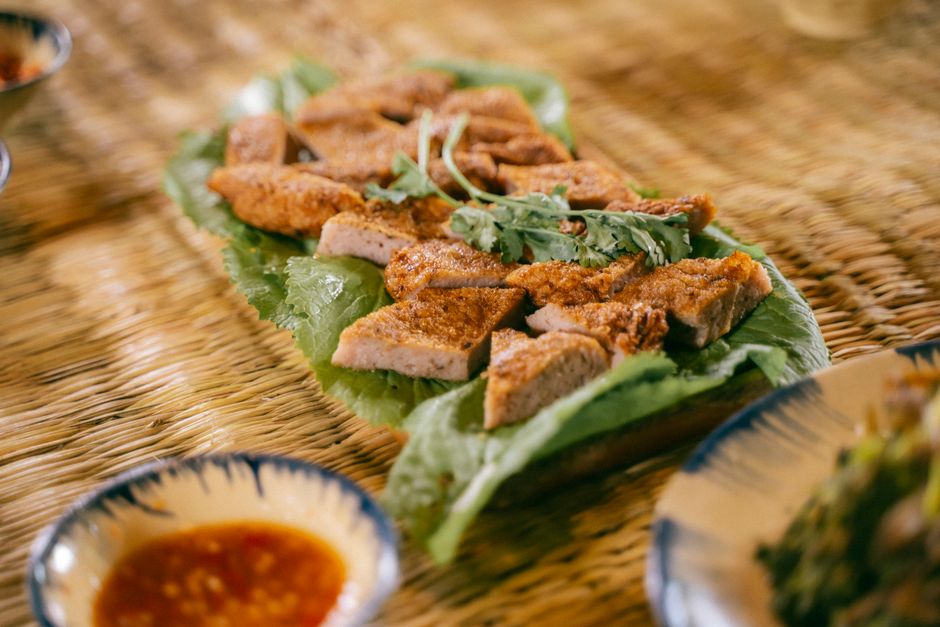
Pork belly is the uncured slab of fat and muscle taken from the belly of a pig. It is the same cut that gets cured and smoked to make bacon. Fresh pork belly is used in dishes like Chinese hong shao rou, Korean samgyeopsal, and Filipino lechon kawali. Nutritionally, it is a high-fat meat: most of its calories come from fat, it provides complete protein, and it contains iron, zinc, and several B vitamins.
What Is Pork Belly Good For Uses And Nutrition?
Pork belly is good for one main thing: flavor and texture. Its layered fat bastes the meat as it cooks, which is why it can be roasted crisp on the outside and tender inside. It is not a health food, and no serious nutrition source presents it as one.
What it does provide is protein, fat, and a handful of micronutrients. What it provides in large amounts is saturated fat and calories. Understanding that split is the whole story.
What Cuts of Meat Count as Pork Belly?
Pork belly is the underside of the pig, running from the lower chest toward the hind legs. It is a boneless, flat cut with distinct layers of fat and lean meat running through it. The number of layers varies by breed and by how the butcher trims it.
This is where confusion starts. In the US, most pork belly goes to commercial bacon production. What reaches the meat counter as fresh pork belly is a smaller share of the animal. It is sometimes sold skin-on, sometimes skinless, and sometimes rolled and tied.
Two related cuts get mixed up with it:
- Pork jowl comes from the cheek. It is fattier and softer than belly and is used in guanciale-style products.
- Pork shoulder (also called Boston butt) is a different cut entirely. It is darker, meatier, and better for pulled pork.
If a recipe calls for pork belly and you substitute shoulder, you will get a very different dish. Belly is defined by its fat layers.
What Is the Nutrition of Pork Belly?
Pork belly is calorie-dense and fat-dominant. The exact numbers shift with the breed, the pig’s diet, and how much fat the butcher leaves on. The USDA maintains a nutrient profile for raw fresh pork belly, and the broad picture is consistent across sources.
Per 100 grams of raw pork belly, you can expect roughly 500 to 520 calories, with fat making up the majority of that energy. Protein sits in the range of 9 to 10 grams per 100 grams. That ratio is unusual. Most meat cuts are protein-dominant. Pork belly is not.
Here is the important part. Cooking changes the numbers dramatically. Fat renders out during roasting, grilling, or braising, and the meat also loses water. A cooked portion can end up with a higher protein percentage and lower fat percentage than the raw cut, but the total calories on your plate depend heavily on how the fat was handled. Pan-frying in the rendered fat is not the same as roasting on a rack.
What Nutrients Does Pork Belly Contain?
Despite the fat, pork belly is not nutritionally empty. It carries a meaningful set of micronutrients typical of pork.
The main ones:
- Complete protein. Pork provides all nine essential amino acids. The quantity per serving is modest compared with lean cuts, but the quality is high.
- B vitamins. Pork is a well-known source of thiamin (B1), along with niacin, B6, and B12. Pork is one of the better dietary sources of thiamin among common meats.
- Minerals. It supplies iron in the heme form, which the body absorbs more efficiently than plant iron. It also provides zinc, phosphorus, and selenium.
- Fat-soluble vitamins. The fat carries small amounts of vitamin E and vitamin D, though pork is not a major dietary source of either.
One clarification that often gets lost: the fat in pork belly is a mix, not a single substance. It contains saturated, monounsaturated, and polyunsaturated fatty acids. Pork fat is notably higher in monounsaturated fat than beef fat or lamb fat. That does not make pork belly a heart-healthy food, but it does mean “saturated fat” alone is an incomplete description.
How Does Pork Belly Compare With Bacon?
Pork belly and bacon are the same cut at different stages. Bacon is pork belly that has been cured, usually with salt and nitrites, and often smoked. That processing step changes the nutrition in ways that matter.
| Feature | Fresh pork belly | Bacon |
|---|---|---|
| Processing | None | Cured, often smoked |
| Sodium | Low, naturally occurring | High, from curing salt |
| Nitrites | None added | Typically added |
| Typical use | Roasted, braised, grilled as a dish | Seasoning, breakfast meat |
The sodium gap is the biggest practical difference. Fresh pork belly has little sodium on its own. Bacon is one of the higher-sodium meats in the typical diet. If you are watching salt intake, those are not interchangeable foods.
Processed meats, including bacon, are classified by the World Health Organization’s cancer research agency as Group 1 carcinogens, meaning the evidence linking them to colorectal cancer is considered sufficient. Fresh, uncured pork belly is not in that category. That distinction is real and worth knowing.
Is Pork Belly Healthy to Eat?
Pork belly is not a health food, and it should not be treated as one. The evidence on high saturated fat intake and cardiovascular risk is substantial, and pork belly is a concentrated source of saturated fat and calories.
That does not mean it has to be avoided entirely. Dietary patterns matter more than single foods. A traditional diet that includes pork belly occasionally, alongside vegetables, whole grains, and lean proteins, looks very different from one built around it.
Some practical points:
- Portion size matters more than preparation. The calorie density is the main issue, and smaller servings address it directly.
- Rendering fat reduces the load. Slow-roasting on a rack lets fat drip away rather than being reabsorbed.
- Pair it with volume. Serving pork belly with vegetables and fiber-rich sides balances the plate without pretending the meat is something it is not.
For people with diagnosed cardiovascular disease, high LDL cholesterol, or a history of heart attack, the general clinical guidance is to limit saturated fat. Pork belly fits poorly into that pattern. That is a conversation to have with a clinician, not a decision to make from a single article.
How Is Pork Belly Used in Cooking?
Pork belly is used across many cuisines, and the cooking method usually reflects the fat content. Each tradition solves the same problem: how to render the fat and get the texture right.
Common approaches:
- Chinese red-braised pork (hong shao rou). Belly is simmered in soy sauce, sugar, and aromatics until the fat turns silky and the sauce clings.
- Korean samgyeopsal. Thick slices are grilled at the table and eaten wrapped in lettuce with garlic and sauces.
- Filipino lechon kawali. Belly is boiled, dried, then deep-fried for a crackling skin and tender interior.
- Western roasting and confit. Belly is slow-cooked in its own fat, then finished at high heat to crisp the skin.
The common thread is slow cooking followed by high heat. That sequence renders the fat and crisps the surface. Rushing it produces greasy, chewy results.
What Should You Know Before Buying Pork Belly?
Fresh pork belly can be harder to find than you might expect. Many supermarkets carry it only in larger stores or by request from the butcher counter. Asian grocery stores usually stock it reliably, often with the skin on.
Look for firm, pinkish meat with white fat that is not yellowing. Yellow fat can indicate older product. Skin-on belly is better for crackling-style recipes; skinless works for braises.
Storage follows standard raw meat rules. Keep it refrigerated and use it within the timeframe recommended for fresh pork, or freeze it for longer storage. Thaw it in the refrigerator, not on the counter.
Frequently Asked Questions
Is pork belly the same as bacon?
Pork belly is the raw cut; bacon is pork belly that has been cured and often smoked. They come from the same part of the pig but differ in sodium, processing, and how they are cooked.
Is pork belly high in protein?
No, pork belly is fat-dominant, with only about 9 to 10 grams of protein per 100 grams raw. Lean pork cuts like loin provide far more protein per calorie.
Can you eat pork belly if you have high cholesterol?
Pork belly is high in saturated fat, so general guidance for people with high cholesterol is to limit it. Talk to your clinician about what fits your situation.
Does cooking pork belly remove the fat?
Some fat renders out during cooking, especially with slow roasting on a rack. The meat still remains high in fat and calories compared with lean cuts.
