
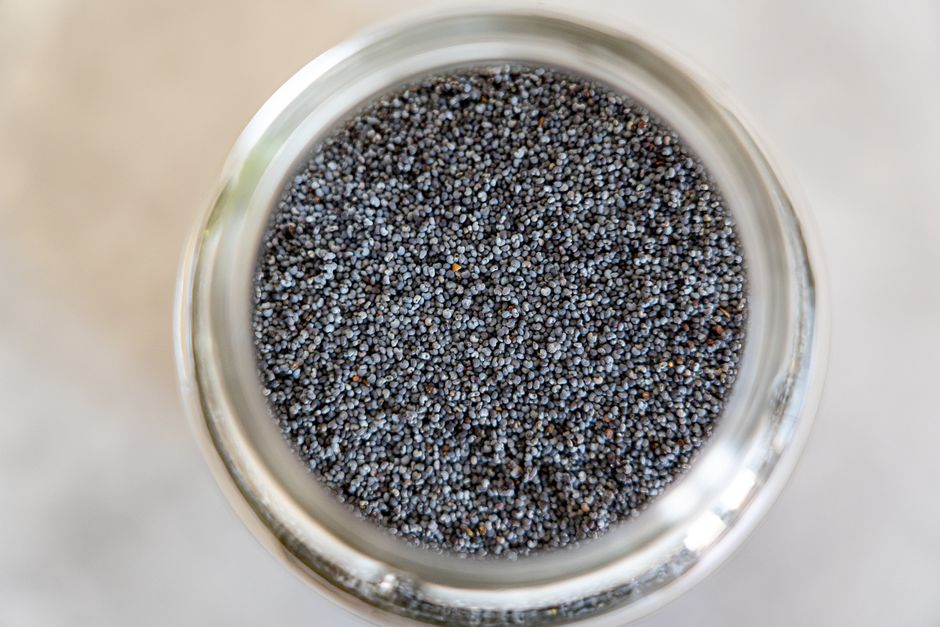
Poppy seed is the tiny, kidney-shaped seed of the opium poppy plant, Papaver somniferum. While the same plant produces opium, the seeds themselves sold for food are legal, widely available, and contain only trace amounts of opium compounds. These seeds are used globally in baked goods, dressings, and traditional dishes, prized for their nutty flavor and crunchy texture.
What Is Poppy Seed?
Poppy seeds come from the dried fruit of the opium poppy. The seeds are harvested after the flower has bloomed and the seed pod has matured. At this stage, the seeds themselves do not contain significant amounts of the active opiate compounds found in the plant’s sap.
Two main types are sold for culinary use. The first is the blue or slate-colored seed, common in European baking. The second is the white or cream-colored seed, more common in Asian and Middle Eastern cooking. Both come from the same plant species but differ in flavor intensity and regional use.
The seeds are small — about 1 millimeter across — but they pack a surprising amount of nutrition. They contain healthy fats, protein, dietary fiber, and several essential minerals including calcium, phosphorus, and magnesium.
Are Poppy Seeds Safe to Eat?
Yes. Culinary poppy seeds are safe for most people when eaten in normal food amounts. The seeds are washed and processed before sale, which removes most of the milky sap that contains opiate compounds.
That said, unwashed seeds can contain higher levels of morphine and codeine. This is a real concern for commercial food producers who buy seeds in bulk. The Food and Drug Administration has issued warnings about this issue, and some countries have set limits on opiate content in imported seeds.
For home cooks, the risk is low. Eating a poppy seed muffin or a slice of poppy seed cake will not cause a drug test failure or any noticeable effect. However, eating very large amounts — such as several tablespoons of unwashed seeds at once — could produce a positive drug screen. This is why some people report failing workplace drug tests after eating large quantities of poppy seed pastries.
Most commercial seeds sold in grocery stores are washed and safe. The concern applies mainly to bulk or specialty seeds purchased directly from growers.
What Do Poppy Seeds Do in the Body?
Digestion of poppy seeds is straightforward. The seed’s outer shell is tough and largely passes through the digestive tract intact. This is why you may see undigested seeds in stool after eating them — this is normal and harmless.
The nutrients inside the seed are partially absorbed. The fats are broken down and absorbed, providing energy and supporting cell function. The minerals contribute to daily intake needs.
One notable effect is on digestion itself. The fiber in poppy seeds adds bulk to stool and can help with regularity. Some people use poppy seed tea or paste as a traditional remedy for digestive complaints, though clinical evidence for this use is limited.
There is no evidence that poppy seeds have any direct effect on sleep, pain, or mood when eaten in normal food amounts. Any claims that poppy seeds provide natural pain relief or sedation are not supported by research. The opiate content in washed culinary seeds is far too low to produce these effects.




Nutritional Profile of Poppy Seeds
Poppy seeds are nutrient-dense for their size. A standard serving is about one tablespoon, which weighs roughly 9 grams. This serving provides approximately 45-50 calories.
The fat content is the most significant component. Poppy seeds are about 40-50% oil by weight. This oil is primarily unsaturated fat, which supports heart health when used in place of saturated fats.
Key nutrients per tablespoon include:
- Calcium: about 125 mg — roughly 10% of daily needs
- Phosphorus: about 90 mg
- Magnesium: about 30 mg
- Fiber: about 1.5 grams
- Protein: about 1.5 grams
These values come from USDA nutritional data. Poppy seeds also contain trace amounts of zinc, iron, and B vitamins, though not in amounts that significantly contribute to daily requirements.
One important note: the calcium in poppy seeds is present, but the seed’s outer shell may reduce absorption. The body may not fully access all the minerals locked inside the undigested seed coat.
How Are Poppy Seeds Used in Cooking?
Poppy seeds appear in cuisines around the world. In European baking, they are a staple in cakes, pastries, and breads. The classic lemon poppy seed muffin uses the seeds for texture and visual appeal as much as flavor.
In Eastern European and Jewish cooking, poppy seed filling is common. The seeds are ground with honey or sugar to make a sweet paste used in pastries like hamantaschen and kolache. The grinding process releases the oils and makes the nutrients more accessible.
Indian cuisine uses white poppy seeds as a thickening agent in curries and sauces. The seeds are ground into a paste that adds body and a subtle nutty flavor without overwhelming the dish.
Middle Eastern cooking incorporates poppy seeds in breads and sweets, often combined with sesame seeds or honey.
Poppy seed oil is also produced, primarily for culinary use in parts of Europe and Asia. It has a mild, nutty flavor and is used in salad dressings. However, it is less common than other cooking oils and may be harder to find in US grocery stores.
Can Poppy Seeds Cause a Positive Drug Test?
This is the most common concern people have about poppy seeds, and it is a legitimate one. Eating poppy seeds can cause a false positive on drug tests for opiates.
The reason is that even washed seeds retain small amounts of morphine and codeine on their surface. When you eat enough seeds, these compounds enter your bloodstream and are excreted in urine. Standard drug test thresholds may flag this as opiate use.
The amount needed varies. Some studies show that eating a single poppy seed bagel can produce a positive result on some tests, though not all. The sensitivity of the test matters, as does the individual’s metabolism and how much water they have drunk.
If you have a drug test coming up, the safest approach is to avoid poppy seeds entirely for at least 48 hours before the test. This includes baked goods, dressings, and any food that lists poppy seeds as an ingredient.
If you test positive after eating poppy seeds, you can request a confirmatory test. Gas chromatography-mass spectrometry (GC-MS) testing can distinguish between morphine from poppy seeds and morphine from heroin or other drugs. This type of test is more accurate and can often clear someone who genuinely only ate poppy seeds.
Are There Any Risks or Side Effects?
For most people, poppy seeds pose no health risk. Allergic reactions are rare but possible. If you have a known allergy to poppy seeds, avoid all products containing them.
There is one serious safety concern that is not widely known: unwashed poppy seeds can be dangerous. In recent years, several deaths have been reported from people brewing large quantities of unwashed poppy seeds as a tea to get a sedative effect. This practice is extremely dangerous and can cause respiratory depression, coma, and death.
The seeds sold in standard grocery stores are washed and do not carry this risk. But buying bulk seeds from specialty suppliers, especially online, requires caution. If a supplier does not state that seeds are washed for culinary use, assume they may contain higher opiate levels.
Poppy seeds are not known to interact negatively with common medications. However, if you take any medication that affects the central nervous system — such as sedatives, sleep aids, or anti-anxiety drugs — it is wise to avoid consuming large amounts of poppy seeds, as the trace opiates could theoretically add to the sedative effect.
How Should You Store Poppy Seeds?
Poppy seeds contain oils that can go rancid over time. Proper storage extends their shelf life and preserves flavor.
Store poppy seeds in an airtight container in a cool, dark place. A pantry or cupboard away from heat sources works well. Under these conditions, seeds will keep for about six months.
For longer storage, refrigeration or freezing works well. In the refrigerator, poppy seeds can last up to a year. In the freezer, they can last up to two years. The cold slows the oxidation of the oils, preserving freshness.
To check if seeds have gone bad, smell them. Fresh poppy seeds have a mild, nutty aroma. Rancid seeds smell sharp, bitter, or paint-like. If you notice this smell, discard the seeds — eating rancid seeds can cause stomach upset and the flavor will ruin any dish.
What Is the Difference Between Poppy Seeds and Other Seeds?
Poppy seeds are often compared to sesame seeds, chia seeds, and flax seeds because they are small and used in baking. But they differ in important ways.
Sesame seeds are larger, have a stronger nutty flavor, and are higher in calcium. Chia seeds form a gel when mixed with liquid, something poppy seeds do not do. Flax seeds require grinding to access their nutrients, while poppy seeds can be eaten whole.
Poppy seeds are unique in their opiate connection. No other common culinary seed has this association, which is why drug test concerns apply only to poppy seeds.
In terms of nutrition, poppy seeds are comparable to other seeds. They are all good sources of healthy fats and minerals. The choice between them comes down to flavor and culinary use rather than any significant nutritional advantage.
Frequently Asked Questions
Can eating poppy seeds make you fail a drug test?
Yes, eating poppy seeds can cause a false positive on an opiate drug test, especially if you eat them within 48 hours of the test. The seeds retain trace amounts of morphine and codeine that can appear in urine.
Are poppy seeds safe during pregnancy?
Eating normal food amounts of poppy seeds is generally considered safe during pregnancy, but no clinical guidelines specifically address this. The trace opiate content is very low, yet some clinicians recommend avoiding large quantities during pregnancy out of caution.
How many poppy seeds can you eat per day?
No official daily limit exists for poppy seeds. A typical serving is one to two tablespoons, and this amount is safe for most people.
Do poppy seeds need to be washed before eating?
Commercial poppy seeds sold in grocery stores are already washed and ready to use. If you purchase seeds from a bulk supplier or directly from a farm, washing them at home is a reasonable precaution, though it will not remove all opiate residue.
