
“Popcorn lung” is a nickname for bronchiolitis obliterans, a rare condition in which the smallest airways in the lungs become inflamed and scarred. The scarring narrows those airways and can block airflow, and it does not reverse. The name stuck because a chemical used in some microwave popcorn flavorings was linked to cases in workers at popcorn plants in the 1990s and 2000s.
It is not caused by eating popcorn. That distinction matters, because the name has created a lot of confusion. The damage comes from breathing certain chemical vapors, not from the food itself.
What Is Popcorn Lungs? Simplified
Bronchiolitis obliterans is a disease of the bronchioles, the tiny airways at the very end of the lung’s branching tubes. When these airways are injured, the body responds with inflammation and then with scar tissue. That scar tissue narrows the airway openings, and airflow drops.
The word “obliterans” means the airways are progressively closed off. Unlike asthma, where airway narrowing is often reversible, the narrowing here involves fixed scar tissue. That is why the condition is generally considered permanent once it develops.
The popcorn connection comes from diacetyl, a chemical that gives butter flavoring its taste. Workers who inhaled high concentrations of diacetyl vapor while mixing flavorings developed severe lung disease. Some were young and healthy before their exposure.
A key point that often gets lost: this is a disease of inhalation. Diacetyl in food that you eat is handled differently by the body than diacetyl vapor drawn deep into the lungs. Eating butter-flavored popcorn has not been shown to cause bronchiolitis obliterans.
How Does Diacetyl Cause Lung Damage?
Diacetyl is a small molecule that vaporizes easily. In flavoring and food production settings, it can fill the air in high concentrations. When breathed in, it reaches the bronchioles, where it appears to injure the cells lining those airways.
The body’s repair response is where things go wrong. Instead of regenerating normal airway lining, the tissue forms fibrous scar. The mechanism is well described in pathology studies, though the exact sequence of cellular events is still being worked out.
Not everyone exposed develops the disease. That suggests other factors — genetics, the intensity and duration of exposure, and possibly co-exposures — play a role. The evidence on individual susceptibility is incomplete.
Diacetyl is not the only cause. Bronchiolitis obliterans has well-documented links to other triggers, and it is worth knowing them because the popcorn story is only one part of the picture.
What Else Causes Bronchiolitis Obliterans?
The popcorn flavoring cases are a well-known cause, but not the most common one. In clinical practice, several other triggers are seen more often.
- Lung or stem cell transplant. This is one of the most recognized causes. It can develop months to years after transplant and is a major reason transplant patients are followed closely.
- Certain infections. Some viral respiratory infections, including adenovirus and respiratory syncytial virus, have been linked to cases, particularly in children.
- Connective tissue diseases. Rheumatoid arthritis and some other autoimmune conditions are associated with bronchiolitis obliterans.
- Inhaled chemical exposures. Besides diacetyl, other industrial and occupational vapors have been implicated.
- Some medications. A small number of drugs have been associated with the condition.
- Idiopathic cases. In some people, no cause is ever identified.
There is also a related but distinct condition called constrictive bronchiolitis, which is often seen in military personnel and others exposed to burn pit smoke and other airborne hazards. The evidence linking those exposures to the disease has grown, though it is still an area of active research rather than settled science.
What Are the Symptoms?
Symptoms usually come on slowly. Early on, they can be easy to dismiss.
- Shortness of breath that gets worse with activity
- A dry, persistent cough
- Wheezing
- Fatigue
- Reduced ability to exercise or climb stairs
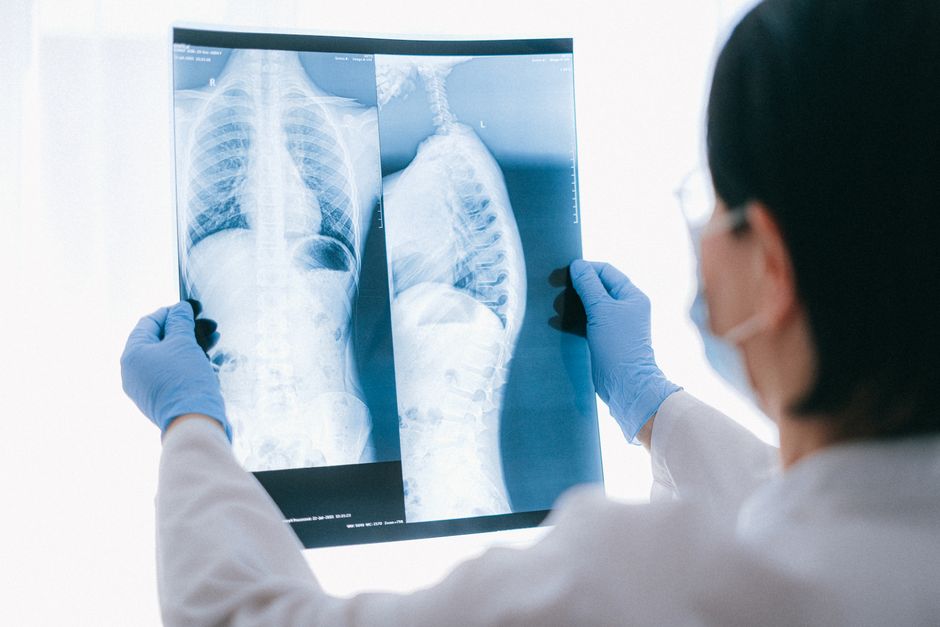
One of the frustrating features of this disease is that it often does not show up on a standard chest X-ray. The scarring is in the small airways, and those changes can be hard to see on routine imaging. That means a normal chest X-ray does not rule it out.
Because the symptoms overlap with asthma, COPD, and other common conditions, diagnosis can take time. A person may be treated for asthma first and not improve.
How Is It Diagnosed?
There is no single test that confirms bronchiolitis obliterans. Diagnosis is built from several pieces of information.
Pulmonary function tests are central. They often show a pattern called airflow obstruction — air moves out of the lungs more slowly than normal. In some cases, the lungs also become stiff, which shows up as reduced lung volumes.
High-resolution CT scanning can show characteristic patterns, including areas where air gets trapped in the lungs and the airways appear narrowed. These findings support the diagnosis but are not always definitive.
Lung biopsy is sometimes used, but it is not routine. The disease can be patchy, so a biopsy can miss affected tissue and produce a false negative. That limitation is well recognized among specialists.
Finally, the exposure history matters a great deal. A clinician who knows to ask about flavoring work, transplant history, or certain infections is more likely to put the pieces together.
Can Popcorn Lung Be Treated or Reversed?
The scarring itself cannot be reversed. That is the honest bottom line, and it is consistent with how the disease is described in the medical literature.
Treatment focuses on slowing progression and managing symptoms. The first and most important step is removing the exposure. If a person is still breathing the offending chemical, stopping that exposure is the priority.
Some clinicians use corticosteroids or other medications to reduce inflammation, especially early on. The evidence that these change the long-term course is limited. This is a case where common clinical practice is ahead of strong trial evidence, and it is fair to say so.
For advanced disease, oxygen therapy and, in some cases, lung transplant may be considered. Lung transplant is a major undertaking and is not appropriate for everyone.
The outlook varies widely. Some people have mild disease that stays stable for years. Others progress to significant disability. Predicting which path a given person will take is not currently possible with confidence.
Is Popcorn Lung a Risk From Eating Popcorn or Vaping?
Eating popcorn has not been shown to cause bronchiolitis obliterans. The disease is linked to inhaling diacetyl vapor, not to consuming it in food.
The vaping question is different and deserves a careful answer. Some e-liquids and flavorings contain diacetyl or related compounds. Whether typical vaping exposures reach the levels associated with occupational disease is not established. Some studies have detected diacetyl in the vapor of certain flavored e-cigarettes, but the health consequences of those levels are not well characterized.
This is an area where the honest position is uncertainty. It would be wrong to say vaping definitely causes popcorn lung, and equally wrong to say there is no reason for concern. The evidence is still developing.
What is well established is the occupational risk. Workers in flavoring manufacturing, food production, and some coffee roasting and packaging settings can be exposed to high diacetyl levels. Workplace safety measures and exposure limits exist for this reason, and they are the main defense.
What Should You Do If You’re Worried?
If you work around flavorings, food additives, or industrial vapors and notice new shortness of breath or a persistent cough, tell a doctor about your work. Exposure history is easy to miss unless you bring it up.
For most people, the popcorn name is more confusing than useful. It points to one dramatic chapter in the history of an uncommon disease. The real story is about inhaled chemicals, damaged small airways, and the fact that this kind of lung injury can be permanent.
Frequently Asked Questions
Can you get popcorn lung from eating microwave popcorn?
No. Eating popcorn has not been shown to cause bronchiolitis obliterans. The disease is linked to inhaling diacetyl vapor, not to eating it in food.
Is popcorn lung the same as COPD?
No. Both involve airflow obstruction, but bronchiolitis obliterans affects the smallest airways and involves fixed scarring, while COPD typically involves the larger airways and lung tissue destruction.
Does vaping cause popcorn lung?
It is not established. Some e-liquids contain diacetyl or related compounds, but whether typical vaping exposures cause the disease has not been confirmed.
Is popcorn lung curable?
No. The scarring in the small airways cannot be reversed, so treatment focuses on removing the exposure, managing symptoms, and slowing progression.
