
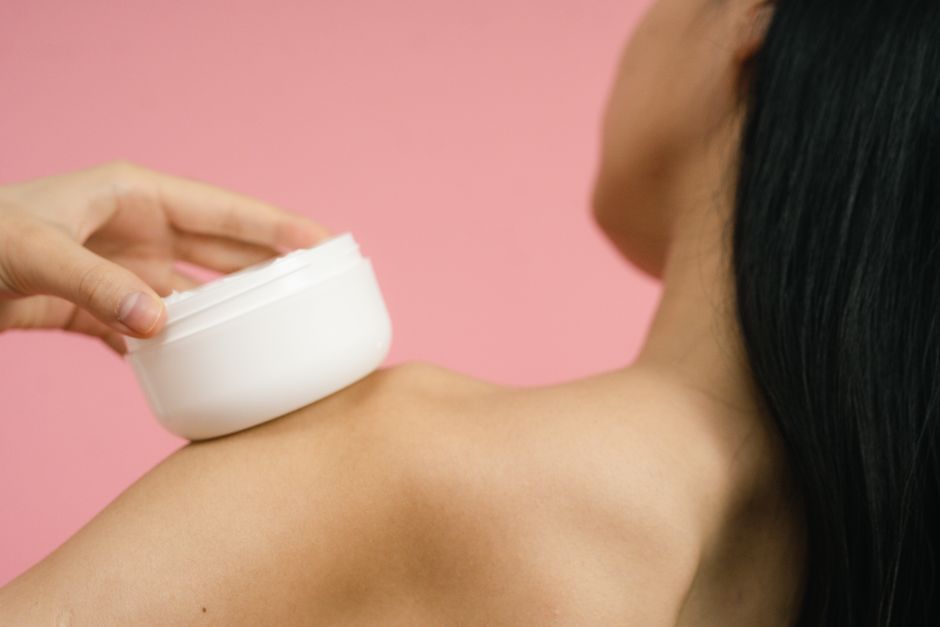
Polypeptide creams are moisturizers or treatment creams that contain short chains of amino acids as their main active ingredient. In skincare, they are used mainly for hydration and for temporarily improving the look of firmness and fine lines. The proteins they are related to — collagen and elastin — give skin its structure, but the way polypeptide creams work is different from how many people assume.
That difference matters. A lot of marketing implies these creams rebuild collagen directly. The biology is more indirect than that. This article explains what polypeptides actually are, what they can and cannot do for skin, and how to read a label without being misled.
What Are Polypeptides and How Do They Relate to Skin?
A polypeptide is a chain of amino acids linked together. Amino acids are the building blocks of proteins. When a chain is short, scientists call it a peptide. When it gets longer, it becomes a polypeptide, and longer still, a protein.
Collagen and elastin — the two proteins most responsible for skin’s firmness and bounce — are large proteins made of long amino acid chains. As we age, the skin produces less of both. Sun exposure, smoking, and normal aging all contribute to that decline.
Skincare peptides are typically fragments of those larger proteins. A manufacturer might use a chain of a few amino acids that matches part of the collagen sequence. The idea is that this fragment can signal something to the skin. A chain of five amino acids is still a peptide by most definitions, but the terms peptide and polypeptide are often used loosely in cosmetics.
The key point: a polypeptide in a jar is not collagen. It is a much smaller molecule. Whether it does anything useful depends on which specific peptide it is and how much of it is in the formula.
What Is Polypeptide Cream Used For In Skincare?
Polypeptide creams are sold for three main purposes: moisturizing, improving the appearance of firmness, and softening the look of fine lines. The moisturizing claim is straightforward. Most of these products are well-formulated creams with humectants and emollients, and those ingredients do hydrate skin reliably.
The firmness and fine-line claims are more complicated. Some peptides have been studied for their effect on collagen production in laboratory settings. A few small human studies have looked at specific peptides and reported changes in skin appearance over weeks to months. The results have generally been modest, and the studies are often short and funded by manufacturers.
What the evidence does not show is that polypeptide creams reverse aging or rebuild skin structure the way a dermatologic procedure does. No topical peptide cream has been shown to match the effect of prescription retinoids on fine lines, and none has been shown to replace procedures like laser resurfacing or fillers.
Some peptide ingredients have a clearer evidence base than others. Certain ones, such as those studied under names like palmitoyl pentapeptide-4 or copper peptides, have more published research behind them. Others are newer and largely supported by lab data and marketing. The category “polypeptide cream” covers a wide range of products with very different ingredient lists.
How Do Polypeptides Actually Work on Skin?
The proposed mechanism is signaling. The theory is that a peptide fragment can be recognized by skin cells and prompt them to produce more collagen or to slow collagen breakdown. This has been demonstrated in cell cultures, where fibroblasts — the cells that make collagen — respond to certain peptides.
The harder question is whether that happens in living skin. The outer layer of skin, the stratum corneum, is designed to keep large molecules out. Peptides are larger than water or glycerin, so how much of a peptide actually reaches the deeper layers where fibroblasts live is not fully established. Some research suggests certain peptides can penetrate to some degree. How much, and whether the amount is meaningful, is debated.
This is the gap between lab results and real-world results. A peptide doing something in a petri dish does not automatically mean it does the same thing when applied to your face. Biological plausibility is not the same as proven clinical benefit.
There is also the question of formulation. A peptide that degrades in the jar, or that is included at a very low concentration, is unlikely to do much regardless of what the research on the raw ingredient shows. Concentration and stability matter, and cosmetic labels are not required to disclose the percentage of each active ingredient.
Are Polypeptide Creams Effective for Wrinkles and Firmness?
The evidence is mixed and generally modest. Some studies suggest certain peptides produce small improvements in the appearance of fine lines and skin texture over several weeks of use. Results vary by peptide, by formulation, and by study design.
For context, the ingredients with the strongest evidence for improving fine lines and skin texture topically are retinoids, along with daily sunscreen, which prevents further damage. Vitamin C and niacinamide also have reasonable supporting evidence for certain skin concerns. Peptides sit in a lower tier of evidence than these.
That does not mean polypeptide creams are useless. A good peptide cream can be an excellent moisturizer, and well-hydrated skin looks plumper and smoother. Some of the visible improvement people notice after using these products likely comes from hydration rather than from any collagen effect.
If your goal is meaningful improvement in wrinkles, a peptide cream alone is unlikely to deliver it. If your goal is a pleasant, hydrating product that may offer a small additional benefit, the evidence supports that being possible for some peptides, though not guaranteed.
Who Might Consider a Polypeptide Cream?
Peptide creams are generally well tolerated and are often marketed as gentler alternatives for people who cannot use retinoids. Retinoids can cause irritation, peeling, and sun sensitivity, especially when starting out. Some people cannot tolerate them at all. For those individuals, a peptide cream may be a reasonable option, though it should not be expected to perform like a retinoid.
People with sensitive or dry skin often do well with peptide creams simply because the base formulas tend to be rich and moisturizing. Those with oily or acne-prone skin may find heavier peptide creams too occlusive, though lighter formulations exist.
One practical note: peptides can be combined with most other skincare ingredients, including vitamin C and niacinamide. There is a common claim that certain peptides conflict with acids or with vitamin C. The evidence for these incompatibilities is limited and largely theoretical, though some formulators avoid combining them as a precaution.
If you are pregnant or breastfeeding, check with a clinician before starting any new active skincare product. Established guidance on peptide use during pregnancy is limited.
How to Read a Polypeptide Cream Label
Ingredient lists are ordered by concentration, with the highest amounts first. If a peptide appears near the end of a long list, it is likely present in a very small amount. That is not automatically a problem — some peptides are effective at low concentrations — but it is worth knowing.
Here are things worth checking:
- The specific peptide name, not just the word “peptides” on the front of the jar
- Whether the peptide appears reasonably high in the ingredient list
- Whether the product also contains sunscreen, since sun protection has stronger evidence than any peptide for preventing visible aging
- Whether the marketing makes claims the evidence does not support, such as “boosts collagen by a specific percentage”
Be cautious with products that promise dramatic results. Skincare actives that genuinely change skin structure, like prescription retinoids, come with known trade-offs like irritation and a gradual timeline. A cream that claims those results with no downsides is making a claim the evidence does not back.
Polypeptide Creams vs Other Anti-Aging Ingredients
It helps to see where peptides sit relative to better-studied options. The table below describes general evidence strength, not specific product performance.
| Ingredient | Main use | Evidence strength |
|---|---|---|
| Retinoids | Fine lines, texture, acne | Strong, well-established |
| Sunscreen | Preventing UV damage and visible aging | Strong, well-established |
| Vitamin C | Brightening, antioxidant support | Moderate |
| Niacinamide | Barrier support, uneven tone | Moderate |
| Peptides | Hydration, possible mild firming | Mixed and modest |
This does not mean peptides have no place. It means they should not be positioned as equal to retinoids or sunscreen, and marketing often does exactly that.
Frequently Asked Questions
Do polypeptide creams really work?
Some studies suggest certain peptides produce small improvements in skin appearance, but the evidence is mixed and modest. Their most reliable effect is moisturizing, since most peptide creams are well-formulated hydrating products.
Can polypeptide cream replace retinol?
No. Retinoids have much stronger evidence for improving fine lines and skin texture, and no peptide cream has been shown to match them. A peptide cream may suit people who cannot tolerate retinoids, but it is not an equivalent swap.
Are polypeptide creams safe for sensitive skin?
Peptides are generally well tolerated, and peptide creams are often formulated for sensitive skin. Individual reactions are still possible, so testing a small area first is reasonable.
How long does it take to see results from polypeptide cream?
Hydration effects are visible within days, but any firming or fine-line effects reported in studies generally took several weeks. Established timelines for peptide results specifically are not well defined.
