
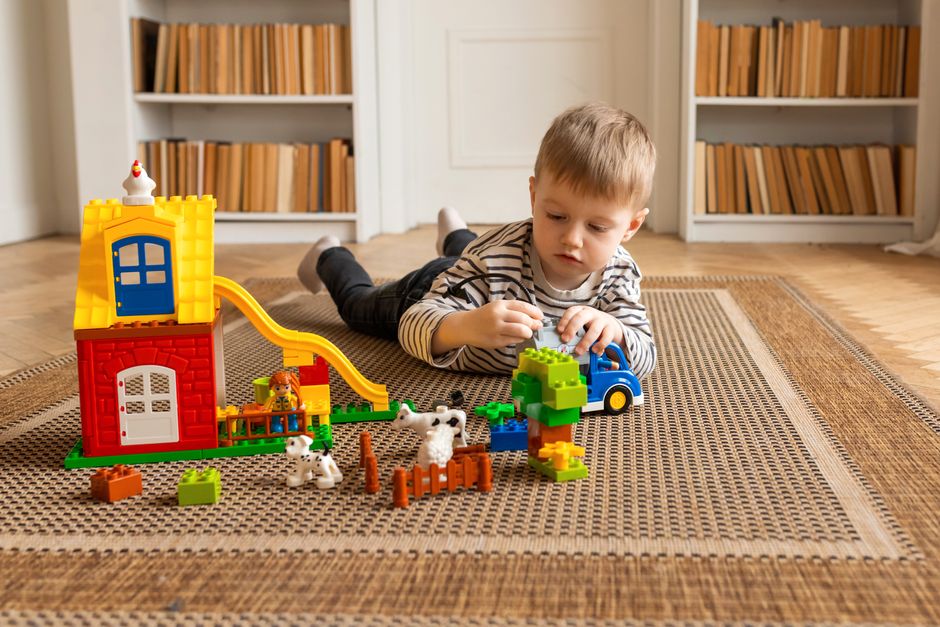
Play therapy is a structured form of counseling that uses toys, games, and creative activities as the primary way a trained therapist communicates with a young child. For toddlers — roughly ages one to three — talking through feelings is not developmentally possible, so play becomes the language. The therapist sets up a safe space and uses play to observe, understand, and gently respond to a child’s emotions and behaviors.
What Is Play Therapy For Toddlers And How Does It Work?
Play therapy works on a simple developmental fact: toddlers express themselves through action, not words. A two-year-old who has witnessed something frightening may not say “I feel scared.” They may instead reenact the scene with dolls, throw toys, or cling constantly. A play therapist reads those behaviors as communication.
During a session, the therapist offers a carefully chosen set of toys — dolls, puppets, sand, art supplies, blocks. The child leads. The therapist follows, narrates what they see, and reflects feelings back in simple language. Over time, this process is thought to help a child process experiences and build coping skills.
The key idea is that play is not a break from therapy. Play is the therapy. The therapist is trained to notice patterns, themes, and shifts in how a child plays, and to respond in ways that support emotional regulation and expression.
Why Toddlers Cannot Just “Talk It Out”
The toddler brain is not wired for verbal therapy. Language areas are still developing rapidly, and the ability to name complex emotions — let alone discuss them — does not typically emerge until well past age three.
What toddlers do have is a powerful drive to play. Developmental research consistently shows that play is how young children learn about the world, practice social roles, and work through confusion or distress. A child who cannot say “I’m worried about the new baby” might instead put a doll in a crib, take it out, and put it back — over and over.
Play therapy meets children where they are. Instead of asking a toddler to translate feelings into words, it lets them show feelings through action. For many young children, that is the only channel available.
What Happens in a Typical Play Therapy Session?
Every therapist works a little differently, but most sessions share common features. A session usually lasts 30 to 50 minutes, depending on the child’s age and attention span. Toddlers often need shorter sessions.
The room is set up to be safe and predictable. Toys are chosen deliberately — not just for fun, but because they invite expression. Common items include:
- Dolls and stuffed animals, which allow children to act out relationships
- Puppets, which can “say” things a child cannot
- Sand trays, where children create scenes
- Art supplies, for messy, non-verbal expression
- Blocks and building toys, for mastery and control
- Dress-up clothes and role-play props
The therapist does not direct the play. Instead, they observe closely and respond. They might say, “That doll looks really mad,” or “You built that tower all by yourself.” These reflections help a child feel seen and begin to connect actions with feelings.
Parents are often included in part of the session, especially with very young children. A therapist may coach a parent on how to play in ways that support the child’s emotional needs at home.





Who Might Benefit From Play Therapy?
Play therapy is used with children facing many kinds of challenges. It is not reserved for severe problems. Some common reasons parents seek it include:
- Anxiety or excessive worry
- Behavior problems at home or daycare
- Difficulty with transitions, like a new sibling or a move
- Grief or loss
- Trauma or frightening experiences
- Social struggles with other children
- Medical procedures or chronic illness
That said, the evidence base for play therapy is mixed. Some studies suggest it can help with emotional and behavioral problems in children. But many of these studies are small, and the quality varies. The strongest evidence tends to involve older children, not toddlers specifically. For the toddler age group, research is more limited.
This does not mean play therapy does not work for toddlers. It means the science is still catching up to the practice. Many clinicians report meaningful improvements, but large, high-quality trials focused on toddlers are scarce.
Is Play Therapy the Same as Regular Play?
No. This is one of the most common misunderstandings. Regular play is free, unstructured, and led entirely by the child for fun. Play therapy is structured, intentional, and led by a trained therapist with specific goals.
The difference is not in the toys. It is in the training and intention behind them. A therapist is watching for themes, tracking changes over time, and responding in ways designed to support emotional growth. A parent playing at home is doing something valuable too — but it is not the same as therapy.
That said, some therapists teach parents “play-based” strategies to use at home. These are not a replacement for therapy but can support it. They usually involve following the child’s lead, describing what the child does, and avoiding correction during special play time.
What Does the Research Actually Show?
Honest answer: the research on play therapy is promising but not definitive, especially for toddlers.
Some reviews of studies in children have found positive effects on behavior and emotional adjustment. But many of these reviews include children of a wide age range, and toddlers are often a small subgroup. The studies also vary widely in how therapy is delivered, how long it lasts, and how outcomes are measured.
There is also a challenge in studying toddlers. They cannot fill out questionnaires. Researchers must rely on parent and teacher reports, which can be biased. Measuring change in a two-year-old is genuinely difficult.
What can be said with confidence: play is central to toddler development, and therapists trained in play-based approaches are widely used in clinical practice. Whether play therapy produces measurable, lasting change in toddlers compared to other approaches is not yet firmly established by large trials.
How Do You Find a Qualified Play Therapist?
Look for a licensed mental health professional with specific training in play therapy. In the United States, some therapists earn a Registered Play Therapist (RPT) credential through a professional association. This requires graduate training, supervised clinical hours, and continuing education.
Not every therapist who works with children has this credential. That does not automatically make them unqualified, but it does mean you should ask about their training and experience with toddlers specifically.
Questions worth asking:
- What is your training in play therapy?
- How much experience do you have with children this age?
- How do you involve parents in the process?
- How will we know if it’s helping?
Trust your instincts. A good therapist will welcome these questions and give clear answers.
What Parents Should Realistically Expect
Play therapy is not a quick fix. Change in young children often unfolds slowly, and progress can look like two steps forward and one step back. Some children warm up quickly. Others need several sessions just to feel safe in the room.
It is also normal for behavior to seem worse before it gets better. When a child starts to feel safe, they may express feelings they had been holding in. This can look like more meltdowns or clinginess for a while.
Parents play a real role. Consistency matters. So does communication with the therapist. If you are not seeing any change after a reasonable period, it is fair to ask whether this approach is the right fit — or whether something else is going on.
Play therapy is one tool among many. It is not the only option, and it is not right for every child. But for some toddlers, it offers a way to be understood when words are not yet available.
Frequently Asked Questions
At what age can a toddler start play therapy?
Play therapy is generally used with children as young as two, and some therapists work with children under two. The approach is adapted to the child’s developmental level, so sessions look different for a two-year-old than for a six-year-old.
How long does play therapy usually take to work?
There is no standard timeline, and it varies widely by child and situation. Some children show changes in a few weeks, while others need several months. A therapist should discuss expected progress with you.
Can parents stay in the room during play therapy?
It depends on the therapist and the child’s needs. Many therapists include parents for part of the session, especially with toddlers. Others prefer to work one-on-one and update parents afterward.
Is play therapy covered by insurance?
Coverage varies by plan and provider. Many insurance plans cover mental health services, but you should check whether play therapy is included and whether the therapist is in-network.
