
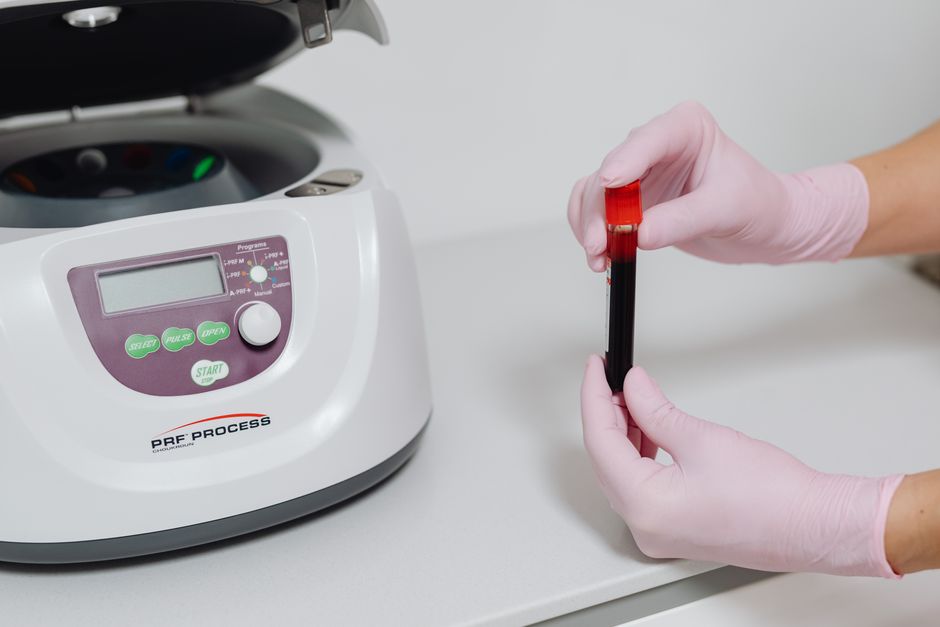
Platelet rich plasma is a sample of a person’s own blood that has been processed to concentrate the platelets — the cell fragments that help blood clot and release growth signals — into a small volume of plasma. It is then injected or applied to a tissue. The idea behind it is simple: deliver a dense dose of the body’s own wound-healing signals right where healing is wanted. Whether that idea actually produces meaningful benefit depends heavily on what it is being used for, and the evidence is very uneven across those uses.
The term gets used loosely. Clinics market “PRP” for hair loss, knee arthritis, tendon injuries, skin rejuvenation, and sexual function. These are not equivalent. Some have moderate clinical support. Others have none. This article separates what is well established from what is still being tested, and flags where marketing has run ahead of the data.
What Is Platelet Rich Plasma and How Is It Made?
Whole blood separates into layers when spun in a centrifuge. Red blood cells are heaviest and settle at the bottom. Platelets and white cells sit in a middle layer above them. Plasma is the straw-colored liquid on top.
To make PRP, a clinician draws a tube of the patient’s blood, spins it, and collects the platelet-rich portion. That portion is then concentrated further. The goal is a platelet count several times higher than normal circulating blood. Normal whole blood contains roughly 150,000 to 450,000 platelets per microliter. Most PRP preparations aim for a concentration above baseline, though there is no single agreed standard for what “platelet rich” means in practice.
That lack of standardization matters. Different clinics use different devices, different spin speeds, and different volumes. Some preparations contain white blood cells and some do not. Some use an anticoagulant and some activate the platelets with calcium or thrombin before injection. Two products both labeled “PRP” can differ substantially in platelet concentration and in the mix of proteins they release.
Platelets are not just clot-makers. They store granules packed with growth factors — platelet-derived growth factor, transforming growth factor beta, vascular endothelial growth factor, and others. When platelets activate, they release these proteins. That release is the biological rationale for PRP. It is also where the reasoning gets stretched: releasing growth factors in a dish is not the same as producing clinical healing in a person.
What Does PRP Actually Do in the Body?
Platelets release signaling proteins that recruit cells involved in tissue repair. They also attract cells that build new blood vessels and lay down collagen. In laboratory and animal studies, concentrated platelets influence these repair pathways.
The gap between that and human benefit is real. A high local dose of growth factors does not automatically translate into faster healing, less pain, or better function in a patient. The body’s repair process is tightly regulated, and adding more of a signal does not always push it forward. Some researchers have found that very high platelet concentrations can actually blunt certain cellular responses — a reminder that more is not automatically better.
This is why clinical trials matter more than mechanism. A treatment can have a sound biological story and still fail to beat placebo in a well-run trial. PRP has landed on both sides of that line depending on the condition.
What Conditions Is PRP Used For?
Evidence strength varies widely by use. Treating all PRP claims as one category is the most common mistake people make when reading about it.
Tendon and muscle injuries. Tennis elbow (lateral epicondylitis) has been studied more than most. Results are mixed. Some trials show modest pain improvement compared with placebo injections, and others show little difference. For Achilles tendinopathy and rotator cuff problems, the evidence is similarly inconsistent. Some clinicians offer PRP for these conditions; it is not a standard first-line treatment in most guidelines.
Knee osteoarthritis. This is one of the more studied uses. Several trials and reviews suggest PRP injections may reduce pain and improve function in the short to medium term for some patients with mild to moderate knee osteoarthritis. Comparisons with hyaluronic acid injections and with corticosteroid injections have produced varying results, and many studies are small or at risk of bias. The evidence is promising but not settled, and it does not show that PRP repairs cartilage.
Hair loss. Some studies of androgenetic alopecia suggest PRP injections may modestly increase hair density or thickness in some people. Results vary, protocols differ, and longer-term data are limited. It is not a cure for pattern hair loss and does not replace established treatments.
Skin and wound healing. PRP has been used in some surgical and wound-care settings. Evidence for cosmetic skin rejuvenation is weak and largely driven by small studies.
Things it is marketed for without good evidence. “Vampire facials,” vaginal rejuvenation, and erectile dysfunction treatments are marketed with PRP. No large, well-controlled human trials confirm benefit for these uses. Some carry real risk of infection or injury when performed outside appropriate medical settings.




Is PRP Effective? What the Evidence Shows
There is no single answer because PRP is not a single treatment. The honest summary is that evidence ranges from moderate for a few musculoskeletal uses to absent for many marketed applications.
Several patterns show up repeatedly in the research:
- Studies are often small, and many lack a proper placebo control — which matters because joint and tendon injections can produce strong placebo responses.
- PRP preparations differ between studies, making it hard to compare results or pool them.
- Short-term pain relief is reported more consistently than long-term structural change. PRP has not been shown to regrow cartilage or reverse tendon damage.
- Many trials are funded or conducted by researchers with commercial ties to PRP device makers, which does not invalidate them but warrants caution.
Where PRP does appear to help, the effect is generally modest and measured in pain scores and function rather than in curing the underlying condition. That distinction is worth holding onto when reading clinic websites.
Is PRP Safe? What Are the Risks?
Because PRP is made from the patient’s own blood, allergic reaction and disease transmission are not concerns in the way they are for donor-derived products. That is a genuine advantage and one of the reasons the treatment is appealing.
It is not risk-free. Injection itself carries the usual risks: pain, bruising, swelling, and a small risk of infection. Some people report a temporary increase in pain for a few days after injection. When PRP is prepared or injected poorly, or in unregulated settings, the risks rise.
There is also a cost consideration that is not a safety issue but is often glossed over. PRP is frequently not covered by insurance because regulators generally do not classify it as an established therapy for most conditions. Patients often pay out of pocket, sometimes for multiple sessions. Anyone considering it should ask what the total cost will be and what evidence supports the specific use.
How Does PRP Compare With Other Treatments?
PRP is usually positioned as an alternative to corticosteroid injections, hyaluronic acid injections, or surgery. The comparisons are not clean.
Corticosteroids reduce inflammation and often relieve pain quickly, but repeated use can weaken tissue over time. Hyaluronic acid is used mainly for knee osteoarthritis. PRP sits somewhere between them in both cost and evidence — more studied than some alternatives for certain uses, less established than others.
No good evidence shows PRP is superior to established treatments across the board. For knee osteoarthritis, some trials suggest it may perform comparably to hyaluronic acid injections over the short term, but results are inconsistent. For most tendon problems, physical therapy remains the foundation of treatment, and PRP is best understood as an adjunct some clinicians offer rather than a replacement for rehab.
What Should You Ask Before Getting PRP?
The most useful questions are about evidence and specifics, not about the general concept.
- What is the PRP being used for, and what does the research show for that exact condition?
- How is the PRP prepared, and what is the platelet concentration?
- How many sessions are typical, and what is the total cost?
- What are the alternatives, and how does PRP compare with them for my situation?
- Is this being done as part of a study, or as an established service?
PRP is a real biological product with a plausible mechanism and a mixed clinical record. It is neither the miracle some clinics advertise nor worthless. The right answer depends almost entirely on what it is being used to treat, and on whether the person offering it is honest about the evidence.
Frequently Asked Questions
What is platelet rich plasma made of?
It is made from a person’s own blood, spun in a centrifuge to concentrate platelets and the plasma they sit in. The final product contains platelets at a higher concentration than normal blood, along with plasma proteins and sometimes white blood cells.
Is PRP injection painful?
Most people describe the injection as uncomfortable rather than severely painful, and some report soreness for a few days afterward. The experience varies with the injection site and the technique used.
How long does PRP take to work?
Reported timelines vary widely by condition and are not well established in the research. Some studies describe improvement over weeks to a few months, but there is no reliable standard timeline that applies across uses.
Is PRP covered by insurance?
In the US, PRP is generally not covered by insurance for most conditions because regulators do not classify it as an established therapy for them. Patients usually pay out of pocket, so it is worth confirming total cost in advance.
