
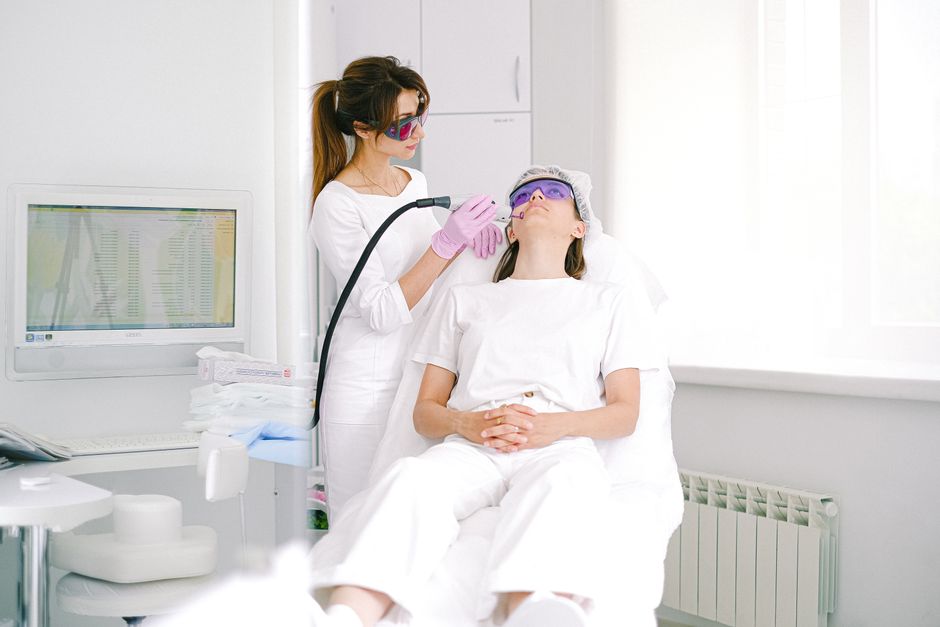
You may have seen it sold as “red light therapy” or “low-level laser therapy” — a glowing panel you sit in front of for a few minutes a day. Photobiomodulation therapy is the clinical name for using specific wavelengths of red and near-infrared light to influence cell behavior in living tissue. The light does not burn or cut. It delivers energy that cells can absorb, and that absorption sets off a chain of biochemical events inside the cell. Whether those events add up to meaningful health benefits depends heavily on the condition, the dose, and the quality of the evidence — and that part is more uneven than the marketing suggests.
What Is Photobiomodulation Therapy And How It Works?
Photobiomodulation works because certain wavelengths of light penetrate tissue and get absorbed by a specific structure inside your cells. That structure is an enzyme called cytochrome c oxidase, which sits in the mitochondria — the compartments that produce most of your cells’ energy.
When red or near-infrared light hits this enzyme, it appears to nudge the mitochondrial chain that makes ATP, the molecule cells use for energy. One widely discussed result is a brief, controlled increase in reactive oxygen species — molecules that, in small amounts, act as signals rather than damage. That signaling can trigger pathways involved in repair and inflammation control.
The wavelengths matter. Red light around 600–700 nanometers penetrates skin well. Near-infrared light around 800–1100 nanometers goes deeper, reaching muscle and joint tissue. Light outside these windows is either absorbed too shallowly or scattered before it reaches anything useful.
Here is the non-obvious part that separates real photobiomodulation from light-therapy hype: the effect is biphasic. A small dose can stimulate. A larger dose can do nothing or even work against you. More light is not better light. This is why dose — measured in energy delivered per area of tissue — is central to the whole field, and why results from one device or protocol do not automatically transfer to another.
What Conditions Has Photobiomodulation Been Studied For?
The research base is broad but uneven. Some areas have genuine clinical support; others rest on small studies or biological reasoning alone.
The strongest and most consistent evidence is in wound healing and tissue repair. Research has examined it for diabetic foot ulcers, surgical wounds, and oral mucositis — painful mouth sores that are a common side effect of cancer chemotherapy and radiation. For oral mucositis, some clinical guidance does recognize low-level laser therapy as a supportive option, which makes it one of the better-established uses.
Musculoskeletal pain has a substantial but mixed literature. Some trials show reduced pain and improved function in conditions like knee osteoarthritis and neck pain; others show little difference from placebo. Results vary by device, dose, and how the trial was designed.
For hair loss, low-level laser devices have been cleared by the US Food and Drug Administration for androgenetic alopecia, and some controlled trials show modest increases in hair density. The effect is generally small and requires ongoing use.
In skin, red light is studied for wrinkle reduction and wound healing, with modest and inconsistent results across studies.
Areas like chronic pain, neuropathy, and inflammation have promising early data but no large, definitive trials. And for broad wellness claims — “cellular rejuvenation,” “detox,” general anti-aging — no clinical evidence currently confirms these.
Does Red Light Therapy Actually Work?
The honest answer is: it works for some things, not others, and the difference is not always predictable from the marketing. The evidence is strongest where the condition is local, the tissue is accessible to light, and the dose has been carefully standardized.
Where it gets murky is in real-world use. Many consumer devices sold for home use are not the same as the medical devices used in clinical trials. Output power, wavelength accuracy, and treatment distance all affect the actual dose delivered to tissue. A panel that looks bright may deliver far less usable energy than a clinical laser.
There is also a placebo problem. Light therapy is hard to blind — you know whether you are sitting in front of a glowing panel — so some trials may overstate benefit. Well-designed studies try to control for this with sham devices, and when they do, the effects often shrink.
None of this means it is fake. It means the field is real but immature, and the gap between what is proven and what is sold is wide.



What Does a Photobiomodulation Session Involve?
In a clinical setting, a session involves exposing the target area to a specific wavelength and dose of light for a set time. Depending on the device, this might be a handheld laser, a cluster of LEDs, or a larger panel.
Sessions are typically short — often minutes rather than an hour. Treatment courses vary widely by condition, and there is no single universal protocol. A wound clinic, a dermatology office, and a physical therapy practice may all use different parameters for different reasons.
Most people describe the sensation as warmth or nothing at all. Unlike a surgical laser, photobiomodulation does not cut or ablate tissue. That is the defining difference — it is a low-energy intervention, not a destructive one.
Is Photobiomodulation Safe?
For the wavelengths and doses used in clinical and consumer devices, short-term safety appears favorable. The main documented risks are minor: temporary redness, mild warmth, or occasional skin irritation. Unlike ultraviolet light, red and near-infrared light do not carry the same DNA-damaging and skin-cancer risk.
That said, “generally safe” is not “safe for everyone.” Some important cautions exist:
- People with photosensitive conditions or those taking photosensitizing medications should check with a clinician first.
- Light should not be directed at the eyes unless a device is specifically designed and cleared for that use.
- It should not be used over suspicious skin lesions or untreated skin cancer.
- Pregnant women, children, and people with active cancer should not assume it is appropriate without medical guidance — and no clinical guidelines currently establish dosing for these groups.
These are reasonable precautions based on how light interacts with tissue, but they are not backed by large trials in every case. When in doubt, ask a clinician who knows your history.
How Does Photobiomodulation Compare to Other Treatments?
It is not a replacement for established treatments. For most conditions where it is studied, it is used alongside standard care — not instead of it. A diabetic foot ulcer still needs proper wound care. Hair loss still has other proven options. Pain still has physical therapy and medication.
Its appeal is that it is non-invasive, generally low-risk, and does not involve drugs. Its limitation is that the evidence, while real in some areas, is not strong enough to make it a first-line treatment for most conditions.
| Condition | Strength of Evidence |
|---|---|
| Oral mucositis (cancer treatment side effect) | Relatively established; recognized in some clinical guidance |
| Wound healing | Moderate; several supportive studies |
| Musculoskeletal pain | Mixed; results vary by device and dose |
| Hair loss | Modest effect in some controlled trials |
| Skin aging | Limited and inconsistent |
| General “wellness” claims | No clinical evidence confirms these |
What Should You Know Before Trying It?
If you are considering photobiomodulation, the most useful thing you can do is match the claim to the evidence. Ask what specific condition the device or service is intended to treat, and whether there is controlled research supporting that use.
Be skeptical of devices that promise everything. A technology with genuine but narrow benefits is often marketed as if it works for all of them. The wider the claim, the more likely it is running ahead of the data.
If you use a home device, follow its instructions on distance and duration. Because the effect is biphasic, more is not better — exceeding recommended exposure will not speed results and may reduce them.
And keep expectations calibrated. For well-studied uses, benefits tend to be modest and gradual. For unstudied uses, there is no reliable expectation to set. That is not a reason to dismiss the field — it is a reason to be honest about where it stands.
Frequently Asked Questions
Is red light therapy the same as photobiomodulation?
Yes, red light therapy and low-level laser therapy are common names for photobiomodulation. The clinical term refers to the use of red and near-infrared light at specific wavelengths and doses to influence cell function.
How long does it take to see results from photobiomodulation?
Timelines vary by condition and are not well standardized across studies, so no single answer applies. Some research reports gradual changes over weeks of consistent use rather than quick results.
Can photobiomodulation help with hair loss?
Some controlled trials show modest increases in hair density, and certain low-level laser devices are cleared by the FDA for androgenetic alopecia. The effect is generally small and typically requires ongoing use to maintain.
Is at-home red light therapy as effective as professional treatment?
Not necessarily, because home devices often deliver different wavelengths and doses than clinical equipment. Output power and dose strongly affect results, so a device’s brightness alone does not indicate how much usable energy reaches your tissue.
