
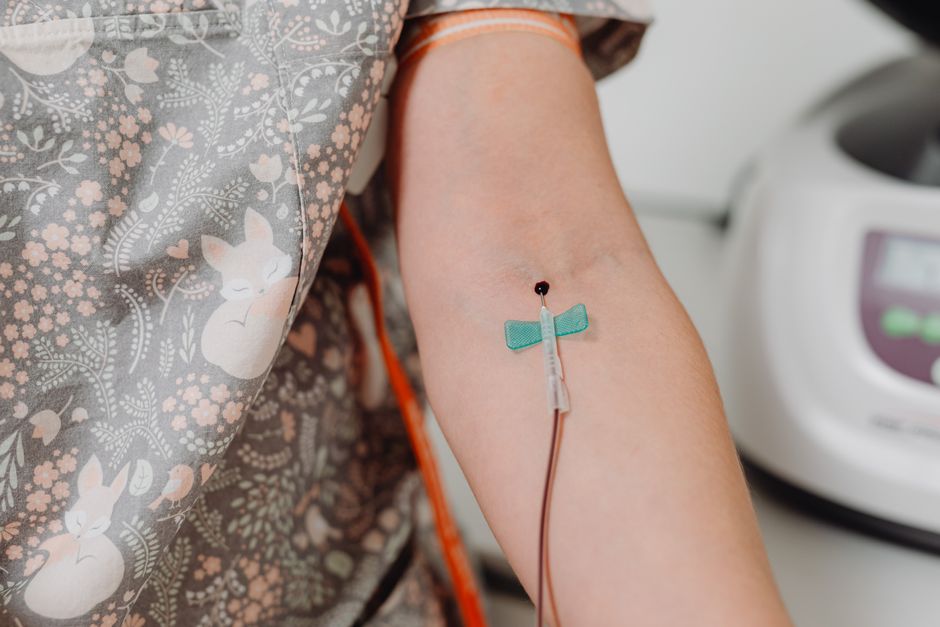
Peripheral blood is the blood that circulates through your heart, arteries, veins, and capillaries — the blood a nurse draws from your arm. It is made of a liquid called plasma, three main types of cells (red blood cells, white blood cells, and platelets), and the proteins and molecules those cells need to work.
That definition sounds simple, but peripheral blood is one of the most informative tissues in the body. A single sample can reveal how your bone marrow is functioning, whether you have an infection, and how well your organs are clearing waste.
What Is Peripheral Blood And What Is It Made Of?
Peripheral blood is the circulating blood found outside the bone marrow, where blood cells are produced. The term exists mainly to separate it from blood forming inside bone marrow and from blood in the organs that store it, like the spleen.
By volume, plasma makes up a little over half of whole blood — roughly 55% — and cells make up the rest. That split is well established. Plasma is about 90% water, with the remaining portion made of dissolved proteins, electrolytes, hormones, nutrients, and waste products.
The cellular portion contains three distinct populations. Red blood cells dominate numerically. White blood cells and platelets are far fewer but carry out immune defense and clotting. Each has a different job, a different lifespan, and a different origin in the bone marrow.
One clarification that surprises people: “peripheral blood” is not a different substance from ordinary blood. It is the same blood, named by location. The distinction matters in medicine because the cells in circulating blood are a sample of what the bone marrow is producing.
What Are the Main Components of Peripheral Blood?
Whole blood separates into layers when spun in a centrifuge, and those layers map onto its components. Plasma sits on top, a thin buffy coat of white cells and platelets sits in the middle, and red cells settle at the bottom.
| Component | Share of Whole Blood | Main Function |
|---|---|---|
| Plasma | About 55% | Carries cells, proteins, nutrients, and waste |
| Red blood cells | About 45% of volume (hematocrit) | Carry oxygen from lungs to tissues |
| White blood cells | Less than 1% | Defend against infection |
| Platelets | Less than 1% | Form clots to stop bleeding |
The 45% figure for red cells is a normal adult hematocrit. It varies by sex, altitude, hydration, and health status, so a result slightly above or below that reference point is not automatically abnormal.
What Does Plasma Do?
Plasma is the transport medium for nearly everything the blood moves. It carries red cells, white cells, and platelets through the vessels, and it dissolves the substances those cells and your tissues exchange.
Its most abundant protein is albumin, which helps hold fluid inside the blood vessels. When albumin levels fall, fluid can leak into surrounding tissue and cause swelling. Plasma also contains globulins, including the antibodies that fight infection, and fibrinogen, a protein central to clotting.
Plasma carries electrolytes like sodium and potassium, hormones from glands to target organs, glucose and amino acids from digestion, and waste products such as urea on their way to the kidneys. It also distributes heat, which is part of how the body regulates temperature.
Plasma is roughly 90% water, so hydration affects its volume and concentration. That is one reason a blood test taken while you are dehydrated can show values that shift once you drink normally.
What Do Red Blood Cells Do?
Red blood cells carry oxygen. Each one is packed with hemoglobin, an iron-containing protein that binds oxygen in the lungs and releases it in tissues where oxygen is low.
These cells have a distinctive shape — a flattened disc with a dent in the center, called a biconcave shape. That shape gives them more surface area for gas exchange and lets them bend to pass through narrow capillaries. Mature red cells lack a nucleus, which leaves more room for hemoglobin.
A red cell circulates for about 120 days before it is broken down, mostly in the spleen and liver. Your bone marrow replaces them continuously to keep the count steady. The hormone erythropoietin, made mainly by the kidneys, signals the marrow to produce more when oxygen levels drop.
Red cells also carry some carbon dioxide back to the lungs, though most carbon dioxide travels dissolved in plasma. That division of labor is easy to overlook.
What Do White Blood Cells Do?
White blood cells defend the body against infection and foreign material. They are far less numerous than red cells — normally a small fraction of the total — but they are the core of the immune response in circulating blood.
There are several types, each with a role. Neutrophils are the most common white cell and respond quickly to bacterial infection. Lymphocytes include the T cells and B cells central to targeting specific invaders and producing antibodies. Monocytes mature into cells that engulf debris and microbes. Eosinophils and basophils are involved in allergic responses and parasite defense.
A white cell count that rises or falls is not a diagnosis on its own. It is a signal that prompts a clinician to look further, because many conditions — infection, inflammation, stress, medication effects, and bone marrow disorders — can change the count.
What Do Platelets Do?
Platelets are small cell fragments, not whole cells, that circulate to stop bleeding. When a blood vessel is injured, platelets stick to the damaged site and clump together to form a temporary plug.
They also release signals that recruit more platelets and trigger the clotting cascade, a chain of protein reactions that produces a fibrin mesh to reinforce the plug. Platelets are produced from large cells in the bone marrow called megakaryocytes, which shed fragments into the bloodstream.
Too few platelets can lead to easy bruising or prolonged bleeding. Too many can raise clotting risk, though the relationship is not always straightforward. Platelet counts are checked routinely before surgery and during certain treatments.
How Is Peripheral Blood Tested?
Peripheral blood is usually collected from a vein in the arm and analyzed in a lab. The most common test is the complete blood count, or CBC, which measures red cell count, hemoglobin, hematocrit, white cell count, and platelet count.
A CBC with differential goes further, breaking the white cells into subtypes. This helps a clinician tell a bacterial infection from a viral one, or spot patterns that suggest other conditions. Results are compared against reference ranges that vary by lab, age, and sex.
Beyond counting cells, blood can be tested for electrolytes, glucose, kidney and liver markers, and specific proteins. Peripheral blood is also the source for many genetic and molecular tests, and for blood donation and transfusion. A peripheral blood smear — a drop of blood spread on a slide and examined under a microscope — lets a trained observer see cell shape and size directly.
One limitation worth knowing: a single abnormal result rarely stands alone. Clinicians interpret blood tests alongside symptoms, history, and repeat testing, because many values shift with hydration, recent illness, and time of day.
Where Do Blood Cells Come From?
Blood cells are made in the bone marrow through a process called hematopoiesis. All of them start from a small pool of stem cells that can develop into any blood cell type.
These stem cells divide and mature into red cells, white cells, and platelets, then enter the bloodstream. The marrow adjusts production based on the body’s needs — more red cells at high altitude, more white cells during infection, more platelets after injury.
This is why peripheral blood is a window into the bone marrow. A change in circulating cells often reflects a change in production, destruction, or distribution somewhere in the body. That connection is the reason a blood test can point to problems far from the vein where the sample was drawn.
Frequently Asked Questions
What is peripheral blood in simple terms?
Peripheral blood is the blood circulating through your body’s blood vessels, as opposed to blood inside the bone marrow where cells are made. It is the blood a lab draws from your arm for testing.
What are the four main components of blood?
Whole blood has four main parts: plasma, red blood cells, white blood cells, and platelets. Plasma is the liquid portion, and the three cell types each carry out distinct jobs.
Is peripheral blood the same as whole blood?
Peripheral blood refers to circulating whole blood, so the terms overlap in everyday use. “Peripheral” describes where the blood is — in the vessels — rather than a different substance.
What does a peripheral blood test check for?
A peripheral blood test, most often a complete blood count, measures red cells, white cells, and platelets, and can check many other markers. Results help clinicians assess infection, anemia, clotting, and overall blood health.
