
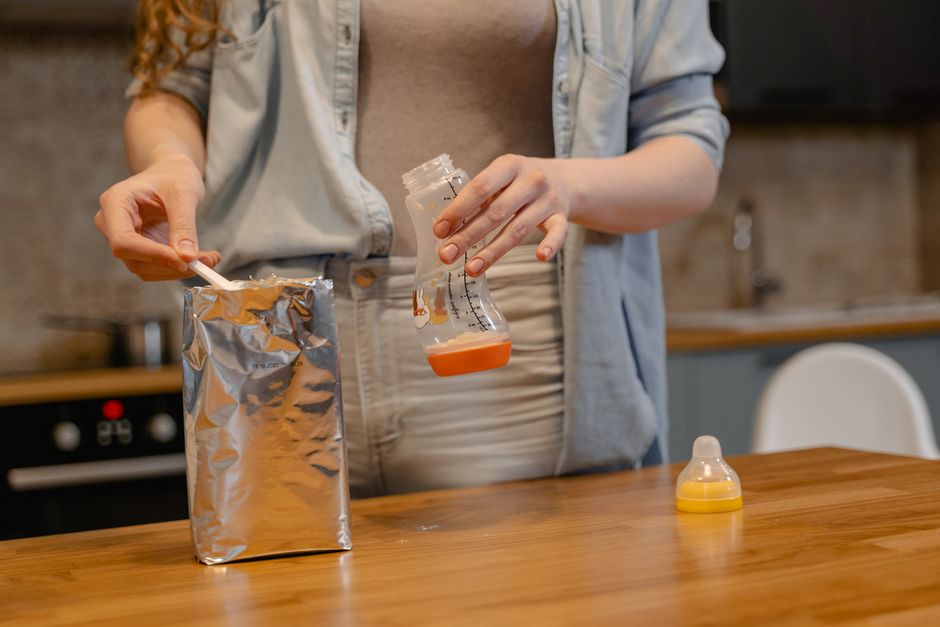
Paced bottle feeding is a method of feeding a baby from a bottle in a way that mimics breastfeeding. It means holding the bottle nearly level, letting the baby set the pace, and pausing often instead of letting milk flow freely. The aim is to let a baby drink until full rather than until the bottle is empty.
The approach is used most often by parents who bottle-feed breast milk or formula, and by families who switch between breast and bottle. It is also taught by many lactation consultants and hospital nurseries as a way to reduce overfeeding. The steps are simple, but they take a little practice.
What Is Paced Bottle Feeding And How To Do It?
Paced bottle feeding is a set of feeding techniques that put the baby in control of how fast and how much they drink. A standard bottle held at a steep angle lets gravity push milk into a baby’s mouth. Paced feeding keeps the bottle flatter so the baby has to actively suck to pull milk out, much like nursing.
The core steps are straightforward:
- Hold the baby in a more upright, semi-seated position rather than lying flat.
- Keep the bottle nearly horizontal, tilted just enough that milk fills the nipple.
- Let the baby suck and pause on their own rhythm. Do not jiggle or nudge the bottle to keep them drinking.
- Pause every so often, or when the baby shows signs of needing a break, and switch sides partway through, as you would in breastfeeding.
- Stop when the baby shows they are full, even if milk remains in the bottle.
The technique is sometimes called “responsive bottle feeding.” The two terms describe the same idea: follow the baby’s cues instead of a schedule or a target volume.
Why Do Parents And Clinicians Use Paced Feeding?
The main reason is to avoid overfeeding. When a bottle flows fast, a baby can swallow more milk than they need before their body signals fullness. Paced feeding slows the flow so those signals have time to register.
There is a physiological basis for this. A baby’s sense of fullness involves stretch receptors in the stomach and hormonal signals that take time to develop and to act. Fast, gravity-driven feeding can outrun those signals. Slowing the pace gives them a chance to work.
Some clinicians also recommend paced feeding for babies who are transitioning between breast and bottle. A bottle that flows very fast can make the breast feel like more work by comparison, and some babies then start to refuse the breast. Paced feeding narrows that gap. This is a widely held clinical view, though it has not been confirmed in large controlled trials.
Does Paced Feeding Reduce Overfeeding And Spit-Up?
Paced feeding is widely used to reduce overfeeding, and the reasoning is sound, but the direct evidence is limited. No large human trials have confirmed that paced feeding alone lowers rates of overfeeding or spit-up compared with standard bottle feeding.
What is well established is that feeding volume and feeding speed affect how much a baby takes in and how comfortably they tolerate a feed. Feeding more slowly and stopping at fullness cues is a reasonable, low-risk approach. Many feeding specialists recommend it. It is fair to describe paced feeding as sensible and widely endorsed rather than proven to prevent specific outcomes.
Spit-up is common in healthy babies and usually reflects normal infant anatomy, not a feeding error. Paced feeding may help some babies, but it is not a treatment for reflux. If a baby is spitting up forcefully, failing to gain weight, or showing distress, that warrants a conversation with a pediatric clinician.
How Do You Hold The Baby And The Bottle?
Position matters as much as pace. Hold the baby fairly upright, supported against your chest or in the crook of your arm, with their head higher than their stomach. This is closer to how a baby nurses and makes it easier for them to pause and breathe.
Hold the bottle almost flat. Tilt it only enough that milk reaches the nipple tip so the baby is not swallowing air. If you tilt it steeply, gravity does the work and the baby loses control of the pace.
Let the baby draw the nipple in themselves rather than pushing it into their mouth. Watch their face. A baby who is done may turn away, slow down, splay their fingers, or let milk pool in their mouth. Those are cues to pause or stop.
Which Bottles And Nipples Work Best?
There is no single bottle proven best for paced feeding. The technique matters more than the equipment. That said, some features make paced feeding easier to manage.
- Slower-flow nipples give the baby more control and make it harder to gulp.
- Nipples with a wider base can encourage a wider latch, closer to breastfeeding.
- Bottles with clear markings help you track how much the baby has taken without pressure to finish.
Marketing around “anti-colic” or “breastfeeding-friendly” bottles outpaces the evidence. No bottle design has been shown in strong trials to prevent colic or to guarantee a smoother breast-to-bottle transition. Choose what your baby tolerates and what you can clean and use easily.
How Much Should A Baby Drink With Paced Feeding?
Paced feeding does not change how much a baby needs. It changes how that amount is delivered. A baby’s intake should be guided by hunger and fullness cues and by their growth, not by a fixed number on the bottle.
General feeding volumes vary widely by age and by whether the baby is drinking breast milk or formula. Breastfed babies typically take smaller, more frequent feeds than formula-fed babies. Your pediatric clinician can advise on expected intake for your baby’s age and weight. No single volume fits every baby, and finishing a bottle is not a goal.
One useful clarification: paced feeding is not the same as restricted feeding. The point is not to give a baby less. It is to let the baby decide when they have had enough.
Can You Use Paced Feeding With Breastfeeding?
Yes, and it is often recommended for families who combine breast and bottle. When a breastfed baby needs a bottle of expressed milk, paced feeding helps keep the bottle experience closer to nursing. That can make it easier to return to the breast.
Some lactation specialists suggest having someone other than the mother give the bottle, especially in the early weeks, so the baby does not associate the mother with a faster, easier feed. This is common clinical advice rather than a proven rule. If you are establishing breastfeeding, talk with a lactation consultant about timing and approach.
Is Paced Feeding Safe For Every Baby?
Paced feeding is generally considered safe for healthy, full-term babies. It is a low-risk approach to ordinary bottle feeding.
Some babies have needs that call for specific guidance. This includes premature infants, babies with feeding difficulties, and babies with certain medical conditions. For these groups, follow the instructions of your baby’s clinical team rather than a general technique. No clinical guidelines set paced feeding as a requirement for these populations, so individualized advice matters.
Never prop a bottle or leave a baby feeding unattended, with or without paced feeding. Always hold the baby during feeds.
Frequently Asked Questions
What is paced bottle feeding?
Paced bottle feeding is a way of bottle-feeding that lets the baby control the pace and amount of milk. It uses a nearly level bottle, an upright position, and frequent pauses to mimic breastfeeding.
How do you do paced bottle feeding step by step?
Hold the baby upright, keep the bottle almost flat, let the baby suck and pause on their own, and stop when they show fullness cues. Switch sides partway through and never nudge the bottle to keep them drinking.
Does paced bottle feeding reduce gas and spit-up?
Some parents report less gas and spit-up, but no large trials have confirmed paced feeding prevents these. It is a reasonable, low-risk approach, and persistent feeding problems should be checked by a clinician.
Can you do paced bottle feeding with formula?
Yes, paced feeding works the same way with formula or expressed breast milk. The technique depends on position and pace, not on what is in the bottle.
