
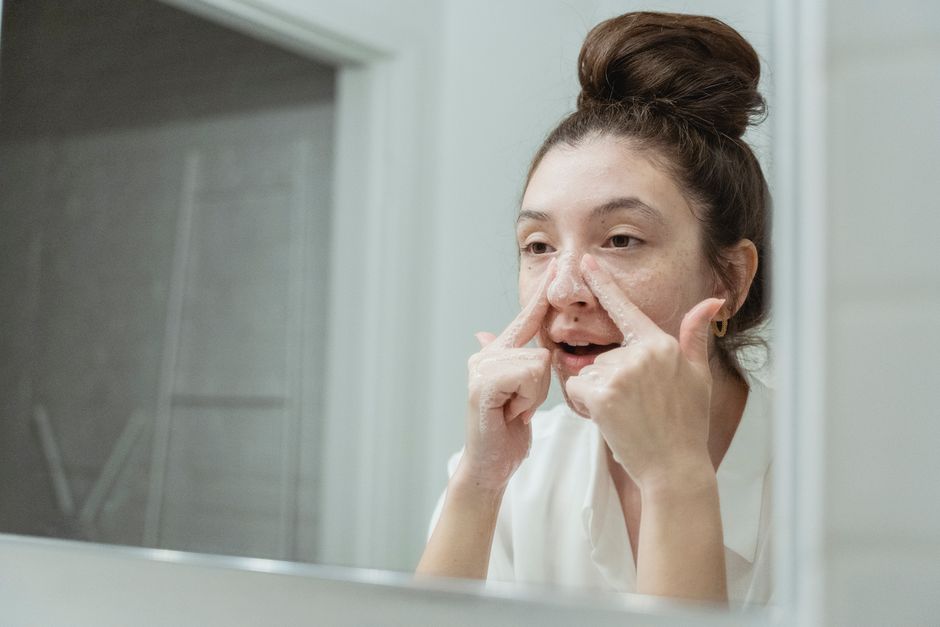
Oily skin happens when your sebaceous glands produce more sebum than your skin needs. Sebum is the natural oil that keeps skin flexible and protects it. When production runs high, that oil rises to the surface and reflects light, which is the shine you see. The main drivers are genetics, hormones, age, and how you care for your skin day to day.
Shine is not a sign of poor hygiene. It is a visible result of normal gland activity running above average. Understanding why your skin produces extra oil makes it easier to manage without stripping your skin, which often backfires.
What Is Oily Skin Causes Shine And Daily Care? Root Causes
Sebaceous glands sit in the skin next to hair follicles and release sebum through the follicle opening. These glands are most dense on the face, scalp, and upper back, which is why those areas tend to look and feel oily first. Sebum travels up the follicle and spreads across the skin surface in a thin film.
Shine comes from how that film interacts with light. A smooth, even layer of oil reflects light directly, like a mirror. Dry skin scatters light in many directions because its surface is rougher. This is why oily skin often looks brighter and more reflective, especially in the T-zone where glands are most concentrated.
Several factors influence how much sebum your glands make:
- Genetics. Gland size and activity levels are largely inherited. If a parent had oily skin, you are more likely to as well.
- Hormones. Androgens, including testosterone, stimulate sebum production. This is why oiliness often begins at puberty and can shift with the menstrual cycle, pregnancy, and menopause.
- Age. Sebum production tends to peak in the late teens and twenties and gradually declines with age. Many people notice their skin becomes less oily in their forties and beyond.
- Environment. Heat and humidity can increase oiliness and make it more noticeable.
- Skin care habits. Harsh cleansing, over-exfoliation, and skipping moisturizer can all trigger more oil production over time.
One point worth clarifying: eating greasy food does not directly make your skin greasy. The oil on your face is made by your own glands, not transferred from food. Diet can influence hormones and inflammation, but the link between specific foods and sebum output is not well established.
Does Oily Skin Mean Your Skin Is Clean or Dirty?
Oily skin is not a cleanliness problem. Sebum production is controlled by hormones and genetics, not by how often you wash. In fact, washing more aggressively often makes oiliness worse.
Here is the mechanism. Your skin has a slightly acidic surface film that helps hold moisture and support a healthy balance of skin bacteria. When you strip that film with strong soaps or frequent washing, your skin loses water. The surface can become dry and irritated even while glands underneath keep producing oil. Some people then wash more to remove the oil, and the cycle repeats.
Over-washing can also leave skin feeling tight and looking shiny at the same time. That combination confuses many people. It usually means the surface is dehydrated while the glands are still active.
Gentle cleansing removes excess oil and debris without stripping the skin. Twice a day is typical. Some people with very oily skin benefit from a third cleanse after heavy sweating, but more than that is rarely helpful.
Which Skin Care Ingredients Actually Help With Oil Control?
A small number of ingredients have solid evidence behind them for reducing oil and shine. Others are widely sold but have little support. Here is how the main options compare.
| Ingredient | What the evidence shows | Notes |
|---|---|---|
| Salicylic acid | Helps clear oil and dead skin cells inside pores | Common in cleansers and toners; can dry skin if overused |
| Niacinamide | Some studies suggest it can reduce sebum production | Generally well tolerated; effects build over weeks |
| Retinoids | Established for acne; may reduce oil over time | Can cause irritation and sun sensitivity at first |
| Clay masks | Temporarily absorb surface oil | Effect lasts hours, not days |
| Oil-free moisturizers | Support the skin barrier without adding heaviness | Useful for most oily skin types |
Salicylic acid is a beta hydroxy acid that dissolves in oil, which lets it work inside the pore lining. This makes it useful for oily skin with clogged pores. It does not switch off sebum production, though. It manages the consequences of oil rather than the source.
Niacinamide has some research behind it for sebum control, but results vary and the effect is modest for most people. Retinoids are well established for acne and can change how skin sheds cells and produces oil over months of use. They are not a quick fix and often cause peeling and redness early on.
No topical product currently available shuts down sebaceous glands permanently. Anyone claiming a product stops oil production entirely is overstating what the evidence supports.
Does Moisturizer Make Oily Skin Worse?
Skipping moisturizer does not reduce oil, and for many people it increases it. When skin loses water, the barrier weakens. Some research suggests that a compromised barrier can be associated with increased sebum output, though the relationship is not fully clear.
The practical answer is to use a light, oil-free moisturizer. Gel formulas and lotions absorb quickly and add water-binding ingredients without a heavy film. Heavier creams and occlusive balms can feel greasy and may worsen shine for people with oily skin.
Apply moisturizer to slightly damp skin after cleansing. This helps trap water in the outer layer. A moisturizer is doing its job when skin feels comfortable, not tight and not slick.
Do Hormones Drive Oily Skin?
Androgens are the main hormonal driver of sebum production. These hormones, which include testosterone, tell sebaceous glands to make more oil. Everyone has androgens, but levels and sensitivity vary.
This explains several patterns. Oiliness often starts at puberty when androgen levels rise. Many women notice more oil and breakouts in the week before a period, when hormone shifts occur. Some hormonal conditions, such as polycystic ovary syndrome, are associated with increased oiliness and acne.
Hormonal acne and oiliness are often treated with approaches that address the hormonal side, including certain prescription medications. These are medical decisions. A dermatologist can assess whether hormonal factors are playing a significant role in your skin.
Adult-onset oiliness that appears suddenly, especially alongside other symptoms like irregular periods or unusual hair growth, is worth discussing with a doctor rather than treating with skin care alone.
What Daily Habits Reduce Shine Without Making Oil Worse?
A consistent, gentle routine does more for oily skin than any single product. The goal is to manage oil without triggering the skin to produce more.
- Cleanse gently twice daily. Use lukewarm water and a mild, non-stripping cleanser. Avoid hot water and harsh scrubs.
- Use a light moisturizer. Choose oil-free, non-comedogenic formulas and apply to damp skin.
- Blot rather than wash during the day. Blotting papers lift surface oil without disturbing the skin barrier.
- Choose oil-free sunscreen. Daily sun protection matters for everyone. Look for formulas labeled oil-free or mattifying.
- Avoid over-exfoliating. Once or twice a week with a gentle acid is usually enough for most people.
- Do not pick or scrub at shine. Friction irritates skin and can increase redness and oiliness.
Makeup and setting powders can reduce visible shine for hours, but they do not change oil production. They are cosmetic tools, not treatments.
One habit that helps more than people expect: resist the urge to wash your face every time it feels oily. Each wash removes oil temporarily, but frequent washing can dry and irritate the skin over time, and the oil returns within hours anyway.
When Should You See a Dermatologist About Oily Skin?
Oily skin itself is not a medical problem. It becomes worth a professional visit when it comes with persistent acne, painful cysts, or sudden changes that do not fit your usual pattern.
See a dermatologist if you have acne that is not improving with over-the-counter products, if you develop deep or painful bumps, or if oiliness appears suddenly in adulthood alongside other symptoms. A dermatologist can also help if oiliness is affecting your quality of life more than you would like, since prescription options exist that over-the-counter products cannot match.
For most people, oily skin is a normal variation that can be managed well with consistent, gentle care. It also has a practical upside: sebum helps protect the skin barrier, and people with oilier skin often show fewer fine lines as they age. That is not a reason to ignore shine, but it is a fair reason not to fight your skin too hard.
Frequently Asked Questions
What causes oily skin on the face?
Oily skin is caused by sebaceous glands producing more sebum than the skin needs, driven mainly by genetics and hormones. Androgens like testosterone stimulate oil production, which is why oiliness often begins at puberty.
Does washing your face more often reduce oily skin?
No, washing too often can make oiliness worse by stripping the skin barrier and causing irritation. Gentle cleansing twice a day is typically enough for most people.
Can diet make oily skin worse?
There is no strong evidence that specific foods directly increase sebum production. Diet may influence hormones and inflammation, but the link to oily skin is not well established.
Does oily skin age better?
People with oilier skin often show fewer fine lines as they age, because sebum helps support the skin barrier and moisture retention. This is a general pattern, not a guarantee for every person.
