
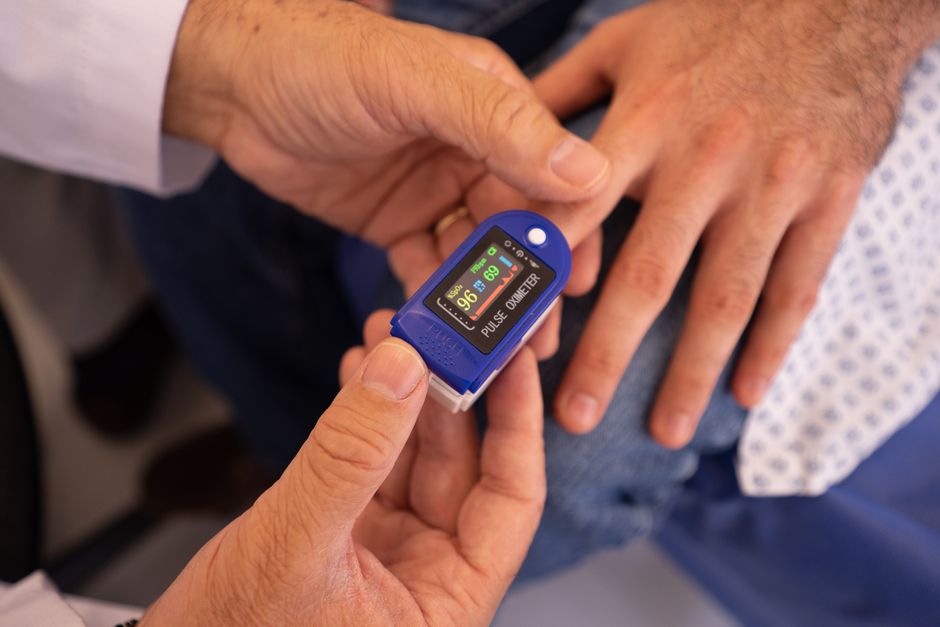
Your blood oxygen level tells you how well your body is moving oxygen from your lungs to your bloodstream. For most healthy people, a normal blood oxygen range is 95% to 100% when measured with a pulse oximeter. A reading of 94% or lower may signal a problem and often warrants a call to your healthcare provider. This measurement, called oxygen saturation, is a quick and reliable window into your respiratory and cardiovascular health.
What Is Normal Blood Oxygen Range?
Normal blood oxygen saturation for a healthy adult at sea level is between 95% and 100%. This applies when you are awake and resting. The number represents the percentage of hemoglobin in your red blood cells that is carrying oxygen.
If you live at high altitude, your normal range may be slightly lower. People who live above 8,000 feet often have readings in the low 90s and feel perfectly fine. That is a normal adaptation to thinner air, not an illness.
A reading of 94% or below is considered low and is called hypoxemia. A single low reading does not always mean something is wrong. But if it stays low, or if you feel short of breath, chest pain, or confusion, seek medical attention promptly.
How Is Blood Oxygen Measured?
Two main tools measure blood oxygen. The most common is a pulse oximeter, the small clip placed on your finger. It shines light through your skin and measures how much light is absorbed by oxygen-rich versus oxygen-poor blood. It is painless and gives a reading in seconds.
Pulse oximeters are convenient but not perfect. They can give falsely low readings if your fingers are cold, if you have nail polish on, or if the device is not positioned correctly. They may also be less accurate in people with darker skin tones, which has been documented in some studies.
The gold standard is an arterial blood gas test. A clinician draws blood from an artery, usually in your wrist, and measures the oxygen pressure directly. This test gives a value called PaO2, and a normal range is roughly 75 to 100 mmHg for a healthy adult. This test is more invasive and is typically used in hospital settings.
What Do Different Oxygen Readings Mean?
Your oxygen saturation reading falls into a few general categories. Each one points to a different level of concern.
- 95% to 100% — Normal for most healthy people.
- 91% to 94% — Borderline low. This may be normal at high altitude but can indicate early respiratory trouble at sea level.
- 86% to 90% — Low. This usually requires medical evaluation, especially if accompanied by symptoms.
- 85% or below — Critically low. This is a medical emergency and requires immediate care.
These numbers are general guidelines. Your personal baseline matters. Someone with chronic lung disease may have a normal baseline of 88% to 92%. For them, a reading of 95% is unusual and not necessarily better. Always interpret readings in the context of your own health history.
What Causes Low Blood Oxygen?
Low blood oxygen happens when something interferes with the transfer of oxygen from the air into your bloodstream. The causes fall into several broad categories.
Lung conditions are the most common cause. Chronic obstructive pulmonary disease (COPD), asthma, pneumonia, and pulmonary fibrosis all reduce how efficiently your lungs exchange oxygen. COVID-19 also became a well-known cause of dangerously low oxygen levels, sometimes without obvious shortness of breath.
Heart conditions can also lower blood oxygen. If your heart cannot pump blood effectively, oxygen-rich blood may not reach your tissues. Congenital heart defects can allow oxygen-poor blood to mix with oxygen-rich blood, which directly lowers saturation.
Anemia reduces the amount of hemoglobin available to carry oxygen. Even with healthy lungs, you cannot transport normal amounts of oxygen if your red blood cell count is low.
Environmental factors matter too. High altitude, carbon monoxide exposure, and certain medications that slow breathing can all cause low readings.
When Should You Call a Doctor About Low Oxygen?
Not every low reading is an emergency, but some situations require immediate attention. Call your doctor or seek urgent care if your oxygen level drops to 94% or below and you have no known chronic lung condition that explains it.
Seek emergency care if a low reading is accompanied by any of these symptoms:
- Severe shortness of breath that does not improve with rest
- Chest pain or pressure
- Blue or gray tint to your lips, skin, or nail beds
- Confusion or difficulty thinking clearly
- Rapid breathing or a racing heart
Do not wait for symptoms to become severe. In some cases, like COVID-19, oxygen levels can drop dangerously low before a person feels noticeably short of breath. This phenomenon, sometimes called “silent hypoxia,” is why home pulse oximeters became widely recommended during the pandemic.
Can You Improve Your Blood Oxygen Level at Home?
If your oxygen level is mildly low and you are otherwise healthy, a few simple actions can help. The most effective is changing your position. Sitting upright rather than lying flat allows your lungs to expand more fully. Some research suggests that lying on your stomach, called prone positioning, improves oxygen exchange in certain situations, though this is primarily studied in hospital settings.
Deep breathing exercises can also help. Slow, deliberate breaths allow more air to reach the lower parts of your lungs. A simple technique is to inhale through your nose for four seconds, hold for four seconds, and exhale through your mouth for four seconds.
Fresh air matters if you are indoors with poor ventilation. Opening a window or stepping outside can increase the oxygen concentration in the air you breathe.
These measures are supportive, not curative. They help in mild situations or while you wait for medical care. They do not treat the underlying cause of low oxygen, and they are not a substitute for professional evaluation.
What About Oxygen Levels During Exercise or Sleep?
Your oxygen level naturally fluctuates during the day. During vigorous exercise, your saturation may stay the same or dip slightly before returning to normal as your breathing adjusts. A healthy person’s oxygen level should recover quickly after exercise.
During sleep, brief dips in oxygen are normal. Most people have occasional short drops that resolve on their own. However, if you have sleep apnea, your oxygen can drop repeatedly and significantly throughout the night. This can strain your heart and brain over time.
If you feel tired despite a full night’s sleep, snore loudly, or have been told you stop breathing during sleep, a home sleep test or overnight oximetry study can help identify the problem. Untreated sleep apnea is linked to high blood pressure, heart disease, and stroke.
Are Home Pulse Oximeters Worth Buying?
A pulse oximeter can be a useful tool for people with chronic lung or heart conditions. It provides objective data that can help you and your doctor track your condition over time. It can also give you peace of mind during a respiratory illness.
For healthy people, the value is less clear. A normal reading can be reassuring, but it is not a substitute for paying attention to how you feel. Shortness of breath, fatigue, or chest discomfort matter even if your oxygen reading looks normal.
If you do buy one, choose a device cleared by the FDA and follow the instructions carefully. Place it on a warm finger, remove nail polish, and wait a few seconds for a stable reading. If the reading seems wrong, reposition the device and try again.
Frequently Asked Questions
What is a dangerous blood oxygen level?
A reading of 85% or below is critically low and requires immediate emergency care. Readings between 86% and 90% are low and should be evaluated by a healthcare provider.
Is 94% blood oxygen normal?
No, 94% is below the normal range of 95% to 100% for most healthy people. If you have no chronic lung condition and your reading stays at 94%, contact your healthcare provider.
Can a pulse oximeter give a false reading?
Yes, pulse oximeters can be inaccurate if your fingers are cold, if you have nail polish or artificial nails, or if the device is not positioned correctly. Some research shows they may also be less accurate on darker skin tones.
What should I do if my oxygen level drops suddenly?
If your oxygen level drops to 94% or below and you feel short of breath, have chest pain, or feel confused, seek emergency medical care immediately. Do not wait to see if it improves on its own.
