
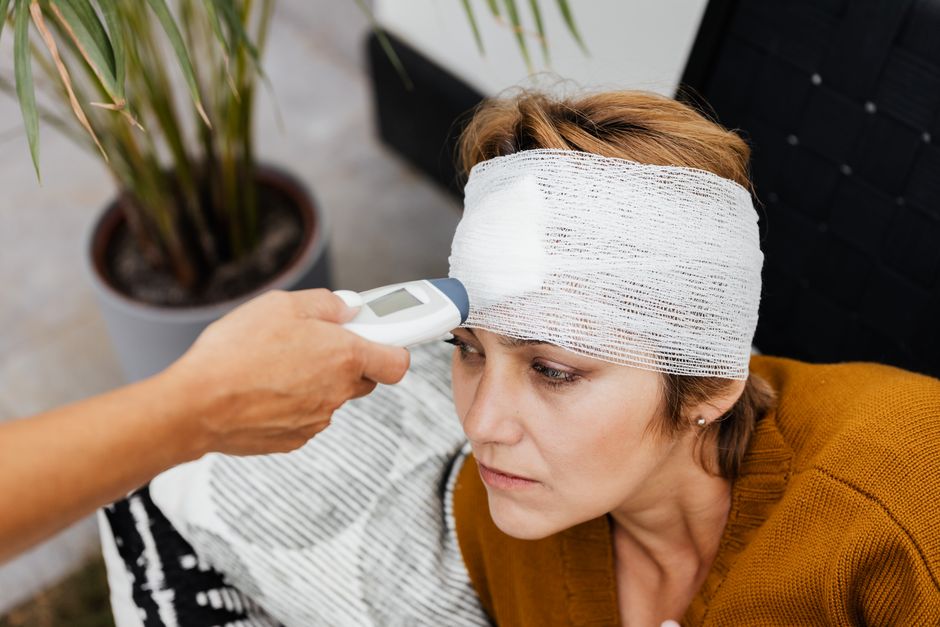
Neurogenic fever is a rise in body temperature caused by damage to the central nervous system rather than by infection. It happens when the brain’s temperature-regulating center — a region called the hypothalamus — is injured or sends faulty signals after a neurological event. It is most often seen after severe traumatic brain injury, certain types of stroke, and some neurosurgical procedures. Because infection is a far more common cause of fever in hospitalized patients, neurogenic fever is usually a diagnosis of exclusion: doctors confirm it only after ruling out infectious and other known causes.
What Is Neurogenic Fever?
Neurogenic fever is defined as an elevated core body temperature that occurs as a direct result of central nervous system injury, without an infectious source. It is sometimes called central fever.
The hypothalamus sits at the base of the brain and acts as the body’s thermostat. It balances heat production against heat loss to keep core temperature within a narrow range, generally around 36.5 to 37.5 degrees Celsius (about 97.7 to 99.5 degrees Fahrenheit). When that region or its connecting pathways are damaged, the thermostat can lose its accuracy and set a higher temperature.
This is not the same as fever from an infection. In infection, the immune system releases signaling molecules that tell the hypothalamus to raise the body’s temperature set point. In neurogenic fever, the problem is the thermostat itself, or the nerve pathways that carry its signals.
One clarification that matters: neurogenic fever is not a single disease. It is a category of fever defined by its cause. That means the underlying brain injury determines how it behaves, how long it lasts, and how it is managed.
What Causes Neurogenic Fever?
The common thread in every cause is disruption to the hypothalamus or the pathways that connect it to the rest of the body. Several types of neurological injury can do this.
- Severe traumatic brain injury. This is one of the most common settings. Damage to the hypothalamus or its blood supply can disturb temperature control.
- Subarachnoid hemorrhage. Bleeding around the brain, often from a ruptured aneurysm, can irritate or injure temperature-regulating structures.
- Intracerebral hemorrhage. Bleeding into brain tissue, particularly near the hypothalamus, can impair the thermostat.
- Ischemic stroke. A blockage that cuts off blood flow to temperature-regulating areas can cause central fever.
- Brain tumors. Tumors that press on or invade the hypothalamus or nearby regions can disrupt temperature control.
- Neurosurgery. Procedures near the hypothalamus or brainstem can temporarily or permanently affect temperature regulation.
- Central nervous system infections and other conditions. These are usually infectious causes, but they can also injure the temperature-control system directly.
Damage to the hypothalamus is the central mechanism in most cases. The specific injury matters less than where it lands. An injury near the hypothalamus is more likely to produce central fever than one in a distant part of the brain.
How Is Neurogenic Fever Different From Infectious Fever?
The distinction matters because the treatments are completely different. Giving antibiotics for a non-infectious fever does nothing, and missing a real infection can be dangerous.
Doctors look at several features to tell them apart. No single feature is perfect, and the evidence on how well these patterns hold up is mixed. Still, certain patterns are used in practice.
| Feature | Neurogenic fever | Infectious fever |
|---|---|---|
| Source of the problem | Brain injury to the thermostat | Immune response to a pathogen |
| Typical pattern | Often sustained and resistant to standard fever medicine | Often responds to fever-reducing medicine |
| Heart rate | May not rise in proportion to temperature | Usually rises with temperature |
| Sweating | Often absent or reduced | Often present |
| Response to antibiotics | None, because there is no infection | Usually improves if the right antibiotic is used |
These patterns are clues, not proof. A patient can have both an infection and a brain injury at the same time. That is exactly why the diagnosis is made carefully.





How Is Neurogenic Fever Diagnosed?
Diagnosis is a process of elimination. There is no single test that confirms neurogenic fever. Doctors first look hard for every other cause of fever, and only then consider a central source.
The workup typically includes:
- A full review of the patient’s neurological injury and imaging, to see whether temperature-regulating areas were affected.
- Blood tests, urine tests, and cultures to look for infection.
- Chest imaging to check for pneumonia, a common cause of fever in hospitalized patients.
- Review of medications, since some drugs can cause fever.
- Assessment for blood clots, which can also raise temperature.
If all of those come back negative, and the fever pattern fits a central cause, doctors may diagnose neurogenic fever. The timing helps too. Central fever often appears within the first days after a brain injury and can persist longer than an infectious fever would.
This is a diagnosis that requires patience. Rushing to it can miss a treatable infection. Ruling out an infection thoroughly is the safer path.
How Is Neurogenic Fever Treated?
Treatment focuses on controlling the temperature and protecting the brain from the harm that sustained high temperature can cause. There is no drug that specifically reverses neurogenic fever.
Cooling is the main approach. Methods include:
- Fever-reducing medications such as acetaminophen. These often work less well for central fever than for infectious fever, but they are still commonly tried.
- Surface cooling, using cooling blankets or ice packs.
- Intravascular cooling, in which a device inside a blood vessel controls temperature more precisely. This is used in intensive care settings for patients who need tight control.
- Treating the underlying brain injury, which is the only way to address the root cause.
The evidence on which cooling method works best is limited. Much of the practice is based on clinical experience and the general principle that controlling high temperature after brain injury is reasonable. Large trials comparing these methods specifically for neurogenic fever are lacking.
Some clinicians also use medications that affect the brain’s temperature signals, but this is not supported by strong trial evidence. It is best described as a practice used in some centers rather than an established standard.
Why Does Controlling the Temperature Matter?
Sustained high temperature is harmful to an injured brain. It raises the brain’s metabolic demand and can worsen secondary damage after the initial injury.
This is why fever control is taken seriously in neurointensive care, regardless of the cause. The goal is not just comfort. It is protecting brain tissue that is already under stress.
How much fever control improves long-term outcomes is an area where the evidence is still developing. Some studies suggest that aggressive temperature control may help certain patients, but results vary and the picture is not settled. What is clear is that uncontrolled high fever after brain injury is a concern that clinicians work to manage.
What Should Families and Patients Know?
If a loved one develops a fever after a brain injury or neurosurgery, the first question is always whether there is an infection. That is the right first question, because infections are common and treatable.
Neurogenic fever becomes more likely when infections have been ruled out and the fever pattern fits a central cause. It is not a sign that the care team has failed. It is a known complication of certain brain injuries.
Families can ask useful questions: Has an infection been ruled out? What is being done to control the temperature? Is the underlying brain injury being treated? These questions help everyone stay focused on what matters.
It also helps to know that neurogenic fever can last longer than a typical infectious fever. It may persist for days or weeks depending on the injury. That timeline can be frustrating, but it reflects the nature of the underlying damage.
Frequently Asked Questions
What is neurogenic fever?
Neurogenic fever is an elevated body temperature caused by damage to the brain’s temperature-regulating center, not by infection. It is diagnosed only after other causes of fever have been ruled out.
What causes neurogenic fever?
It is caused by injury to the hypothalamus or its nerve pathways, most often from severe traumatic brain injury, subarachnoid hemorrhage, intracerebral hemorrhage, or neurosurgery. Any injury near the temperature-regulating areas of the brain can trigger it.
How is neurogenic fever diagnosed?
It is diagnosed by ruling out infection and other known causes of fever through blood tests, cultures, and imaging. Doctors then consider a central cause if the fever pattern fits and the brain injury involved temperature-regulating areas.
How is neurogenic fever treated?
Treatment centers on cooling the body with medications, cooling blankets, or intravascular cooling devices, along with treating the underlying brain injury. There is no drug that specifically reverses neurogenic fever.
