
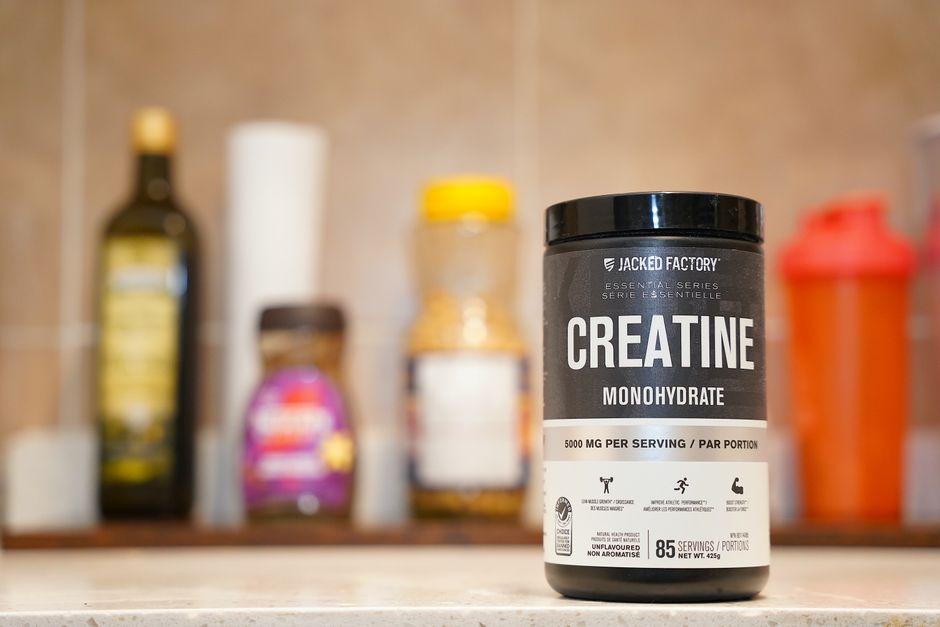
Creatine is a compound your body makes on its own and gets from food, mostly meat and fish. “Natural creatine” refers to the creatine already present in your body and diet, as opposed to the synthetic or fermented creatine sold as a supplement. Your liver, kidneys, and pancreas produce it from three amino acids, and your muscles store it to help power short bursts of intense movement.
What Is Natural Creatine?
Natural creatine is the same molecule whether your body makes it or you eat it. There is no chemical difference between the creatine in a steak and the creatine in a supplement tub. The word “natural” describes the source, not a different substance.
Your body produces roughly half of the creatine it needs and relies on food for the rest. About 95% of the creatine in your body sits in skeletal muscle, stored as a compound called phosphocreatine. That stored form helps regenerate a molecule called ATP, which is the basic energy currency your cells run on during short, hard efforts like sprinting or lifting a heavy weight.
Creatine is one of the most studied compounds in sports nutrition. The research base on its role in muscle energy is large and consistent. Claims that go beyond muscle energy — for skin, mood, or general “vitality” — rest on much thinner evidence, and it is worth separating those from the well-established physiology.
How Does Your Body Make and Store Creatine?
Your body builds creatine in a stepwise process using the amino acids glycine, arginine, and methionine. The liver does most of this work, with the kidneys and pancreas contributing. The finished creatine travels through your blood and is taken up by muscle cells, where it gets locked in as phosphocreatine.
This internal production is fairly stable from person to person. What varies a lot is how much creatine your muscles already hold. People who eat little meat and fish tend to start with lower muscle stores. People who eat a lot of both tend to sit higher. This is part of why the same supplement dose can produce different responses in different people.
Muscle creatine stores also drop with age and with low physical activity. That decline is one reason older adults and people who avoid animal foods sometimes show more noticeable changes when they add creatine from food or supplements. The physiology here is well understood. The size of any real-world benefit is a separate question, and it depends heavily on the person and the context.
Which Foods Naturally Contain Creatine?
Creatine comes almost entirely from animal foods. Herring, salmon, tuna, beef, pork, and chicken are the main dietary sources. The amount varies by species and cut, and cooking can reduce it somewhat because creatine breaks down with heat.
As a rough reference, a serving of fresh fish or red meat provides somewhere in the range of a few hundred milligrams to around a gram of creatine, depending on the type and portion. Getting a meaningful amount from food alone is possible for regular meat and fish eaters. It is very difficult for vegetarians and vegans, because plants contain essentially no creatine.
This is the key practical distinction. If you eat animal foods most days, your diet already supplies creatine. If you avoid them, your body still makes creatine on its own, but your muscle stores tend to run lower than those of regular meat eaters.
One clarification that surprises people: “natural” creatine supplements are not chemically different from other creatine supplements. Most creatine monohydrate is manufactured, and the label “natural” on a supplement usually refers to marketing positioning rather than a distinct molecule or a proven advantage.


Natural Creatine vs. Creatine Supplements: What’s the Difference?
The molecule is identical. The difference is dose, convenience, and cost. Food delivers creatine alongside protein, fat, and other nutrients in modest amounts. Supplements deliver a concentrated dose with nothing else attached.
Creatine monohydrate is the form with the largest body of research behind it. Other forms sold at higher prices — creatine hydrochloride, buffered creatine, and various blends — have far less evidence showing they work better. Some have little to no direct human trial data comparing them head to head with monohydrate. Paying more for these forms is not supported by strong evidence.
For people who want to increase muscle creatine stores, supplements are simply a more efficient delivery method than food. For people who eat meat and fish regularly and are not chasing a specific performance goal, food may be enough. Neither route is inherently “better” — they differ in practicality.
Does Natural Creatine Improve Exercise Performance?
Creatine supplementation can increase muscle phosphocreatine stores, and higher stores support performance in short, high-intensity efforts. This is one of the better-supported findings in sports nutrition. Research has fairly consistently shown benefits for repeated bouts of brief, intense activity such as sprinting and resistance training.
The effect is not universal. People who already have high muscle creatine — typically regular meat eaters — tend to see smaller gains from adding more. Vegetarians often respond more, because they start from a lower baseline. Benefits for long-duration endurance exercise are much less clear, and the evidence does not strongly support creatine as an endurance aid.
It is worth being honest about the limits. Improvements are generally modest and specific to certain types of effort. No supplement replaces training, sleep, and adequate protein. And the research is largely on supplements, not on food-sourced creatine specifically, so claims about “natural” dietary creatine producing the same performance effects should be treated with caution.
Is Natural Creatine Safe?
Creatine monohydrate has a strong safety record in healthy adults when used at studied doses. Reviews of the research have generally found no evidence of kidney or liver damage in healthy people taking creatine. The kidneys do process creatine’s breakdown product, creatinine, which is why people with existing kidney disease should talk to a doctor before using it.
Common side effects are mild. Some people report stomach discomfort, and taking it with food or splitting the dose can help. Early concerns about dehydration and muscle cramping have not held up well in the research. Weight gain of a kilogram or two is common and comes mostly from water drawn into muscle, not fat.
The evidence in some groups is genuinely limited. There are no established clinical guidelines for creatine use in pregnant or breastfeeding women, and it should not be assumed safe there. Data in children and adolescents is sparse, and use in minors should be discussed with a clinician rather than assumed appropriate. People with kidney conditions, or those taking medications that affect the kidneys, should get medical advice first.
Do You Need a Creatine Supplement If You Eat Meat?
Probably not for basic health. If you eat meat or fish most days, your diet and your body’s own production likely cover your needs for normal function. Your body does not require dietary creatine to be healthy — it makes what it needs, and the amino acids used to build it come from protein in your diet.
A supplement makes more sense if you have a specific goal that depends on high muscle creatine stores, such as certain strength or sprint training. Even then, the added benefit tends to be smaller for regular meat eaters than for vegetarians. For vegans and vegetarians, food provides essentially no creatine, so a supplement is the only practical way to raise muscle stores above what the body makes on its own.
The simplest honest summary: natural creatine from food is part of a normal diet for many people. Supplements are a tool with real but specific benefits, not a requirement. If you are considering one and you have any health condition or take regular medication, check with your clinician first.
Frequently Asked Questions
What is natural creatine?
Natural creatine is the creatine your body produces on its own and gets from animal foods like meat and fish. It is the same molecule found in creatine supplements.
Is natural creatine the same as creatine monohydrate?
The creatine molecule is identical; creatine monohydrate is simply creatine bound to a water molecule in supplement form. Most “natural” creatine supplements are not chemically different from standard ones.
Which foods are highest in natural creatine?
Herring, salmon, tuna, beef, pork, and chicken are the main dietary sources. Plants contain essentially no creatine, so vegetarians and vegans rely mostly on what their bodies make.
Is natural creatine safe for kidneys?
Creatine monohydrate has a strong safety record in healthy adults at studied doses, with no evidence of kidney damage in healthy people. People with existing kidney disease should talk to a doctor before using it.
