
Your “burning fat heart rate” is a specific intensity range where your body draws a larger share of its energy from fat than from carbohydrates. It usually falls somewhere between 60% and 70% of your maximum heart rate. At that pace you can still talk, but you’re working harder than a stroll.
The idea comes from exercise physiology, and the basic science is real. Fat and carbohydrate are both burned at almost every intensity. What changes is the mix. The confusion starts when people assume this range is the only place fat loss happens. It isn’t, and that gap between the science and the marketing is where most of the misleading advice lives.
What Does “Burning Fat Heart Rate” Actually Mean?
It refers to the exercise intensity where the proportion of energy coming from fat is near its peak. As you exercise harder, your body shifts toward carbohydrate. Go easier, and fat’s share rises again.
Here is the part most people miss. The percentage of energy from fat and the total amount of fat burned are two different numbers. At a gentle pace, a high share of your fuel is fat, but you’re burning few calories overall. At a harder pace, fat’s share drops, yet you may burn more fat in absolute terms because total energy use is higher. Research on substrate use during exercise has shown this pattern consistently. The “fat-burning zone” tells you about proportions, not about how much fat you’ll lose.
Your body stores fat as triglycerides in fat tissue. Hormones, mainly insulin and the catecholamines, control whether fat is released and oxidized. During low-to-moderate exercise, catecholamine levels rise modestly, blood flow to fat tissue increases, and free fatty acids become the dominant fuel for working muscles. Push harder and carbohydrate, stored as glycogen in muscle and liver, takes over a larger role. That crossover is a normal, well-documented physiological response, not a switch you can flip for better results.
How Do I Find My Burning Fat Heart Rate?
You can estimate it from your maximum heart rate. A common approach is to take 60% to 70% of your estimated maximum. The widely used formula for maximum heart rate is 220 minus your age. So a 50-year-old would estimate a maximum of about 170 beats per minute, putting the fat-burning range near 102 to 119 bpm.
Be aware of the limits. The 220-minus-age formula is a rough population average. Individual maximum heart rates vary widely at the same age, and the formula tends to overestimate for some people and underestimate for others. Some researchers have proposed alternative equations, but none is precise for an individual. Your true range is best found by feel or, if you want accuracy, through a supervised exercise test.
A Practical Way to Gauge It
The talk test is simple and reasonably reliable. At a fat-burning intensity, you can hold a conversation but wouldn’t want to sing. If you’re gasping out single words, you’re above the range. If you could chat comfortably for a long time, you’re below it.
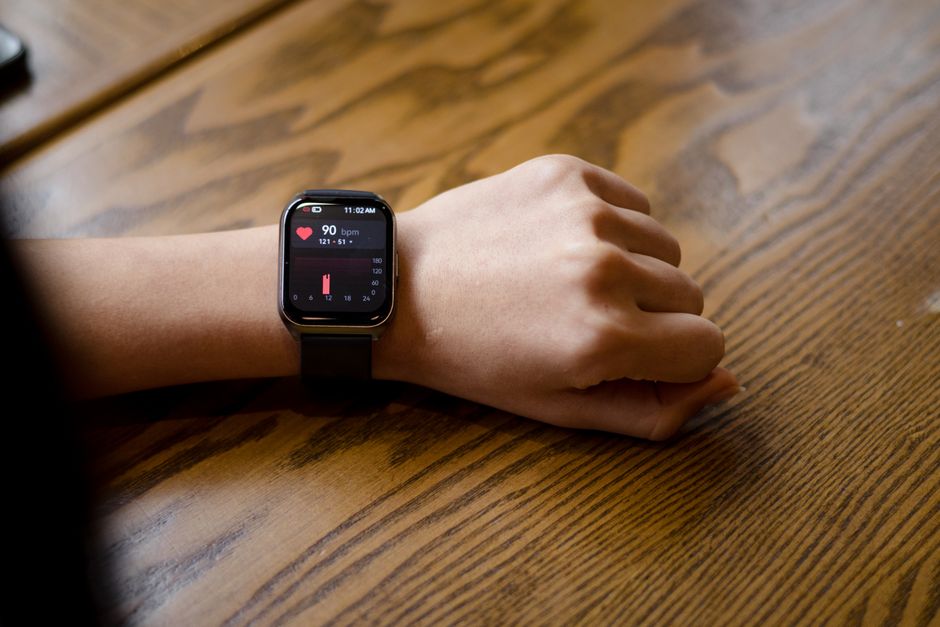
Heart rate monitors and fitness watches give useful feedback, but treat the “fat burn” label on the screen as a rough guide. Optical wrist sensors can drift during exercise, and the zone boundaries are based on population averages, not your individual physiology.
Does Training in This Zone Burn More Fat?
Not necessarily, and this is where the marketing gets ahead of the evidence. Training at a lower intensity does rely more on fat during the session. But total fat loss over weeks and months depends mostly on overall energy balance, not on the fuel mix during any single workout.
When researchers compare moderate-intensity continuous training with higher-intensity interval training, the results for body fat reduction are often similar, and sometimes interval training comes out slightly ahead for certain outcomes. The evidence is mixed and depends on the population and the program. What the research does not support is the claim that you must stay in a narrow “fat-burning zone” to lose fat. Higher intensities burn more total calories per minute, and that matters for energy balance.
There’s also an after-effect worth knowing about. Harder exercise can raise your metabolic rate for a period afterward, which adds a small amount to total energy expenditure. The size of this effect is often overstated online. It’s real but modest, and it doesn’t make high-intensity work a shortcut around diet.




What Determines How Much Fat You Actually Lose?
Energy balance is the dominant factor. Fat loss happens when you take in fewer calories than you expend over time. Exercise contributes to that deficit, but it’s one input among several, and diet usually has more leverage.
Other things shape the picture too:
- Total calorie burn across the day, including exercise, daily movement, and basic body functions.
- Diet quality and portion size, which drive how many calories you take in.
- Muscle mass, which affects resting energy use over the long term.
- Sleep and stress, which influence appetite and eating behavior.
- Genetics and hormones, which affect where and how readily you store and release fat.
No heart rate zone overrides these fundamentals. A workout that keeps you in a “fat-burning” range still needs to fit inside a broader plan that manages food intake and total activity.
Is the Fat-Burning Zone Still Worth Using?
Yes, for reasons that have little to do with the label. Lower-intensity work is easier to sustain, gentler on joints, and well suited to building an aerobic base. It’s a sensible choice for beginners, for people returning after a break, and for anyone doing long sessions. The American College of Sports Medicine and other public health bodies emphasize regular moderate-intensity activity for general health, and that guidance holds up well.
Moderate-intensity activity also carries cardiovascular and metabolic benefits that go beyond fat loss. Regular aerobic exercise supports heart health, blood pressure, and blood sugar control. Those are stronger reasons to train than the fat-burn percentage on a watch.
A balanced routine often mixes intensities. Easy sessions build endurance. Harder sessions improve fitness and burn more calories per minute. Both have a place, and neither cancels the other out. If you have a heart condition, take medication that affects heart rate, or are new to exercise, talk with a clinician before pushing intensity. Some common medications, including certain blood pressure drugs, lower heart rate and make zone estimates unreliable.
What Is the Difference Between Fat Burn and Cardio Zones?
Fitness devices usually split intensity into zones, and the “fat burn” zone sits below the “cardio” and “peak” zones. The table below shows the typical structure. These are general ranges, not personal prescriptions.
| Zone | Approx. % of Max Heart Rate | Main Fuel Emphasis | Talk Test |
|---|---|---|---|
| Very light | 50–60% | Mostly fat | Easy conversation |
| Fat burn (moderate) | 60–70% | High fat share | Can talk, can’t sing |
| Cardio (vigorous) | 70–85% | Shifting toward carbohydrate | Short sentences only |
| Peak | 85%+ | Mostly carbohydrate | Hard to speak |
The boundaries are approximate and vary between devices and formulas. The key point is that moving up a zone doesn’t stop fat burning. It changes the mix and raises total calorie use. Fat is still being oxidized at higher intensities, just at a smaller share of the total.
The Bottom Line on Fat-Burning Heart Rate
The fat-burning heart rate is a real physiological concept, usually around 60% to 70% of your estimated maximum heart rate. It marks where fat supplies the largest share of your energy during exercise. It does not mark the only intensity that burns fat, and it does not guarantee fat loss.
Use it as one tool among several. It’s a comfortable, sustainable pace that supports aerobic fitness and is easy to stick with. Pair it with harder sessions, a sensible diet, and consistent daily movement. That combination, not a single heart rate number, is what drives results.
Frequently Asked Questions
What heart rate burns the most fat?
Fat supplies the largest share of energy at roughly 60% to 70% of your maximum heart rate. Total fat burned can still be higher at harder intensities because you use more energy overall.
How do I calculate my fat-burning heart rate?
Estimate your maximum heart rate as 220 minus your age, then take 60% to 70% of that number. This is a rough population estimate, not a precise personal target.
Is it true you only burn fat in the fat-burning zone?
No. Your body burns a mix of fat and carbohydrate at nearly every intensity, including high-intensity exercise. The zone only changes the proportion, not whether fat is used.
Should I do only low-intensity exercise to lose fat?
Not necessarily. Fat loss depends mainly on overall energy balance, and a mix of easy and harder sessions is generally more sustainable than staying in one narrow range.
