
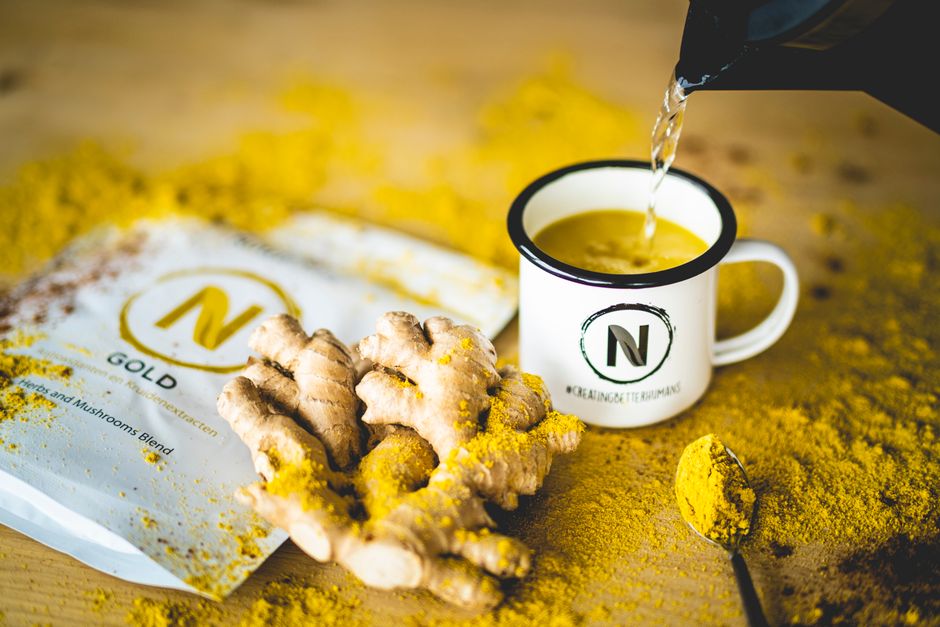
Mushroom coffee is regular coffee blended with powdered medicinal mushrooms, most often lion’s mane, chaga, reishi, or cordyceps. It usually contains less caffeine than a standard cup because the mushroom powder replaces part of the coffee grounds. The mushrooms themselves are not the button mushrooms from the grocery store — they are dried, ground fungi chosen for compounds studied in laboratory and animal research.
The idea behind it is simple. You keep the coffee ritual and the taste, and you add mushrooms that have a long history of use in traditional Chinese medicine. What the marketing often skips is how thin the human evidence is for most of the health claims attached to these products.
What Is Mushroom Coffee Made Of?
Most brands start with instant coffee or finely ground coffee and mix in dried mushroom extract. The mushroom portion is usually small by weight. A typical serving might contain somewhere between 500 milligrams and 2 grams of mushroom powder, though formulations vary widely and there is no standard.
The four fungi you will see most often are:
- Lion’s mane (Hericium erinaceus) — studied for nerve growth factor and cognitive effects
- Chaga (Inonotus obliquus) — a birch tree fungus rich in melanin and antioxidants
- Reishi (Ganoderma lucidum) — used traditionally for immune and stress support
- Cordyceps (usually Cordyceps militaris in commercial products) — associated with exercise and oxygen use
An important detail most buyers miss: many products use mycelium grown on grain, not the mushroom fruiting body. Mycelium is the root-like network of the fungus. Fruiting body is the part that looks like a mushroom. The two have different chemical profiles, and some research suggests the fruiting body contains higher levels of certain beneficial compounds. Labels that say “mushroom” do not always mean fruiting body. If that distinction matters to you, look for products that state “100% fruiting body” on the label.
How Much Caffeine Is in Mushroom Coffee?
It depends entirely on how much real coffee the product contains. Mushroom coffee is not caffeine-free unless it is made without coffee at all.
Some blends use a full dose of coffee and simply add mushroom powder, which means caffeine content is close to a normal cup — roughly 95 milligrams for an 8-ounce brewed coffee, according to USDA data. Others replace half or more of the coffee with mushroom powder, cutting caffeine substantially. A few products are mushroom-only and contain no caffeine.
Because there is no standard recipe, you cannot assume a mushroom coffee has less caffeine than regular coffee. Read the label. If caffeine intake matters to you — for sleep, anxiety, or blood pressure — the amount per serving is the number that counts, not the word “mushroom” on the front of the package.
Does Mushroom Coffee Have Proven Health Benefits?
No large, long-term human trials have confirmed the health benefits commonly claimed for mushroom coffee. This is the honest position, and it is worth stating plainly because the marketing around these products suggests otherwise.
What exists is a mix of laboratory studies, animal research, and a small number of human trials — mostly small, short, and conducted on individual mushroom extracts rather than on mushroom coffee as a product.
For lion’s mane, some small human studies have looked at cognitive function in older adults with mild impairment. Results have been mixed, and the studies were small. That is not the same as evidence that drinking lion’s mane coffee improves memory or focus in healthy adults.
For cordyceps, some research in athletes suggests possible effects on exercise performance, but findings are inconsistent and study sizes are small. For reishi and chaga, most of the evidence comes from cell and animal studies. Those are useful for generating hypotheses. They are not proof of benefit in people.
One clarification worth making: a compound showing activity in a petri dish or a mouse does not mean it will do the same thing in a human body. Absorption, dose, and metabolism all change the picture. This gap between lab findings and real-world outcomes is where most mushroom coffee claims quietly fall apart.



Is Mushroom Coffee Safe?
For most healthy adults, drinking mushroom coffee in normal amounts is unlikely to cause harm. That is a reasonable statement based on the long history of culinary and traditional use of these fungi. It is not the same as saying the products have been tested for safety in clinical trials, because most have not.
Some points worth knowing:
- Reishi and other mushrooms can interact with blood-thinning medications and immunosuppressants. If you take either, talk to your doctor before using these products.
- People with autoimmune conditions are often advised to avoid immune-stimulating supplements. Whether mushroom coffee falls into that category is not well studied, so caution is reasonable.
- Mushroom extracts can cause digestive upset in some people, particularly at higher doses.
- If you are pregnant or breastfeeding, there are no clinical guidelines establishing safe doses of these mushroom extracts. The cautious approach is to avoid them or ask your obstetric provider.
There is also a quality issue. Independent testing has found that some mushroom supplements contain little or none of the mushroom listed on the label, or contain fillers like grain starch from the growing medium. This is a manufacturing problem, not a property of mushrooms themselves, but it affects what you actually get.
How Does Mushroom Coffee Compare to Regular Coffee?
The comparison is less dramatic than marketing suggests. Here is how the two stack up on the factors that usually matter.
| Factor | Regular coffee | Mushroom coffee |
|---|---|---|
| Caffeine | About 95 mg per 8 oz cup | Varies — from zero to near-regular, depending on the blend |
| Evidence for health benefits | Strong. Linked to lower risk of several chronic diseases in large observational studies | Weak. Mostly lab and animal data, few human trials |
| Taste | Familiar coffee flavor | Similar, sometimes earthier or slightly bitter |
| Cost | Low | Often several times higher per serving |
| Standardization | Consistent | Highly variable between brands |
The coffee itself is the part with the strongest evidence behind it. Large observational studies have consistently linked regular coffee consumption to lower risks of type 2 diabetes, Parkinson’s disease, and some liver conditions. Those findings apply to coffee, not to the mushroom powders added to it.
If you enjoy mushroom coffee and it helps you drink less caffeine, that is a legitimate reason to use it. Just do not assume the mushroom part is doing heavy lifting that the research does not support.
Who Might Want to Try It — and Who Should Skip It
Mushroom coffee tends to appeal to people who want to reduce caffeine without giving up the ritual, or who are curious about functional mushrooms. If either describes you, trying it is low-risk for most healthy adults.
It may be worth avoiding or discussing with a doctor if you:
- Take blood thinners, immunosuppressants, or medications for autoimmune conditions
- Are pregnant or breastfeeding
- Have a known allergy to mushrooms or molds
- Are sensitive to caffeine and cannot verify the caffeine content of a specific product
One practical note on cost. Mushroom coffee often runs several times the price of regular coffee per cup. Whether that is worth it depends on what you are actually buying it for. If it is for the taste and the lower caffeine, fine. If it is for specific health outcomes, the evidence does not currently justify the premium.
Frequently Asked Questions
Is mushroom coffee actually coffee?
Usually yes — it is regular coffee mixed with powdered mushroom extract, though some products contain no coffee at all. Check the ingredient list to know which one you have.
Does mushroom coffee have less caffeine than regular coffee?
Not always. Some blends contain nearly the same caffeine as a standard cup, while others cut it substantially or remove it entirely. The caffeine content depends on how much real coffee is in the product, so read the label rather than assuming.
Can mushroom coffee improve memory or focus?
No large human trials have confirmed this. Some small studies on lion’s mane extract suggest possible cognitive effects in older adults with mild impairment, but results are mixed and the studies were small.
Is it safe to drink mushroom coffee every day?
For most healthy adults, daily use in normal amounts is unlikely to cause harm, based on the long history of culinary and traditional use of these fungi. People on blood thinners or immunosuppressants, and those who are pregnant or breastfeeding, should check with a doctor first.
