
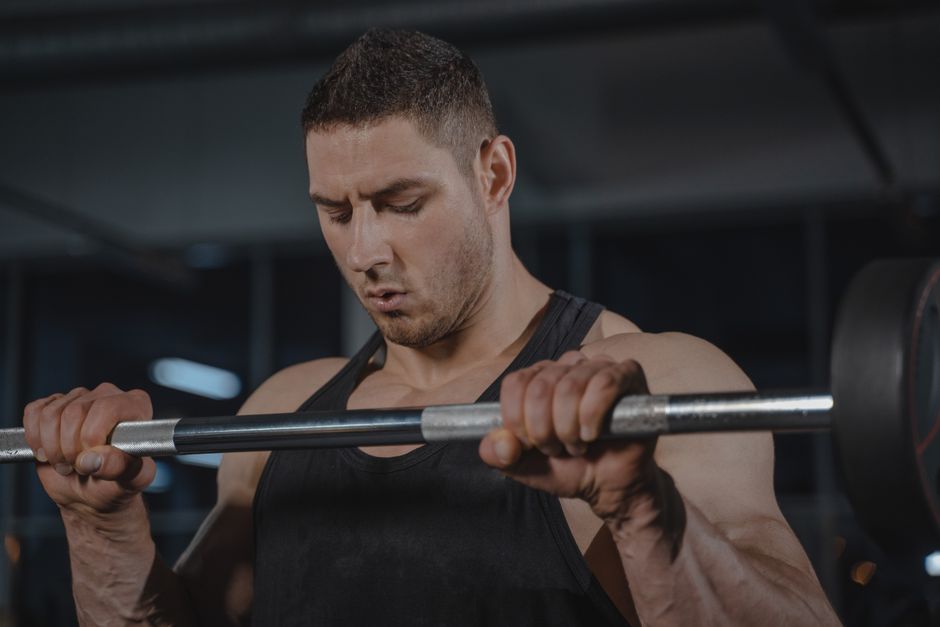
Muscular strength is the maximum amount of force a muscle or muscle group can generate in a single effort. It is distinct from muscular endurance, which measures how long you can sustain an activity, and from power, which measures how quickly you can generate force. In practical terms, strength is how much weight you can lift, push, or pull for one repetition.
What Is Muscular Strength?
Muscular strength is defined as the maximum force your muscles can produce against resistance. It is typically measured by a one-repetition maximum, often called a 1RM. That is the heaviest weight you can lift once with proper form.
Strength is not the same as muscle size. While the two are related, strength depends on how well your nervous system recruits muscle fibers, not just how big the muscle is. A trained lifter can often lift more weight than someone with larger muscles because their brain and nerves activate the muscle more efficiently.
This distinction matters for anyone starting a fitness program. Building strength requires training the nervous system as much as the muscle tissue itself. That is why strength gains often appear quickly in beginners, even before visible muscle growth occurs.
How Is Muscular Strength Different From Power and Endurance?
Strength, power, and endurance are often grouped together as “fitness,” but they are separate qualities that respond to different training methods.
Muscular strength is the maximum force you can produce. Think of a heavy deadlift or a max bench press. The effort lasts only a few seconds.
Muscular power is force produced quickly. A vertical jump, a sprint start, or a medicine ball throw all require power. Power combines strength with speed.
Muscular endurance is the ability to repeat a movement over time. Planks, high-repetition push-ups, and long-distance cycling rely on endurance more than raw strength.
Training for each quality looks different. Heavy weights with low repetitions build strength. Moderate weights moved explosively build power. Lighter weights with high repetitions build endurance. A balanced program typically includes elements of all three.
What Determines How Strong You Are?
Several factors influence your strength levels. Some are within your control. Others are not.
Nervous system efficiency is the biggest factor. Your brain sends signals through motor neurons to activate muscle fibers. With training, this signaling becomes faster and more coordinated. More muscle fibers fire at once, producing more force. This is called neural adaptation, and it explains most early strength gains.
Muscle fiber type plays a role. Fast-twitch fibers generate more force than slow-twitch fibers. Genetics determine your ratio of fast-twitch to slow-twitch fibers. Some people naturally have more fast-twitch fibers, giving them a strength advantage.
Muscle cross-sectional area matters. Larger muscles can produce more force. This is why strength training, over time, leads to muscle growth. The size increase is real, but it develops more slowly than neural adaptations.
Joint angle and limb length affect how much force you can produce at a given moment. A person with shorter arms may have a mechanical advantage in bench pressing. A person with longer legs may excel at deadlifting. These differences are structural, not a reflection of effort.
Age and sex influence strength baselines. Strength typically peaks in the late 20s to early 30s and gradually declines with age. Men generally have more muscle mass and higher absolute strength than women, though relative strength per pound of body weight is more comparable.




What Are the Health Benefits of Muscular Strength?
Strength training is not just for athletes. The health benefits are well documented and apply across all ages.
Fall prevention is one of the most important benefits for older adults. Stronger leg and core muscles improve balance and stability. Falls are a leading cause of injury in people over 65, and strength training reduces that risk.
Bone density improves with resistance training. Bones respond to mechanical stress by becoming denser. This is especially important for women, who face higher osteoporosis risk after menopause.
Metabolic health improves with strength training. Muscle tissue burns more calories at rest than fat tissue. More muscle means a slightly higher resting metabolic rate. Strength training also improves insulin sensitivity, which helps regulate blood sugar.
Daily function becomes easier. Carrying groceries, lifting children, climbing stairs, and getting up from the floor all require strength. Maintaining strength keeps these everyday tasks manageable as you age.
Joint health benefits from strong supporting muscles. Strong muscles around the knees, hips, and shoulders stabilize the joints and reduce wear on cartilage. This does not cure arthritis, but it can reduce pain and improve function for many people.
How Much Strength Training Do You Need?
Major health organizations recommend strength training at least two days per week. Each session should target all major muscle groups: legs, back, chest, shoulders, arms, and core.
A typical strength session includes 2 to 4 sets of each exercise. Repetition ranges vary by goal:
- 1 to 5 repetitions — maximal strength development
- 6 to 12 repetitions — muscle growth and general strength
- 15 or more repetitions — muscular endurance
Beginners often start with bodyweight exercises: squats, push-ups, lunges, and planks. As strength improves, adding external resistance becomes necessary to continue progressing.
Rest between sets matters. For strength-focused work with heavier loads, rest 2 to 3 minutes between sets. For endurance-focused work, rest 30 to 60 seconds.
Progressive overload is the core principle. To get stronger, you must gradually increase the demand on your muscles. This can mean adding weight, adding repetitions, or reducing rest time. Without progressive overload, strength plateaus.
How Long Does It Take to Get Stronger?
Initial strength gains can appear within 2 to 4 weeks of consistent training. These early gains come mostly from neural adaptations. Your muscles are not bigger yet, but your nervous system is learning to activate them more effectively.
Visible muscle growth typically takes 8 to 12 weeks of consistent training. The timeline varies based on genetics, training intensity, protein intake, and sleep quality.
Strength gains slow over time. A beginner might add 10 to 15 percent to their lifts within a few months. An advanced lifter might work months for a 2 to 5 percent gain. This is normal and reflects the principle of diminishing returns.
Consistency matters more than intensity in the long run. Training twice a week for a year produces better results than training five times a week for a month and quitting.
Can You Build Strength Without Weights?
Yes, especially for beginners. Bodyweight exercises can build meaningful strength, particularly in the lower body and core. Squats, lunges, push-ups, and pull-ups challenge muscles against your body weight.
There are limits. Bodyweight exercises make progressive overload harder because you cannot easily add small amounts of resistance. Once you can do 20 or more repetitions of an exercise with ease, you have largely maxed out its strength-building potential.
Options for adding resistance without a gym include resistance bands, adjustable dumbbells, kettlebells, or a backpack filled with books. The principle remains the same: increasing resistance over time drives strength gains.
Is Muscular Strength the Same as Muscle Mass?
No. Strength and muscle size are related but distinct. Strength is a function of the nervous system and muscle architecture. Muscle mass is a function of muscle fiber size and number.
Training for strength with heavy, low-repetition sets produces less muscle growth than moderate repetition training. Conversely, bodybuilders often have impressive muscle mass but may not be as strong, pound for pound, as powerlifters who train specifically for strength.
Both qualities are valuable. Strength supports function and joint health. Muscle mass supports metabolism and provides a reserve of protein for illness or injury recovery. Most people benefit from training that develops both.
Frequently Asked Questions
What is the difference between muscular strength and muscular endurance?
Muscular strength is the maximum force you can produce in one effort, while muscular endurance is how long you can sustain a repeated or sustained effort. Heavy weights with low reps build strength; lighter weights with high reps build endurance.
How often should I train for strength?
Two to three sessions per week is effective for most people. Each session should include exercises for all major muscle groups with at least one rest day between sessions.
Can older adults build muscular strength?
Yes. Studies consistently show that older adults can gain significant strength with resistance training, even into their 80s and 90s. The gains improve balance, reduce fall risk, and support independent living.
Do I need to lift heavy weights to get stronger?
No. Lifting a moderate weight that is challenging for 8 to 12 repetitions builds strength effectively for most people. The key is progressive overload, meaning the weight or repetitions increase over time.
