
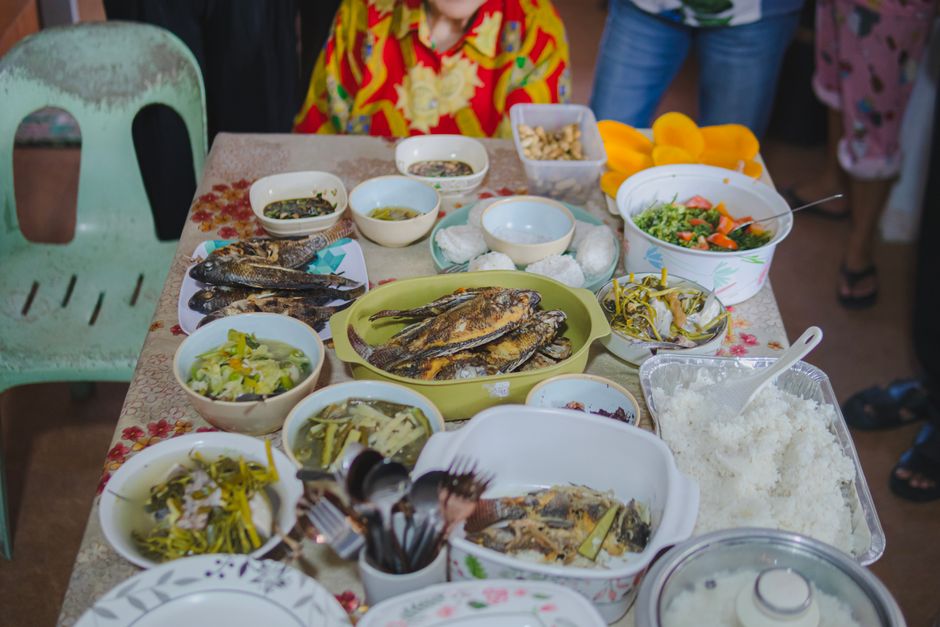
Mongo food is a Filipino dish made from mung beans, a small green legume that belongs to the same plant family as lentils and peas. The beans are boiled until soft, then cooked with garlic, onion, tomatoes, and often shrimp or pork, and served over steamed rice. Filipinos eat it because it is cheap, filling, and a familiar part of everyday home cooking, not because of any trend or marketing push.
What Is Mongo Food And Why Filipinos Eat It?
Mongo food — usually called ginisang mongo or simply mongo — is a stew built around mung beans. The beans are simmered until they break down, then sautéed with aromatics and finished with leafy greens like malunggay or spinach.
The name comes from the Spanish word for mung bean, which entered Filipino vocabulary during the colonial period. The dish itself predates that naming. Legumes have been a staple protein source across Southeast Asia for centuries, and mung beans grow well in tropical climates.
Filipinos eat it for three practical reasons. It is inexpensive. It stores well without refrigeration. And it stretches a small amount of meat across a large pot of food, which matters in households feeding many people on a limited budget.
What Is a Mung Bean, Exactly?
A mung bean is the seed of Vigna radiata, a plant in the legume family Fabaceae. The same bean is used across Asia in very different forms.
In its whole green form, it becomes mongo stew in the Philippines and similar dishes elsewhere. Sprouted, it becomes the bean sprouts common in stir-fries. Hulled and split, it becomes the yellow lentil-like base for Indian dal and Chinese sweet soups. Ground, it becomes the starch used in glass noodles.
So the mung bean is not one food. It is a single crop with several distinct culinary identities, and the Filipino version uses the whole, unsprouted bean.
What Nutrition Does It Provide?
Mung beans are a genuine source of plant protein, fiber, and several micronutrients. According to USDA nutrient data, cooked mung beans provide roughly 7 grams of protein and about 7.5 grams of fiber per cooked cup, along with folate, iron, magnesium, and potassium.
That protein and fiber combination is the main nutritional point. Fiber slows digestion and contributes to the feeling of fullness. Protein contributes to satiety as well. Together they help explain why a bean dish can feel more filling than its calorie count might suggest.
One clarification worth making: mung beans are not a complete protein on their own. They are low in the amino acid methionine. Rice, which is low in lysine, complements them. The traditional pairing of mongo over rice is not accidental — it is a nutritionally sensible combination that cultures arrived at long before anyone analyzed amino acid profiles.
How Is Mongo Food Traditionally Cooked?
The method is consistent across most Filipino households, with regional and family variation.
The beans are rinsed, then boiled in water until they soften and begin to break apart. This can take a while — mung beans are firm and take longer to cook than lentils. Some cooks soak them first to shorten cooking time.
Separately, garlic and onion are sautéed in oil, tomatoes are added and cooked down, and often a small amount of pork, shrimp, or dried fish is included for flavor. The cooked beans go in, the mixture simmers together, and leafy greens are stirred in at the end so they wilt without overcooking.
It is served over white rice. The consistency varies — some versions are thick and stew-like, others are soupier. There is no single correct version, and arguing about the right texture is something of a Filipino pastime.
Common Variations
- With malunggay — moringa leaves, added at the end for color and a mild flavor
- With shrimp — common in coastal areas and adds sweetness
- With pork or chicharon — adds fat and richness, often the crispy pork rind on top
- With ampalaya leaves — bitter melon leaves, giving a distinctly bitter note
- Vegetarian versions — omitting meat entirely, which is common and works fine
Why Is Mongo Food Considered a Budget Meal?
Dried mung beans are among the cheapest protein sources available in Philippine markets. A small bag of dried beans yields many servings once cooked, because the beans roughly double or triple in volume as they absorb water.
This is the core reason the dish is so widespread. It feeds a family for very little money. The meat component is optional or minimal, and the greens are often grown in a backyard.
That economic reality shaped the dish’s place in Filipino culture. It is associated with ordinary days, not celebrations. It shows up in school lunches, in canteens, and on weeknight dinner tables. It is comfort food precisely because it is unremarkable.
Is Mongo Food Actually Healthy?
The base ingredients are nutritious. Whether a specific pot of mongo is healthy depends almost entirely on how it is cooked.
A version with plenty of vegetables, minimal oil, and little or no fatty pork is a fiber-rich, plant-protein-rich dish. A version heavy on oil, fatty meat, and served over a large mound of white rice is a different nutritional picture. The beans do not change; the surrounding ingredients do.
There is one caution worth stating plainly. Dried beans must be cooked thoroughly. Raw and undercooked legumes contain compounds that can cause digestive distress. This is why beans are boiled rather than eaten raw or lightly cooked. Thorough cooking addresses this, and it is standard practice in every traditional recipe.
Another practical note: mung beans are high in fiber, and a large portion can cause gas or bloating in people not used to eating legumes. This is normal and generally lessens with regular consumption.
What Is the Difference Between Mongo and Monggo?
They are the same thing. Monggo is the more common spelling in Filipino writing, and mongo is a widely used variant. Both refer to mung beans and to the dish made from them.
If you see either spelling on a menu or in a recipe, you are looking at the same food. There is no meaningful distinction.
Is Mung Bean the Same as Bean Sprouts?
Yes and no. Bean sprouts are germinated mung beans — the same seed at an earlier stage of growth.
When a mung bean sprouts, its nutritional profile shifts. Sprouting increases certain vitamins, including vitamin C, and reduces some of the compounds that make beans hard to digest. But the sprout is a different food in texture, flavor, and how it is used.
Mongo stew uses the whole dried bean. Bean sprouts are used raw or briefly stir-fried. They are not interchangeable in recipes.
How Does Mongo Food Fit Into Filipino Culture?
Food in the Philippines carries social meaning, and mongo sits in a specific place. It is not festival food. It is not restaurant food, generally. It is home food.
That gives it a particular kind of value. Many Filipinos describe mongo as a dish that reminds them of a parent or grandparent, of a specific kitchen, of a time when money was tight and the pot still got everyone fed. The nutritional and economic facts and the emotional ones are not separate. They are the same story.
It also reflects something broader about Filipino cooking: a willingness to build a full meal from inexpensive, shelf-stable ingredients, using technique and seasoning to make them satisfying. That approach runs through much of the cuisine.
Can You Make Mongo Food Outside the Philippines?
Yes, and the ingredients travel well. Dried mung beans are sold in most Asian grocery stores and increasingly in mainstream supermarkets. They keep for a long time in a sealed container in a cool, dry place.
The greens are the harder part. Malunggay is not widely available fresh outside tropical regions, though frozen and dried versions exist. Spinach, kale, or water spinach work as substitutes and produce a similar dish.
The rest — garlic, onion, tomato, oil, rice — is available almost anywhere. The dish adapts easily, which is part of why it has followed Filipino communities around the world.
Frequently Asked Questions
What is mongo food made of?
Mongo food is made from dried mung beans boiled until soft, then cooked with garlic, onion, and tomatoes, often with shrimp or pork and leafy greens. It is served over rice.
Is mongo food the same as mung bean stew?
Yes, mongo food is a Filipino mung bean stew, also spelled monggo. The terms refer to the same dish.
Is mongo food healthy?
The beans provide plant protein, fiber, folate, iron, and magnesium, so the base is nutritious. How healthy a specific version is depends on how much oil, fatty meat, and white rice are added.
Do you have to soak mung beans before cooking?
Soaking is not required but shortens cooking time and may make the beans easier to digest. Many traditional recipes skip it and simply boil the beans longer.
