
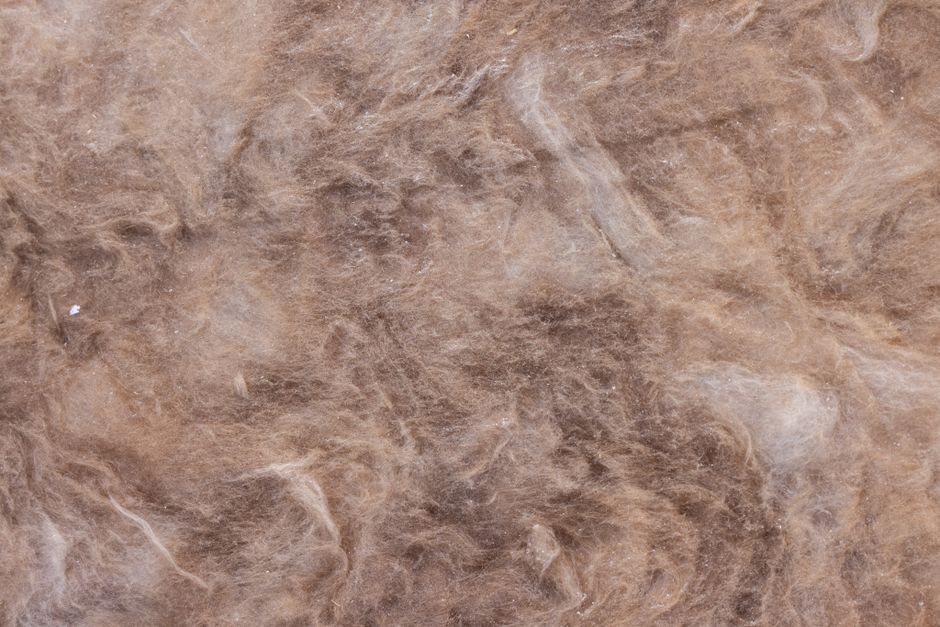
Mineral wool is a general name for fibrous insulation materials made by melting rock, slag, or glass and spinning the molten material into fine fibers. It is used mainly to insulate buildings, pipes, and industrial equipment, and it also appears in some soundproofing and fire-blocking products. The main health concern most people ask about is the fibers themselves: modern mineral wool products sold in the US are not classified as carcinogenic, though older or unbound fibers can irritate the skin, eyes, and airways during handling.
What Is Mineral Wool and How Is It Made?
Mineral wool is manufactured by heating raw materials until they melt, then forcing the liquid through a spinning process that pulls it into thin fibers. Those fibers are bound together with a resin or binder and formed into batts, boards, or loose fill.
The two main raw material sources are rock (basalt or diabase) and industrial slag, which is a byproduct of metal smelting. Glass wool, often sold as fiberglass, is made from sand and recycled glass using a similar spinning method. All of these fall under the broader term “man-made vitreous fibers” or MMVF in technical and regulatory literature.
The fibers themselves are amorphous, meaning they lack the crystalline structure of asbestos. This is a key difference. Asbestos fibers are crystalline and persist in lung tissue for decades, which is why they cause mesothelioma and other serious diseases. Mineral wool fibers are designed to break down in the body more readily, and manufacturers have reformulated products over the past several decades to improve that clearance.
What Are the Main Types of Mineral Wool?
There are three main categories, and they differ in raw material, fiber size, and typical use.
- Rock wool (stone wool): Made from melted basalt rock. Denser and more heat-resistant than glass wool. Common in industrial insulation, fire stops, and exterior wall systems.
- Slag wool: Made from blast furnace slag. Chemically similar to rock wool. Used in similar industrial applications.
- Glass wool: Made from sand and recycled glass. Lighter and typically less expensive. Common in residential attic, wall, and ceiling insulation.
There is also a distinction between “bound” and “unbound” products. Bound wool has a resin coating that holds fibers together and reduces airborne release. Unbound or loosely bonded material sheds more fibers during handling.
In practice, most insulation sold to homeowners today is bound. The binder also affects fire performance and moisture behavior, which matters more for building performance than for health.
What Is Mineral Wool Used For?
Mineral wool shows up in more places than most people realize.
In buildings, it insulates walls, roofs, floors, and attics. It is also used as a firestop in penetrations where pipes and cables pass through fire-rated walls. Because it resists high temperatures, it is often chosen where foam insulation would melt or burn.
In industry, mineral wool wraps pipes, boilers, tanks, and furnaces. It is also used in acoustic panels and ceiling tiles because its fibrous structure absorbs sound.
In automotive and appliance manufacturing, mineral wool appears as heat shields and sound dampening material. Some ceiling and wall products marketed for sound control contain mineral wool rather than foam.
One point worth clarifying: mineral wool is not the same as “mineral fiber” ceiling tiles, which may contain other materials. The terms get used loosely, and the safety profile depends on what is actually in the product.





Is Mineral Wool Safe to Handle and Live With?
For installed mineral wool in a wall or attic, the health risk to occupants is very low. The fibers are bound in place and not released into the air under normal conditions.
The concern is mainly during installation, removal, or any activity that disturbs the material. When fibers become airborne, they can irritate the skin, eyes, throat, and upper airways. This is a mechanical irritation, not a toxic reaction.
Most people who handle mineral wool without protection report itching, redness, or a scratchy throat. These symptoms typically resolve once exposure stops. Washing with cool water and mild soap helps; warm water can open pores and make fibers lodge more deeply in the skin.
On cancer risk, the picture is clearer than it once was. The International Agency for Research on Cancer (IARC) classified rock and slag wool in Group 3, meaning it is not classifiable as to its carcinogenicity to humans. Glass wool was also placed in Group 3. This is different from asbestos, which is Group 1, and from some older refractory ceramic fibers, which are Group 2B.
That IARC classification reflects the reformulated products sold today. Older mineral wool made before the 1990s had different fiber dimensions and higher biopersistence. If you are working with insulation of unknown age, treat it with more caution.
What Precautions Should You Take?
Basic handling precautions reduce irritation substantially.
- Wear gloves, long sleeves, and eye protection when cutting or installing.
- Use a NIOSH-approved N95 or P100 respirator if you are working in a confined space or generating dust.
- Ventilate the area. Open windows and use a fan to move air out.
- Avoid eating, drinking, or smoking while handling the material.
- Wash work clothes separately from other laundry.
- Shower and change after finishing, especially if you have been in an attic or crawlspace.
If you are removing old insulation and are unsure whether it contains asbestos, stop and get it tested. Asbestos was used in many building products before the 1980s, and disturbing it without proper controls is a genuine health hazard. This is not a situation where guessing is acceptable.
For skin irritation after contact, rinse with cool water. Do not rub. Some clinicians recommend applying tape to lift surface fibers, but there is no strong evidence that this works better than washing. If irritation persists for more than a few days or you develop a rash that spreads, see a doctor.
How Does Mineral Wool Compare to Other Insulation?
Each insulation type has trade-offs, and the right choice depends on the application.
| Type | Fire resistance | Moisture behavior | Typical concern |
|---|---|---|---|
| Mineral wool | Non-combustible | Water-repellent but vapor-permeable | Fiber irritation during handling |
| Fiberglass | Non-combustible | Similar to mineral wool | Fiber irritation during handling |
| Cellulose | Treated for fire resistance | Can absorb moisture | Settling; chemical additives |
| Spray foam | Combustible unless treated | Acts as vapor barrier | Off-gassing during cure; harder to remove |
Mineral wool tends to cost more than fiberglass but performs better in fire-rated assemblies and in applications where moisture resistance matters. For a typical attic, the difference in real-world performance between mineral wool and fiberglass is often smaller than the price difference suggests.
R-value, which measures thermal resistance, depends on thickness and density, not on the material type alone. A given R-value can be achieved with any of these products.
Does Mineral Wool Release Fibers Into Indoor Air?
Installed mineral wool does not significantly release fibers into indoor air under normal conditions. Studies of buildings with mineral wool insulation have generally not found elevated airborne fiber levels compared to buildings without it.
Airborne fiber release is a concern during installation, cutting, and removal. Once the material is enclosed behind drywall or in an attic floor, fiber migration into living spaces is minimal.
If you notice visible dust or fibers settling on surfaces in your home, the cause is more likely a gap, a damaged vapor barrier, or an air leak than the insulation itself. Sealing air leaks and repairing damaged areas addresses the source.
Frequently Asked Questions
Is mineral wool the same as asbestos?
No. Mineral wool is made from rock, slag, or glass and has an amorphous fiber structure, while asbestos is a naturally occurring crystalline mineral. Asbestos is classified as a known human carcinogen, whereas modern rock, slag, and glass wool are classified as not classifiable for carcinogenicity.
Can mineral wool insulation cause cancer?
The International Agency for Research on Cancer classifies rock wool, slag wool, and glass wool in Group 3, meaning they are not classifiable as carcinogenic to humans. Older products made before the 1990s had different fiber properties and should be handled with more caution.
What should I wear when installing mineral wool?
Wear gloves, long sleeves, eye protection, and a NIOSH-approved N95 or P100 respirator if you are working in an enclosed space. Ventilate the area and wash work clothes separately from other laundry.
Does mineral wool insulation need to be replaced?
Mineral wool does not degrade on its own under normal conditions and generally does not need replacement unless it has been physically damaged or soaked. If it stays wet for extended periods, it can lose some insulating performance and may need to be removed and replaced.
