
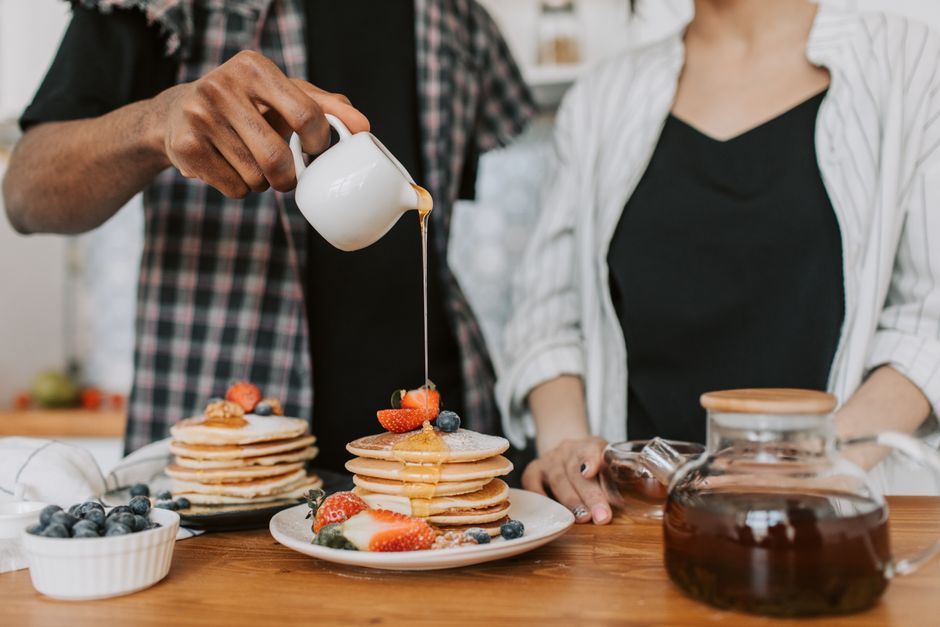
Maple syrup is a sweetener made by boiling down the sap of sugar maple trees. The sap is collected in late winter and early spring, then heated until most of the water evaporates, leaving a thick amber liquid. It is one of the few sweeteners sold to consumers that comes directly from a plant’s sap rather than from a refined crop like cane or corn.
That simple definition hides a lot of detail. The grade on the bottle, the color of the syrup, and the nutrition label all reflect how the sap was processed. Understanding those details helps you know what you are actually buying.
What Is Maple Syrup Made Of?
Maple sap is mostly water. It contains between 1 and 3 percent sugar when it comes out of the tree, which is why roughly 40 gallons of sap are needed to make 1 gallon of finished syrup. The boiling process removes water and concentrates the sugars, minerals, and flavor compounds that remain.
The finished product is still mostly sugar. A typical serving of maple syrup contains a high proportion of sucrose, along with smaller amounts of glucose and fructose. It also carries trace minerals, including manganese, calcium, and potassium, though the amounts are small relative to the sugar content.
One clarification worth making: maple syrup is not a low-calorie or “health food” sweetener. It contains minerals that refined white sugar lacks, but you would need to eat a large amount of syrup to get meaningful quantities of them. The minerals are a genuine difference from white sugar, not a reason to treat syrup as a supplement.
What Do the Grades of Maple Syrup Mean?
Maple syrup grades describe color and flavor, not quality or purity. In the United States, syrup is classified into four grades under a system that replaced the older letter-grade labels. The current grades are Grade A Golden, Grade A Amber, Grade A Dark, and Grade A Very Dark.
The grade reflects when in the season the sap was collected and how it was processed. Earlier sap tends to produce lighter syrup with a delicate flavor. Later sap produces darker syrup with a stronger taste. All four grades meet the same basic standard for purity.
- Golden — light color, mild flavor, often used for drizzling
- Amber — medium color, richer flavor, the most common all-purpose grade
- Dark — deeper color, robust flavor, good for baking and cooking
- Very Dark — darkest and strongest, often used in cooking and commercial food
A darker grade does not mean a better or worse product. It means a different flavor profile. Some people prefer dark syrup on pancakes; others find it too strong.
How Is Maple Syrup Different From Pancake Syrup?
Pancake syrup is usually not maple syrup at all. Most bottles sold as “pancake syrup” or “table syrup” are made from corn syrup, high-fructose corn syrup, or a blend of sweeteners, flavored with artificial maple flavoring and colored with caramel. They may contain little or no actual maple sap.
This is one of the most common points of confusion for shoppers. The word “maple” on a label does not guarantee the bottle contains real maple syrup. Look at the ingredient list. Pure maple syrup has one ingredient: maple syrup. If the label lists corn syrup, water, sugar, or “natural flavor,” it is an imitation product.
The two products also differ in nutrition. Imitation syrups are typically higher in added sugars and lack the trace minerals found in real maple syrup. They are also usually cheaper, which is part of why they dominate the pancake aisle.
Is Maple Syrup Healthier Than Sugar?
Maple syrup is not a health food, and the evidence does not support treating it as one. It is still a concentrated source of sugar. Gram for gram, it delivers a similar amount of sugar and calories as other sweeteners, and eating too much added sugar is linked to weight gain, dental problems, and other health concerns regardless of the sugar’s source.
What is different is the mineral content. Real maple syrup contains small amounts of manganese, calcium, potassium, and zinc that refined sugar does not. Some research suggests maple syrup contains polyphenols, plant compounds with antioxidant activity. That is a real difference at the chemistry level.
The practical question is whether those differences matter for health. The evidence here is limited. No large human trials have shown that swapping sugar for maple syrup improves health outcomes. The amounts of minerals and polyphenols in a typical serving are small. Anyone choosing maple syrup for its trace nutrients would need to eat far more sugar than is advisable to get a meaningful dose.
Some clinicians and nutrition researchers have noted that maple syrup may have a slightly lower glycemic impact than some refined sweeteners, but the difference is modest and does not change the basic advice to limit added sugars. If you use maple syrup, use it as a sweetener, not as a health supplement.
How Should You Store Maple Syrup?
Pure maple syrup should be refrigerated after opening. Before opening, an unopened bottle keeps well in a cool, dark place. Once opened, refrigeration slows spoilage and prevents mold growth.
Maple syrup can develop mold on its surface if left at room temperature for long periods, especially in warm, humid conditions. If mold appears, the syrup should be discarded. Some people skim it off, but that is not a reliable way to make the remaining syrup safe.
For longer storage, maple syrup can be frozen. It does not freeze solid because of its sugar content, but freezing extends shelf life considerably. Glass bottles should be checked for cracks before freezing to avoid breakage.
What Should You Look For When Buying Maple Syrup?
Check the ingredient list first. Pure maple syrup contains only maple syrup. Anything else is an imitation or a blend.
Look for a grade label. In the US, the four Grade A categories tell you about color and flavor, not quality. Choose based on how you plan to use it. Amber is a safe all-purpose choice; dark grades work well in cooking and baking.
Be aware that “organic” maple syrup exists and is produced under certified organic standards, but organic certification does not change the basic nutritional profile. It reflects how the sugarbush was managed, not whether the syrup is healthier.
Price is often a signal. Real maple syrup costs more than imitation syrup because producing it takes far more raw material and labor. A very cheap bottle labeled “maple syrup” is worth a closer look at the ingredients.
Does Maple Syrup Have Any Risks?
The main risk is the same one that applies to any added sugar: eating too much. The American Heart Association recommends limiting added sugars, and maple syrup counts as added sugar. People with diabetes should account for maple syrup in their carbohydrate intake the same way they would any sweetener.
There is one important safety note for infants. Honey is not safe for children under 12 months because of the risk of infant botulism, and the same caution does not apply to maple syrup in the same way. However, added sugars in general are not recommended for infants and young children, and maple syrup should not be given to babies as a sweetener. No clinical guidelines support using maple syrup for infants.
People with a maple allergy are rare but exist. Anyone who reacts to maple products should avoid them and speak with a clinician.
Frequently Asked Questions
Is maple syrup the same as pancake syrup?
No. Pure maple syrup is boiled maple tree sap with one ingredient. Most pancake syrup is made from corn syrup and artificial flavoring with little or no real maple.
Is maple syrup healthier than white sugar?
It contains trace minerals that white sugar lacks, but it is still a concentrated sugar and the health benefit of that difference is not established. Treat it as a sweetener, not a health food.
What does Grade A mean on maple syrup?
Grade A is a quality and color classification, not a purity rating. All four Grade A categories meet the same basic standard; the grade describes color and flavor.
Does maple syrup need to be refrigerated?
Yes, after opening. Unopened bottles keep in a cool, dark place, but refrigeration after opening slows spoilage and helps prevent mold.
