
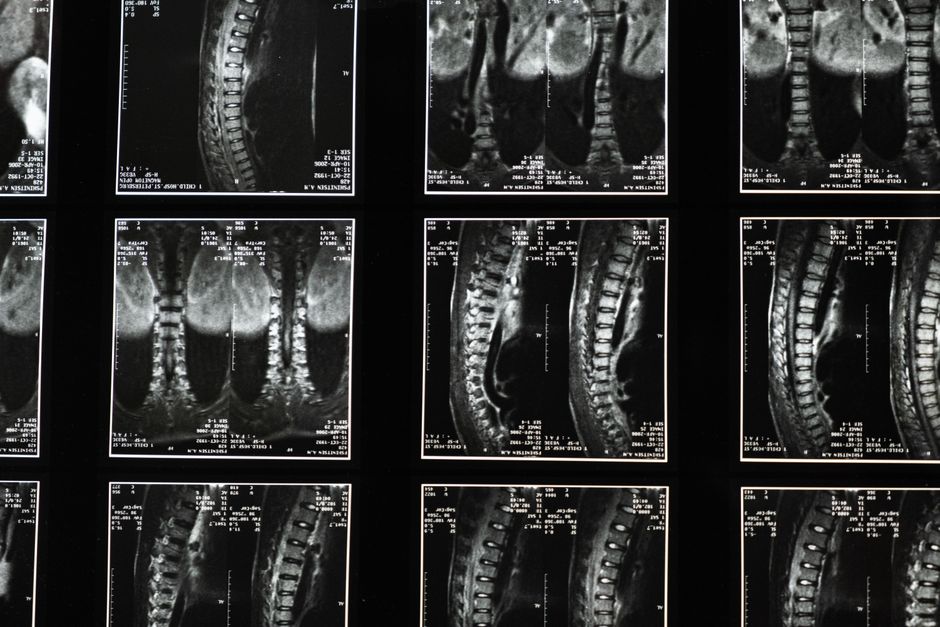
Lumbarization is a congenital condition in which the first segment of the sacrum fails to fuse properly with the rest of the sacrum, so it looks and behaves like an extra lumbar vertebra. People are born with it. It is a difference in how the lower spine formed before birth, not a disease someone develops later, and many people who have it never know. When it does cause trouble, the symptoms usually come from the extra motion segment it creates at the base of the spine.
What Is Lumbarization?
The human spine has a set pattern: seven cervical vertebrae in the neck, twelve thoracic vertebrae in the mid-back, five lumbar vertebrae in the lower back, and then the sacrum, a fused block of bone at the base of the spine. Lumbarization happens when the top segment of the sacrum does not fuse as it normally would. Instead, it keeps the shape and joints of a lumbar vertebra.
The result is a spine that has six mobile lumbar segments instead of five. This is a form of what doctors call a transitional vertebra — a vertebra that sits between two spinal regions and does not fit neatly into either one. Lumbarization is sometimes called a sacralized lumbar vertebra’s mirror opposite. The two conditions are related but not the same.
What Is the Difference Between Lumbarization and Sacralization?
Lumbarization and sacralization are two versions of the same developmental event, just in opposite directions. In lumbarization, a sacral segment becomes mobile and looks like a lumbar vertebra. In sacralization, the opposite happens: the lowest lumbar vertebra fuses to the sacrum and loses its mobility.
Both are classified as lumbosacral transitional vertebrae. Doctors sometimes use the Castellvi classification to describe them, which groups these transitional vertebrae into types based on how the transverse process — the bony wing on the side of the vertebra — relates to the sacrum. This classification is mainly a research and surgical planning tool. It is not something most patients need to track.
One practical detail matters here. When a person has lumbarization, the vertebra they think of as L5 is actually an S1 segment, and everything above it shifts by one. This numbering matters during spine surgery, injections, or when reading an MRI. Surgeons use special imaging to confirm which vertebra is which before operating.
What Causes Lumbarization?
Lumbarization is a congenital condition, meaning it is present at birth. It develops during the early weeks of pregnancy when the spine forms from blocks of tissue called somites. Normally, the lowest of these blocks fuse to create the sacrum. In lumbarization, that fusion does not complete, and the top sacral segment stays separate.
The specific cause in any one person is usually not known. It is not caused by anything a mother did or did not do during pregnancy. It is not the result of an injury, poor posture, or lifting. It is not a sign of a disease process. It is simply a variation in how the skeleton formed.
Some research suggests a genetic component, since these transitional vertebrae sometimes run in families. The evidence for a specific inheritance pattern is limited, though. Most cases appear to happen without any family history.
Lumbarization is fairly common. Estimates vary widely depending on the study and how the condition is defined, but a meaningful share of the general population has some form of lumbosacral transitional vertebra. Many of these people have no symptoms at all and only find out by accident when imaging is done for another reason.





What Symptoms Does Lumbarization Cause?
Most people with lumbarization have no symptoms. When symptoms do appear, they tend to come from the extra movement at the lumbosacral junction — the point where the spine meets the pelvis.
Because one segment that should be fused and stable is instead mobile, the joints and discs around it may take on more stress over time. This can lead to:
- Low back pain, often worse with activity or prolonged standing
- Pain that feels like it sits at the very base of the spine
- Stiffness in the lower back
- Pain that radiates into the buttock or leg, if a nerve is involved
- Disc problems at the level above the transitional vertebra
The link between lumbarization and back pain is real but not simple. Some studies find more degenerative changes at the disc just above a transitional vertebra. Other studies find no clear connection between having the anomaly and having pain. The evidence is mixed. Having lumbarization does not mean you will develop back pain, and having back pain does not mean lumbarization is the cause.
This matters for diagnosis. Low back pain is extremely common, and most of it comes from ordinary causes like muscle strain, disc degeneration, or facet joint arthritis. Lumbarization is often an incidental finding — something seen on a scan that may or may not be related to the person’s symptoms.
How Is Lumbarization Diagnosed?
Lumbarization is diagnosed with imaging. Plain X-rays of the lower back and pelvis are usually the first step, and they can often show the transitional vertebra clearly. An X-ray taken with the spine bent forward and back can help show whether the segment is mobile.
An MRI or CT scan gives more detail. These can show the shape of the vertebra, the state of the discs, and whether any nerves are being compressed. They also help the radiologist number the vertebrae correctly, which is important because the extra segment shifts the count.
One useful clue on imaging is the position of the iliolumbar ligament, a band of tissue that normally attaches the L5 vertebra to the pelvis. In lumbarization, the vertebra above the transitional segment may carry this ligament instead, which helps confirm the anatomy.
Diagnosis is not just about finding the anomaly. It is about figuring out whether the anomaly is causing the person’s symptoms. A doctor will take a history, do a physical exam, and look at how the pain behaves. If the imaging shows lumbarization but the symptoms point somewhere else, the lumbarization may not be the answer.
How Is Lumbarization Treated?
There is no treatment that changes the anatomy. The vertebra is formed the way it is formed, and it stays that way. Treatment, when it is needed at all, focuses on managing symptoms.
For most people with mild symptoms, the approach is conservative. This can include physical therapy to strengthen the muscles that support the lower back, activity modification, and over-the-counter pain relief. Some clinicians recommend core strengthening and posture work, though the evidence that these specifically help lumbarization-related pain is limited. They are reasonable general measures for low back pain.
For persistent pain, a doctor may consider injections such as an epidural steroid injection or a facet joint injection. These are used for symptom relief, not to correct the anatomy. Results vary from person to person.
Surgery is uncommon and reserved for specific situations — significant nerve compression, instability, or pain that has not responded to other treatment. When surgery is done, the surgeon must account for the extra vertebra and confirm the correct level before operating. This is one reason accurate imaging and numbering matter so much.
No specific diet, supplement, or exercise has been shown to reverse or correct lumbarization. Any product claiming to do so is not supported by evidence.
Does Lumbarization Cause Long-Term Problems?
For many people, lumbarization causes no long-term problems at all. It is a variation, not a progressive condition. It does not spread or worsen on its own.
The main long-term concern is the added stress on the segments around the transitional vertebra. Over years, this could contribute to earlier disc wear at the level above. Some studies support this pattern, while others do not show a clear link. The evidence is not settled.
If you have lumbarization and you develop back pain, it is worth telling any doctor or physical therapist who treats you. The extra vertebra changes how the spine is numbered, and that can affect how imaging is read and how injections or surgery are planned. Beyond that, most people with lumbarization live normal, active lives without restriction.
Frequently Asked Questions
Is lumbarization the same as sacralization?
No. Lumbarization means a sacral segment stays mobile and acts like a lumbar vertebra, while sacralization means the lowest lumbar vertebra fuses to the sacrum. Both are lumbosacral transitional vertebrae, just in opposite directions.
Can lumbarization cause back pain?
It can, because the extra mobile segment can put added stress on nearby joints and discs. However, many people with lumbarization have no pain, and most low back pain has other causes.
How is lumbarization found?
It is found with imaging, usually an X-ray of the lower back and pelvis, sometimes followed by an MRI or CT scan. Many cases are discovered by accident during scans done for unrelated reasons.
Can lumbarization be fixed?
No. The anatomy cannot be changed, and no diet, supplement, or exercise reverses it. Treatment, when needed, focuses on managing symptoms rather than correcting the vertebra.
