
Driving after even one drink can put you over the legal limit depending on your body size, what you ate, and how fast you drank. In the United States, the legal limit for blood alcohol concentration (BAC) is 0.08% for drivers aged 21 and over. This means 0.08 grams of alcohol per 100 milliliters of blood. It applies in all 50 states. If your BAC is at or above this number, you can be arrested for driving under the influence (DUI).
What Is Legal Limit For Blood Alcohol Level? The Basics Explained
The legal limit for blood alcohol level is a measurement of alcohol in your bloodstream. Law enforcement uses it to decide if you are too impaired to drive. A BAC of 0.08% is the national standard for adult drivers. Commercial drivers face a stricter limit of 0.04%. Drivers under 21 are subject to zero-tolerance laws, which typically set the limit at 0.01% or 0.02%.
Your BAC rises when alcohol enters your bloodstream faster than your liver can process it. The liver breaks down about one standard drink per hour on average. A standard drink is 12 ounces of beer, 5 ounces of wine, or 1.5 ounces of distilled spirits. Drink faster than that and your BAC climbs.
How Many Drinks Does It Take To Reach 0.08%?
There is no single answer that applies to everyone. Body weight, sex, age, metabolism, and food intake all influence how quickly you reach 0.08%. A 100-pound woman might reach 0.08% after two drinks in an hour. A 200-pound man might need four drinks in an hour. These are rough estimates, not guarantees.
Alcohol distributes differently in bodies with different water content. Muscle holds more water than fat, so alcohol becomes more diluted in people with more muscle mass. Women generally have a higher percentage of body fat and less water than men of the same weight. This means alcohol is more concentrated in a woman’s bloodstream after the same number of drinks.
The safest approach is to avoid guessing. If you plan to drink, plan not to drive. Personal breathalyzer devices can give you a rough idea of your BAC, but consumer devices are not always accurate enough to rely on for legal decisions.
What Happens To Your Body At 0.08%?
At 0.08%, your driving skills are measurably impaired. Your reaction time slows. Your judgment is worse. Your ability to track moving objects declines. Your peripheral vision narrows. These changes directly affect your ability to operate a vehicle safely.
Research consistently shows that the risk of being involved in a fatal crash rises sharply as BAC increases. Even at 0.05%, which is legal in most states for adult drivers, reaction time and coordination are already affected. At 0.08%, the impairment is significant enough that every state has set this as the threshold for criminal penalties.
Lower BAC levels also cause impairment. At 0.02%, you may experience a slight loss of judgment and a decline in visual function. At 0.05%, coordination and response times worsen noticeably. The 0.08% limit is a legal threshold, not a line between safe and unsafe driving.

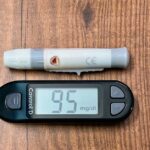
How Is Blood Alcohol Level Measured?
Law enforcement uses three main methods to measure BAC: breath, blood, and urine. Breath testing is the most common in roadside stops. A breathalyzer estimates BAC by measuring the amount of alcohol in your breath. The ratio between breath alcohol and blood alcohol is well established, and the results are admissible in court in all 50 states.
Blood tests are more accurate than breath tests. A sample of your blood is drawn and analyzed in a laboratory. Blood tests are typically used when a breath test is not available or when a more precise measurement is needed. Urine tests are the least accurate and are rarely used in DUI enforcement today.
If you refuse a chemical test after being arrested for DUI, you face automatic license suspension in most states. This is called implied consent. By driving on public roads, you have already agreed to submit to chemical testing if lawfully arrested.
Are There Different Limits For Different Drivers?
Yes. The 0.08% limit applies to regular passenger vehicle drivers aged 21 and over. Commercial drivers who operate vehicles requiring a commercial driver’s license (CDL) are held to a limit of 0.04%. This includes truck drivers, bus drivers, and drivers of vehicles carrying hazardous materials.
Drivers under 21 face zero-tolerance laws in every state. These laws set the maximum legal BAC between 0.00% and 0.02%, depending on the state. Even one drink can put a minor driver over the legal limit. Penalties for underage DUI typically include license suspension, fines, and mandatory alcohol education classes.
Some states impose enhanced penalties at higher BAC levels. Many states have aggravated DUI laws that increase penalties when BAC reaches 0.15% or 0.20%. These penalties can include longer license suspensions, mandatory jail time, and required installation of an ignition interlock device.
How Long Does Alcohol Stay In Your System?
Your liver processes alcohol at a fairly constant rate. On average, it eliminates about one standard drink per hour. This rate does not speed up with coffee, cold showers, or exercise. Nothing you do after drinking will lower your BAC faster than time.
If you stop drinking at midnight with a BAC of 0.08%, you will not reach zero until roughly 8:00 AM. This assumes you are an average metabolizer. Some people process alcohol slower or faster depending on genetics, liver health, and other factors.
Sleep does not speed up alcohol metabolism. You can go to bed at a 0.08% BAC and wake up hours later still over the legal limit. This is a common cause of morning-after DUI arrests. If you drank heavily the night before, you may still be impaired when you wake up.
The only reliable way to sober up is to stop drinking and give your body time. Plan ahead if you know you will be drinking. Arrange a ride, use public transportation, or stay where you are until you are sober.
What Are The Penalties For Driving Over The Legal Limit?
Penalties for a first-time DUI offense vary by state but typically include fines, license suspension, and mandatory alcohol education programs. Many states also require installation of an ignition interlock device. These devices require you to blow into a breathalyzer before your car will start.
Repeat offenses carry harsher penalties. A second DUI often results in longer license suspension, higher fines, and possible jail time. A third offense may be classified as a felony in many states. The exact penalties depend on your state’s laws and the specific circumstances of your arrest.
Beyond legal penalties, a DUI conviction has long-term consequences. Your auto insurance rates will increase significantly. A DUI stays on your driving record for years. Employers in many fields check driving records, and a DUI can affect your job prospects.
If your BAC is above 0.08% and you cause an accident that injures or kills someone, you face much more serious charges. Vehicular manslaughter and aggravated DUI charges carry severe prison sentences. These are some of the most serious consequences of drinking and driving.
Can You Be Arrested Below 0.08%?
Yes. The 0.08% limit is the threshold for a per se DUI charge. This means the prosecution does not need to prove impairment if your BAC is 0.08% or higher. The number itself proves the offense.
But you can still be arrested below 0.08% if an officer determines you are impaired. This is called a driving while ability impaired (DWAI) charge in some states, or an impairment-based DUI in others. Officers look for signs of impairment such as swerving, slow responses, slurred speech, and poor performance on field sobriety tests.
Field sobriety tests are not precise measurements of impairment. They include the walk-and-turn test, the one-leg stand, and the horizontal gaze nystagmus test. These tests are standardized and validated by research, but they are still subjective. An officer’s observation of your driving behavior and physical symptoms can be enough to arrest you.
Frequently Asked Questions
What is the legal blood alcohol limit in all 50 states?
The legal BAC limit is 0.08% for drivers aged 21 and over in every state. Commercial drivers face a 0.04% limit, and drivers under 21 are subject to zero-tolerance laws.
How many drinks can I have before driving?
There is no safe number that applies to everyone. Body weight, sex, food intake, and time between drinks all affect your BAC. The only guaranteed safe choice is not to drink and drive.
Can I be charged with DUI if my BAC is below 0.08%?
Yes. You can be arrested below 0.08% if an officer determines you are impaired. Many states have separate charges for driving while ability impaired at lower BAC levels.
How long does it take to get alcohol out of your system?
The liver processes about one standard drink per hour on average. Coffee, cold showers, and exercise do not speed up the process. Only time lowers your BAC.
