
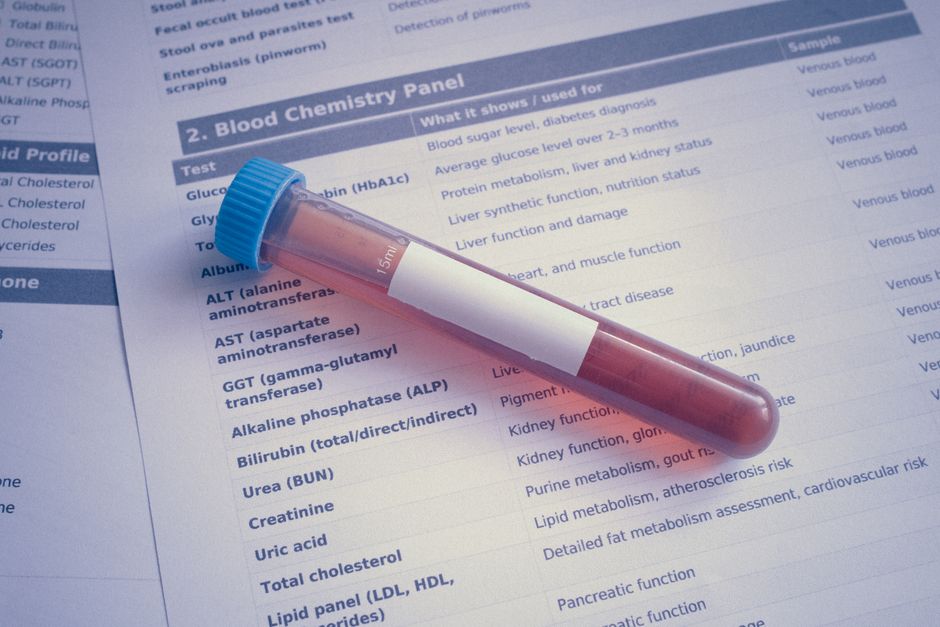
When you get a standard lipid panel, the LDL number on your report is often not measured directly. It is calculated using a formula that estimates the amount of low-density lipoprotein cholesterol in your blood. The most common method uses your total cholesterol, HDL cholesterol, and triglycerides to arrive at that LDL figure. Understanding how this calculation works matters because the result guides real medical decisions about your heart health.
What Is LDL Calculated In Blood Test?
LDL cholesterol is the “bad” cholesterol that can build up in your arteries and increase your risk of heart disease and stroke. A calculated LDL means the lab did not measure the LDL particles directly. Instead, they used a mathematical formula to estimate the LDL level from other values already measured in your blood.
The standard calculation subtracts HDL cholesterol and a fraction of triglycerides from total cholesterol. Triglycerides are another type of fat in your blood. The formula assumes that most of the remaining cholesterol is LDL. This approach has been used in clinical practice for decades because it is inexpensive and works well for most people.
Direct LDL measurement exists but is more expensive and not routinely ordered. For the majority of patients, the calculated value is accurate enough for doctors to assess risk and make treatment decisions.
How Does the LDL Calculation Work?
The most widely used formula is the Friedewald equation. It was developed in 1972 and remains the standard in many laboratories. The formula is:
LDL = Total Cholesterol − HDL − (Triglycerides ÷ 5)
All values are measured in milligrams per deciliter (mg/dL). The division by 5 accounts for the fact that very low-density lipoprotein (VLDL) carries about one-fifth of your triglyceride level. VLDL is another cholesterol-carrying particle, and the formula estimates its contribution before subtracting it from total cholesterol.
This equation works reliably when your triglyceride level is below 400 mg/dL. Above that threshold, the estimate becomes less accurate. When triglycerides are very high, the formula can underestimate LDL or produce values that do not reflect reality.
In 2020, a newer formula called the Martin-Hopkins equation was introduced. It uses the same basic principle but adjusts the triglyceride-to-VLDL ratio based on individual triglyceride and non-HDL cholesterol levels. Some research suggests this newer method is more accurate, especially at higher triglyceride levels. Many labs now use it, though the Friedewald equation remains common.
Why Does the Calculation Matter for Your Health?
Your LDL number is one of the most important values on a lipid panel. Guidelines from major cardiovascular organizations use LDL to classify your risk and determine whether you need treatment. For most people, the goal is to keep LDL below 100 mg/dL. People with higher risk may need it below 70 mg/dL.
When your doctor decides whether to prescribe a statin, the calculated LDL is a central part of that decision. Statins lower LDL and reduce the risk of heart attacks and strokes. The accuracy of the LDL number therefore directly affects whether you receive medication and at what dose.
However, LDL is not the only factor. Your doctor also considers your age, blood pressure, smoking status, diabetes, and family history. The lipid panel is one piece of a larger risk picture.


When Is Calculated LDL Less Accurate?
Calculated LDL is least reliable in certain situations. The most important limitation is high triglycerides. If your triglyceride level exceeds 400 mg/dL, the Friedewald formula may produce inaccurate results. Some labs will automatically switch to a direct LDL measurement when triglycerides are very high.
Non-fasting blood samples also affect accuracy. Triglycerides rise after eating, which can skew the calculation. For this reason, most lipid panels require a 9 to 12 hour fast beforehand. If you ate before your blood draw, the calculated LDL may be falsely low or high depending on the timing.
Certain medical conditions can also interfere. People with diabetes, kidney disease, or liver disease may have altered lipid metabolism that makes the formula less reliable. In these cases, a direct LDL measurement may be more appropriate.
Very low LDL levels also pose a challenge. When LDL drops below 30 mg/dL, the calculated value becomes less precise. This situation is uncommon but can occur in people taking high-dose statins.
What Is a Direct LDL Test?
A direct LDL test measures the LDL cholesterol in your blood sample without using a formula. It uses laboratory techniques that physically separate LDL from other lipoproteins. This method is more expensive and takes more time, which is why it is not the default option.
Direct measurement is typically ordered when calculated LDL may be unreliable. This includes people with very high triglycerides, those who cannot fast, or patients with conditions that affect lipid metabolism. Some guidelines also recommend direct measurement when treatment decisions hinge on a precise LDL number.
Direct tests are not perfect either. Different laboratory methods can produce slightly different results. But in general, direct measurement is considered more accurate than calculation in difficult cases.
What Do Your LDL Numbers Mean?
Understanding your LDL result requires context. Here are the standard categories used by major cardiovascular guidelines:
- Below 100 mg/dL: Optimal for most people
- 100–129 mg/dL: Near optimal
- 130–159 mg/dL: Borderline high
- 160–189 mg/dL: High
- 190 mg/dL and above: Very high
These numbers are well established in clinical guidelines. However, your personal target depends on your overall risk profile. A person with diabetes or known heart disease has a lower LDL goal than a healthy young adult.
Your doctor will interpret your LDL in the context of your full lipid panel, including total cholesterol, HDL, and triglycerides. The ratio of these values can provide additional insight into your risk.
Can You Lower Your LDL Cholesterol?
Lifestyle changes can meaningfully reduce LDL cholesterol. Diet is the most powerful tool. Reducing saturated fat intake — found in fatty meats, full-fat dairy, and tropical oils — can lower LDL. Increasing soluble fiber from oats, beans, and fruits also helps.
Regular physical activity supports heart health, though its direct effect on LDL is modest. Weight loss, if needed, can improve multiple lipid parameters simultaneously. Quitting smoking improves HDL and reduces overall cardiovascular risk even if LDL changes little.
When lifestyle changes are not enough, medications are highly effective. Statins remain the first-line treatment for elevated LDL. They work by blocking an enzyme the liver needs to produce cholesterol. Other options include ezetimibe, PCSK9 inhibitors, and bile acid sequestrants.
No supplement has been proven to lower LDL as effectively as prescription medications. Some plant sterols and psyllium fiber show modest effects, but the evidence for most over-the-counter products is limited. Discuss any supplement with your doctor before starting it.
Frequently Asked Questions
Why is my LDL calculated instead of measured?
Calculated LDL is cheaper, faster, and accurate enough for most people. Direct measurement is reserved for cases where the formula may be unreliable.
What does LDL calculated mean on my blood test?
It means the lab estimated your LDL using a formula based on your total cholesterol, HDL, and triglycerides. It is not a direct measurement of LDL particles.
Can I eat before an LDL blood test?
Most labs require fasting for 9 to 12 hours before a lipid panel. Eating beforehand raises triglycerides and can make the calculated LDL less accurate.
Is calculated LDL accurate?
Calculated LDL is accurate for most people with normal triglyceride levels. It becomes less reliable when triglycerides exceed 400 mg/dL or when LDL is very low.
