
Langerhans cell histiocytosis (LCH) is a rare disorder in which immune cells called Langerhans cells multiply abnormally and build up in tissues. The term “Handl syndrome” is not a recognized medical diagnosis. It most likely refers to Hand-Schüller-Christian disease, an older name for a form of LCH that affects the skull, causing bone lesions, diabetes insipidus, and bulging eyes. That name is no longer used in modern medicine.
LCH is not cancer in the traditional sense, but it behaves like one in some cases. It can range from a single bone lesion that heals on its own to a widespread, life-threatening condition involving multiple organs. Understanding what LCH is — and what the old names mean — helps cut through the confusion.
What Is Langerhans Cell Histiocytosis?
LCH is a rare disease where a specific type of immune cell accumulates where it should not. These cells are called Langerhans cells, and they normally live in the skin and help the immune system detect threats. In LCH, something goes wrong and these cells gather in bones, skin, lymph nodes, the liver, the spleen, the lungs, or the pituitary gland.
The disease is technically classified as a histiocytic disorder, not a cancer. Histiocytes are a family of immune cells that includes Langerhans cells. But LCH shares features with cancer — abnormal cell growth, the ability to spread, and in severe cases, organ damage. This is why it is sometimes treated with chemotherapy.
LCH can appear at any age, but it is most commonly diagnosed in children, particularly between ages 1 and 3. It is rare in adults. The exact number of cases is not precisely known because mild cases may never be diagnosed.
What Is Handl Syndrome and Is It the Same as LCH?
Handl syndrome is not a term used in current medical literature. It is almost certainly a shortened or misspelled reference to Hand-Schüller-Christian disease. That condition was first described in the late 1800s and early 1900s by three physicians — Alfred Hand, Artur Schüller, and Henry Christian — whose names became attached to a specific pattern of symptoms.
Hand-Schüller-Christian disease was defined by three features:
- Bone lesions in the skull that look punched out on X-ray
- Diabetes insipidus (a condition causing excessive thirst and urination due to a hormone problem)
- Bulging eyes (exophthalmos) caused by pressure from lesions behind the eye
This triad was once considered a distinct disease. Today, doctors understand it as one possible presentation of LCH — specifically, multisystem LCH involving the skull and pituitary gland. The old name has been retired. Modern classification focuses on how many organs are involved and which ones, not on historical labels.
If you or someone you know was given a diagnosis of “Handl syndrome,” it likely means LCH with skull and pituitary involvement. The treatment approach depends on the full picture, not the name.
What Causes LCH?
The cause of LCH is not fully understood, but research has identified a key mechanism. Most cases involve mutations in genes in the MAPK pathway — a signaling system that tells cells when to grow and divide. These mutations are acquired during a person’s life, not inherited from parents.
The most common mutation found in LCH affects the BRAF gene. This same gene is involved in melanoma and some other cancers. About half of LCH cases have a BRAF mutation, according to research published in the journal Blood and other sources. Other MAPK pathway mutations account for many of the rest.
These mutations cause Langerhans cells to multiply when they should not. They also attract other immune cells to the area, creating inflammation and tissue damage. This explains why LCH lesions contain a mix of cell types, not just Langerhans cells.
LCH is not contagious. It is not caused by anything a parent did or did not do. There is no known way to prevent it.




What Are the Symptoms of LCH?
Symptoms depend entirely on which organs are affected. Some people have no symptoms at all and the disease is found by accident on an X-ray. Others have serious, multi-organ involvement.
Bone involvement is the most common feature, occurring in roughly 80% of cases. It often causes pain, swelling, or a visible lump. The skull is a frequent site, and lesions there can press on the brain or pituitary gland.
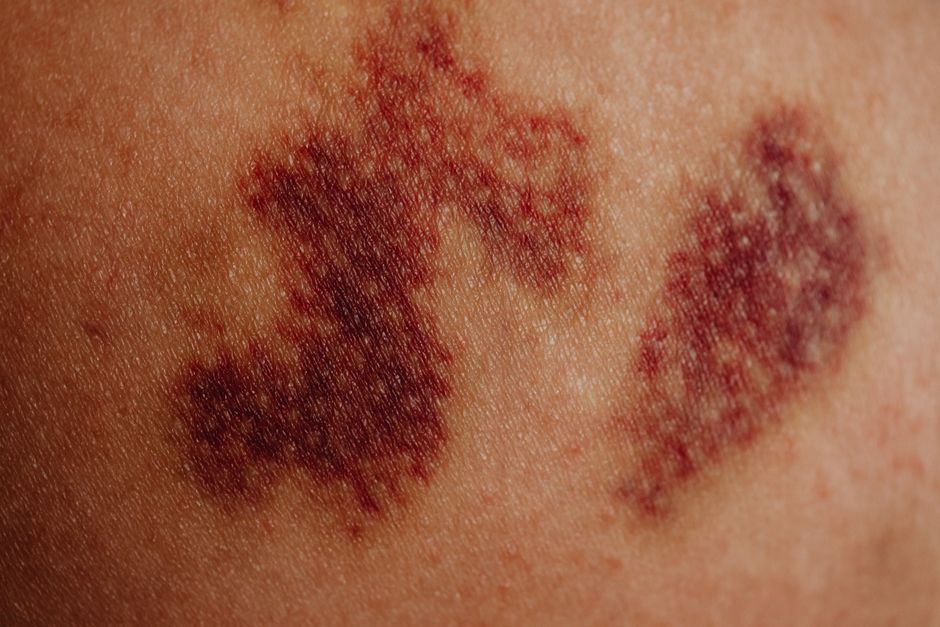
Skin involvement is also common, especially in infants. It can look like a rash, scaly patches, or small bumps that resemble eczema or diaper rash. Because it looks like other conditions, skin LCH is sometimes missed.
Other possible symptoms include:
- Swollen lymph nodes
- Enlarged liver or spleen
- Jaundice (yellowing of the skin or eyes)
- Frequent urination and extreme thirst (from diabetes insipidus)
- Bulging eyes
- Ear drainage or chronic ear infections
- Breathing problems, if the lungs are involved
- Failure to thrive in young children
The presence of diabetes insipidus is significant. It means the pituitary gland or the area around it is affected. This occurs in a minority of LCH patients but is more common when the skull is involved.
How Is LCH Diagnosed?
Diagnosis requires a tissue biopsy. A doctor removes a small sample of the affected tissue and examines it under a microscope. The pathologist looks for the characteristic Langerhans cells and confirms them with special stains.
The key marker is a protein called CD1a. Langerhans cells in LCH test positive for CD1a, along with another marker called langerin (CD207). Finding these markers confirms the diagnosis.
Once LCH is confirmed, doctors stage the disease by determining which organs are involved. This typically includes:
- Blood tests to check liver and kidney function
- Imaging studies such as X-rays, CT scans, or MRI
- Bone scans or PET scans to find bone lesions
- A water deprivation test or blood osmolality test if diabetes insipidus is suspected
LCH is classified as either single-system (one organ or system involved) or multisystem (two or more). It is also classified by whether certain “risk organs” — the liver, spleen, bone marrow, or lungs — are affected. This classification guides treatment and helps predict outcomes.
How Is LCH Treated?
Treatment depends on the extent of the disease, the age of the patient, and which organs are involved. There is no single standard treatment for all cases.
For single-system LCH involving only the skin or a single bone, treatment may be minimal. Some bone lesions heal on their own. Surgery to remove a lesion may be enough. Skin LCH is sometimes treated with topical steroids or other creams.
For multisystem LCH or disease involving risk organs, systemic treatment is usually needed. The mainstay is chemotherapy, typically with drugs like vinblastine and prednisone. These are well-established treatments supported by clinical trials conducted by cooperative groups such as the Histiocyte Society.
Targeted therapies are a newer option. Because many LCH cases involve BRAF mutations, drugs that block the BRAF protein — originally developed for melanoma — have shown benefit in some LCH patients. These include vemurafenib and dabrafenib. However, their long-term effectiveness and safety in LCH are still being studied. They are generally reserved for severe or treatment-resistant cases.
Radiation therapy is used less often than in the past. It may be considered for bone lesions that cause pain or do not respond to other treatments, but there are concerns about long-term side effects, especially in children.
For diabetes insipidus, treatment focuses on replacing the missing hormone with desmopressin. This controls symptoms but does not reverse the underlying pituitary damage.
What Is the Outlook for People With LCH?
Outcomes vary widely. For single-system LCH, the prognosis is generally good. Many cases resolve with minimal treatment, and some heal without any treatment at all.
For multisystem LCH, the outlook depends on which organs are involved and how well the patient responds to treatment. Involvement of risk organs — liver, spleen, bone marrow, or lungs — is associated with a less favorable prognosis. Age also matters; infants under 1 year tend to have more serious disease.
Long-term follow-up is important for all LCH patients. The disease can come back after treatment, and some treatments carry long-term risks. Diabetes insipidus, if it develops, is usually permanent. Growth problems, hearing loss, and other complications can occur.
Research into LCH is ongoing. Understanding of the genetic drivers of the disease has improved significantly in the past decade, leading to new treatment options. Clinical trials continue to test new approaches.
Frequently Asked Questions
Is Handl syndrome the same as Langerhans cell histiocytosis?
Handl syndrome is not a recognized medical term. It likely refers to Hand-Schüller-Christian disease, an older name for a form of LCH involving the skull, diabetes insipidus, and bulging eyes. Modern medicine classifies this as multisystem LCH.
Is LCH a form of cancer?
LCH is classified as a histiocytic disorder, not cancer. However, it shares some features with cancer, including abnormal cell growth and the ability to spread, and it is sometimes treated with chemotherapy.
What is the life expectancy of someone with LCH?
Life expectancy varies widely depending on the extent of disease and organs involved. Single-system LCH generally has a good prognosis, while multisystem disease involving risk organs can be life-threatening.
Can LCH be cured?
Many cases of LCH respond well to treatment and go into remission. Some cases resolve on their own. However, the disease can recur, so long-term follow-up is needed.
