
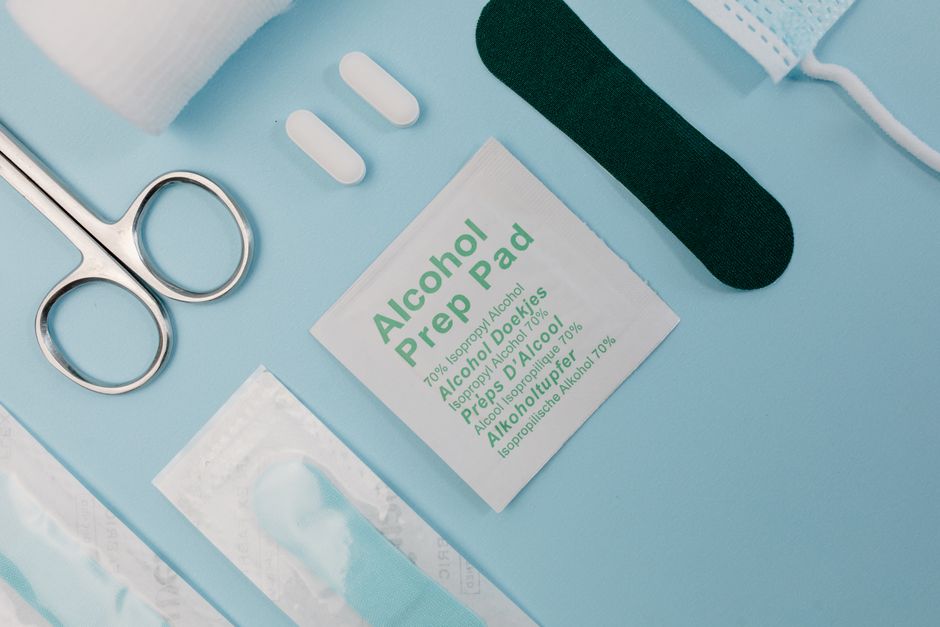
Isopropyl alcohol is a clear, flammable liquid that kills germs on surfaces and skin, dissolves oils and grime, and shows up in everything from first-aid kits to electronics benches. It works because it disrupts the outer membranes of bacteria and many viruses, and because it evaporates quickly without leaving residue. You will find it sold as rubbing alcohol, usually mixed with water at concentrations between 70% and 91%, and sometimes as 99% for cleaning tasks that need almost no water at all.
The concentration matters more than most people realize. A bottle labeled 70% is not a watered-down version of a stronger product. In many everyday situations it is the better choice, and the reason comes down to how the chemistry actually behaves.
What Is Isopropyl Alcohol Used For?
Its main jobs fall into three categories: disinfection, cleaning, and dissolving.
As a disinfectant, it is used on skin before injections, on minor cuts and scrapes, and on hard surfaces like countertops, doorknobs, and medical equipment. As a cleaner, it removes fingerprints, dust, and oily films from glass, stainless steel, and plastic. As a solvent, it thins certain inks, removes adhesive residue, and cleans the contacts inside electronic devices.
It also appears in personal care products as a carrier for other ingredients, and in some industrial processes as a drying agent because it displaces water and then evaporates.
One clarification worth making: isopropyl alcohol and ethyl alcohol are not the same chemical. Ethyl alcohol is the kind in beverages and in some hand sanitizers. Isopropyl alcohol is toxic when swallowed and is never meant for drinking. Products are sometimes confused because both are clear liquids that smell similar and both disinfect.
Why Does 70% Isopropyl Alcohol Work Better Than 99%?
This is the counterintuitive part. Stronger is not always more effective.
Isopropyl alcohol kills microbes by denaturing their proteins and disrupting their cell membranes. That process needs water. Water helps the alcohol cross the cell wall and lets the proteins unfold. In pure or near-pure alcohol, the outer layer of a bacterial cell can coagulate too fast, forming a hardened shell that protects the inside. The microbe survives.
Water also slows evaporation, which gives the alcohol more contact time on the surface. A 99% solution can flash off before it has finished the job.
The 70% concentration is widely used in clinical settings for exactly these reasons. It is the standard for skin antisepsis and for disinfecting small surfaces. Higher concentrations around 90% to 99% are better suited to tasks where water is the enemy — cleaning electronic components, removing water spots, or dissolving certain resins.
That said, concentration is not the only variable. Contact time matters too. Wiping a surface and immediately drying it does not give the alcohol time to act. Letting it stay visibly wet for a period is what does the work.
Does Isopropyl Alcohol Kill Viruses and Bacteria?
It kills many bacteria and several types of viruses, but not all of them.
It is effective against a broad range of bacteria, including many that cause common infections. Against viruses, results depend on the type. Viruses that have a lipid envelope — a fatty outer layer — tend to be more vulnerable. This group includes influenza viruses and coronaviruses. Viruses without that envelope, such as norovirus and some enteroviruses, are generally more resistant.
Bacterial spores, including those that cause tetanus and Clostridium difficile infections, are also largely resistant to alcohol. This is why hospitals do not rely on alcohol alone for every situation and use other agents when spores are a concern.
So the honest position is this: isopropyl alcohol is a useful disinfectant with real limits. It is not a universal germ killer, and no product is.




Is Rubbing Alcohol Safe for Skin?
Occasional use on intact skin is common and generally well tolerated. It is routinely used to clean skin before a blood draw or injection.
Regular or repeated use is a different story. Alcohol strips the natural oils that protect the skin. Over time this can lead to dryness, cracking, and irritation. People with eczema or sensitive skin may react more easily.
It should not be applied to open wounds, deep cuts, or burns. Putting alcohol on damaged tissue causes pain and can slow healing rather than help it. For minor cuts, washing with plain soap and water is the standard approach.
It also should not be used on mucous membranes or near the eyes.
What Are the Safety Risks of Isopropyl Alcohol?
Swallowing is the most serious danger. Even small amounts can cause alcohol poisoning. Symptoms include confusion, vomiting, drowsiness, and in severe cases slowed breathing, coma, and death. Isopropyl alcohol is roughly twice as toxic as ethyl alcohol when ingested, and it is metabolized into acetone, which adds to the effects.
If someone swallows it, this is a medical emergency. Contact poison control or emergency services right away. Do not wait for symptoms to appear.
Inhaling concentrated fumes in a closed space can cause headache, dizziness, and nausea. It is flammable, with a low flash point, so it should be kept away from flames, sparks, and hot surfaces. It should be stored out of reach of children and pets.
For occasional household disinfection, using it in a ventilated area and keeping the container closed is the sensible approach.
How Should You Use and Store It?
For skin, apply a small amount to a cotton ball or pad and wipe the area once. Let it air dry rather than wiping it off.
For surfaces, apply enough to keep the surface wet for a short period, then let it dry. Pre-mixed disinfecting products often list a required wet contact time on the label, and following that is more reliable than guessing.
For electronics, use a small amount on a cloth or swab — never pour liquid directly onto a device. Unplug anything that uses power first.
Store it in its original container, tightly closed, away from heat and direct sunlight. It does not need refrigeration. Keep it out of reach of children, and never transfer it into a food or drink container, where it could be mistaken for something safe to consume.
Frequently Asked Questions
Can I use isopropyl alcohol to clean my phone screen?
Yes, a small amount on a soft cloth is generally safe for most screens, but avoid pouring it directly on the device. Check your manufacturer’s guidance first, since some screens have coatings that alcohol can wear down over time.
Is 91% isopropyl alcohol better for disinfecting than 70%?
No, for most disinfection tasks 70% is the better choice because water helps it penetrate microbes and slows evaporation. The 91% and 99% versions are better suited to cleaning electronics and removing residue.
Can isopropyl alcohol be used on wounds?
No, it should not be applied to open wounds, cuts, or burns. It damages tissue and causes pain; washing with plain soap and water is the standard approach for minor cuts.
What should I do if someone swallows isopropyl alcohol?
Treat it as a medical emergency and contact poison control or emergency services immediately, even if the person seems fine at first. Do not wait for symptoms to develop before getting help.
