
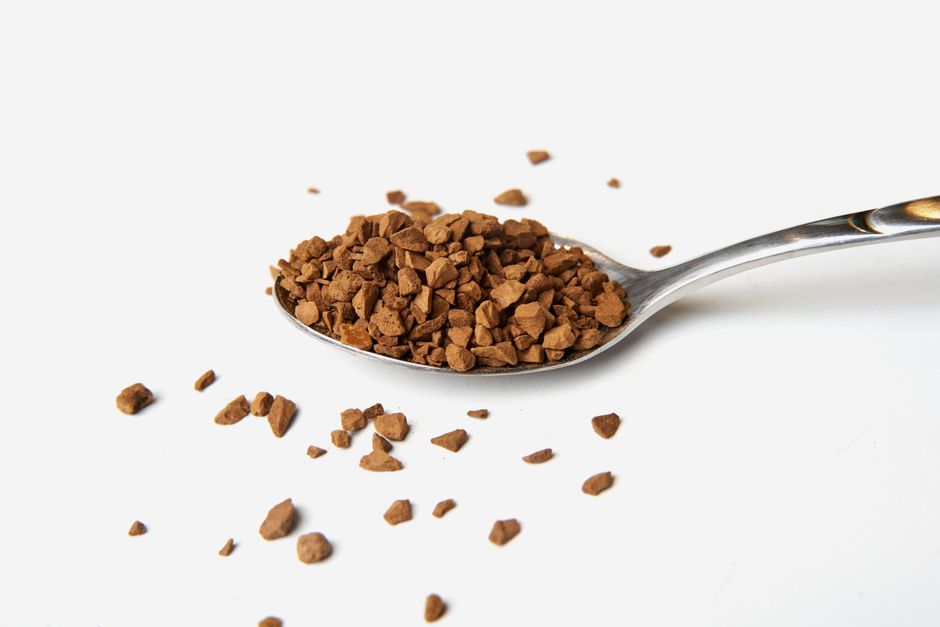
Instant coffee is a dried coffee extract that dissolves quickly in hot water to make a cup of coffee. It is made by brewing ground coffee beans, then removing the water through spray-drying or freeze-drying. The result is a concentrated powder or granule that you can store for months and prepare in seconds.
How Is Instant Coffee Made?
Instant coffee starts the same way as regular coffee. Producers roast, grind, and brew coffee beans into a strong liquid concentrate. Then they remove the water to leave behind solid coffee solids.
There are two main drying methods. Spray-drying shoots the liquid coffee into hot air, which evaporates the water quickly. This is the most common method and produces a fine powder. Freeze-drying freezes the liquid coffee and then places it in a vacuum chamber. The ice turns directly into vapor, leaving larger granules behind. Freeze-dried coffee often costs more and some people say it tastes better.
One important detail: instant coffee uses more coffee beans per cup during production than regular brewed coffee. A single teaspoon of instant coffee represents about two teaspoons of ground coffee beans. This is why the caffeine content can vary.
The process removes most of the volatile compounds that give fresh coffee its aroma. That is why instant coffee does not smell or taste exactly like freshly brewed coffee. Manufacturers sometimes add flavor oils back in after drying.
Does Instant Coffee Have the Same Health Benefits as Brewed Coffee?
Research shows that instant coffee retains many of the same antioxidants found in regular coffee. A study published in the Journal of Agricultural and Food Chemistry found that instant coffee contains similar levels of chlorogenic acid, a key antioxidant, compared to brewed coffee. The difference is small enough that both provide meaningful antioxidant intake.
Instant coffee also contains less acrylamide than many people think. Acrylamide is a chemical that forms when coffee beans are roasted. Some headlines have raised concerns about it. But the levels in instant coffee are far below any amount linked to health problems in humans. The World Health Organization has stated that dietary acrylamide intake from coffee is not a significant cancer risk.
One area where instant coffee differs is caffeine content. Instant coffee typically has less caffeine per cup than brewed coffee. A standard cup of instant coffee contains about 60 to 80 milligrams of caffeine. A similar cup of drip coffee contains 95 to 165 milligrams. This can be an advantage if you want to reduce your caffeine intake without giving up coffee entirely.
Instant coffee also contains more of a compound called acrylamide than brewed coffee, but the amounts are still very small. The difference is about half a microgram per cup versus one microgram. For context, a serving of french fries contains about 60 micrograms.
What Is Instant Coffee’s Caffeine Content Compared to Other Drinks?
The table below shows how instant coffee compares to other common caffeinated drinks. These numbers are averages and individual brands may vary.
| Drink | Serving Size | Average Caffeine (mg) |
|---|---|---|
| Instant coffee | 8 oz (240 ml) | 60-80 |
| Brewed drip coffee | 8 oz (240 ml) | 95-165 |
| Espresso | 1 oz (30 ml) | 47-64 |
| Black tea | 8 oz (240 ml) | 40-70 |
| Green tea | 8 oz (240 ml) | 20-45 |
| Cola | 12 oz (355 ml) | 34-46 |
Instant coffee gives you about half the caffeine of a standard drip coffee. This makes it a reasonable choice if you are sensitive to caffeine or want to avoid the jitters. Some people use instant coffee as a way to taper their caffeine intake gradually.
One thing to watch: some instant coffee brands add extra caffeine. Check the label if you are trying to control your intake. The caffeine content can also vary depending on how much powder you use. A heaping teaspoon gives more caffeine than a level one.





Does Instant Coffee Taste Different From Freshly Brewed Coffee?
Yes, instant coffee tastes different. The drying process removes many of the aromatic compounds that create the complex flavor of fresh coffee. What remains is a simpler, sometimes more bitter taste profile.
Some people describe instant coffee as having a metallic or burnt flavor. This is not your imagination. The spray-drying process exposes the coffee to high heat, which can create harsh flavors. Freeze-dried instant coffee often has a milder taste because the lower temperatures preserve more of the original compounds.
There are ways to improve the taste. Using hot but not boiling water helps. Water that is too hot can extract more bitter compounds from the granules. Adding a pinch of salt can reduce bitterness. Some people mix instant coffee with a small amount of cold water first to dissolve it completely, then add hot water. This can create a smoother texture.
If you are used to fresh coffee, instant coffee will taste different. That does not mean it is bad. Many people prefer the convenience and accept the trade-off in flavor. The key is knowing what you are getting and adjusting your expectations.
What Are the Practical Advantages of Instant Coffee?
Instant coffee has several practical benefits that explain its popularity. It is one of the most convenient ways to make coffee. You do not need any equipment beyond a cup and a spoon. No coffee maker, no filters, no grinder.
It has a very long shelf life. An unopened jar of instant coffee can last two to twenty years depending on the brand and packaging. Once opened it stays fresh for several months if stored in a cool, dry place. This makes it a good option for emergency supplies, camping, or travel.
Instant coffee is also lighter and more compact than whole beans or ground coffee. A small jar can make dozens of cups. This is useful if you have limited storage space or want to pack coffee for a trip without carrying heavy equipment.
The cost per cup is generally lower than brewed coffee, especially if you compare it to buying coffee from a shop. A jar of instant coffee that costs ten dollars can make about 100 cups. That is ten cents per cup. Even premium instant brands cost less than most coffee shop drinks.
What Are the Downsides of Instant Coffee?
Instant coffee is not for everyone. The most common complaint is the taste. People who enjoy the complex flavors of freshly ground coffee often find instant coffee flat or harsh. There is no way around this. The drying process removes flavor compounds that cannot be replaced.
Some studies suggest that instant coffee may have a higher glycemic index than brewed coffee. This means it could cause a quicker rise in blood sugar. The effect is small but worth noting if you have diabetes or prediabetes. The reason is not fully understood but may relate to how the drying process affects the coffee’s carbohydrates.
Instant coffee also contains more of a compound called furan, which forms during heating. Animal studies have linked high furan levels to liver damage. However, the amounts found in instant coffee are far below levels that cause concern in humans. The European Food Safety Authority has stated that furan levels in coffee are not a health risk at typical consumption levels.
There is also the issue of additives. Some instant coffee brands add sugar, creamer, or artificial flavors. Always check the ingredient list if you want pure coffee. The best instant coffee brands list only one ingredient: coffee.
Common Misconceptions About Instant Coffee
A common myth is that instant coffee is made from low-quality beans. This is not entirely accurate. While some brands do use lower-grade beans, many use the same Arabica and Robusta beans found in whole-bean coffee. The quality depends on the brand, not the form.
Another misconception is that instant coffee has no caffeine. As shown in the table above, it does contain caffeine, just less than brewed coffee. Some people mistakenly think that because it dissolves instantly, it must be less potent. The opposite is true. The concentration of coffee solids in instant coffee is actually higher than in brewed coffee by weight.
Some people believe instant coffee is unhealthy because it is processed. Processing does not automatically make food unhealthy. Instant coffee retains most of the antioxidants found in fresh coffee. The processing removes water and some volatile compounds, but it does not remove the beneficial polyphenols.
There is also a belief that instant coffee causes more stomach issues than regular coffee. Some people report this, but there is no strong evidence to support it. The acidity of instant coffee is similar to brewed coffee. If you have a sensitive stomach, the amount you drink and whether you drink it on an empty stomach matter more than the form of coffee.
Frequently Asked Questions
Is instant coffee real coffee?
Yes, instant coffee is real coffee made from brewed coffee beans that have been dried into a soluble powder. It contains the same coffee solids as brewed coffee.
Does instant coffee have more caffeine than regular coffee?
No, instant coffee has less caffeine than regular brewed coffee. A typical cup has about 60 to 80 milligrams compared to 95 to 165 milligrams in drip coffee.
Can instant coffee go bad?
Instant coffee does not spoil in a way that makes you sick, but it loses flavor over time. An unopened jar lasts years and an opened jar stays fresh for several months.
Is instant coffee cheaper than regular coffee?
Yes, instant coffee is generally cheaper per cup than brewed coffee. A jar costing ten dollars can make about 100 cups, making it one of the most affordable coffee options.
