
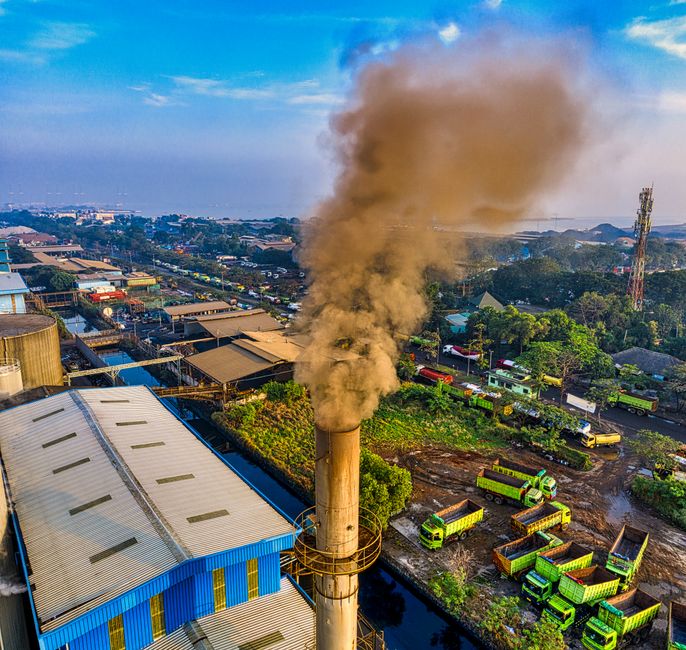
Industrial water is water used for manufacturing, processing, cleaning, and cooling in factories and power plants. It comes from sources like rivers, lakes, groundwater, and municipal supplies, and it requires treatment before use and again before it is released back into the environment. This article explains the main uses, where the water comes from, and how treatment works at each stage.
What Are the Main Uses of Industrial Water?
Industry uses more water than most people realize. In many countries, industrial activity accounts for a significant share of total freshwater withdrawals. The water serves different purposes depending on the sector.
Cooling is the largest single use. Power plants and manufacturing facilities use water to absorb heat from machinery, reactors, and processes. Thermoelectric power plants, for example, withdraw massive volumes of water for cooling, though most of it returns to the source. The water itself is not consumed in the traditional sense, but it is heated, which can affect local ecosystems.
Processing water is used directly in production. Food and beverage plants use water to wash raw ingredients, cook products, and mix formulations. Chemical plants use water as a solvent or reactant. Paper mills use enormous volumes to carry wood fibers through the manufacturing line. In these cases, water becomes part of the product or is contaminated during the process.
Washing and rinsing keeps equipment and finished products clean. Pharmaceutical manufacturing requires highly purified water to prevent contamination. Electronics manufacturers use ultrapure water to rinse silicon wafers. Even less sensitive industries, like textile mills, need clean water for dyeing and finishing fabrics.
Boiler feedwater is a specialized use. Boilers generate steam for heating, power generation, or driving turbines. The water must be treated to remove minerals that would otherwise scale the boiler tubes and cause failures. Steam condensate is often recovered and reused, but makeup water is still needed to replace losses.
Sanitary and facility uses include restrooms, landscaping, and general housekeeping. These uses are similar to municipal water use but on a much larger scale.
Where Does Industrial Water Come From?
Factories draw water from whatever sources are available and legally accessible. The choice depends on location, cost, and local regulations.
Surface water from rivers, lakes, and reservoirs is the most common source. Facilities located near large water bodies have direct access. The water quality varies with the season, upstream activities, and weather events. Surface water typically requires significant treatment before use because it contains suspended solids, organic matter, and microorganisms.
Groundwater comes from wells tapping into aquifers. Groundwater is generally cleaner than surface water because the soil filters out many contaminants. However, it often contains high levels of dissolved minerals like calcium, magnesium, and iron. These minerals cause hardness and scaling in pipes and equipment. Some groundwater contains naturally occurring arsenic or other metals that require specialized treatment.
Municipal water supplies serve many industrial facilities. The factory buys treated drinking water from the local utility. This is the simplest option because the water is already potable. But it is also the most expensive, and some municipalities restrict industrial use during droughts. Even municipal water may need further treatment for specific industrial applications, especially high-purity requirements.
Reclaimed or recycled water is an increasingly important source. Some facilities treat their own wastewater and reuse it within the plant. Others purchase treated effluent from municipal wastewater plants. This approach reduces freshwater demand and is often encouraged by regulators. The water quality is suitable for cooling and some processing uses but not for applications requiring high purity.
How Is Industrial Water Treated Before Use?
Raw water, whether from a river or a well, contains impurities that can damage equipment or ruin products. The treatment process removes these impurities before the water enters the facility’s distribution system.
Filtration removes suspended particles. Sand filters, cartridge filters, and membrane filters catch sediment, algae, and debris. The level of filtration depends on the application. Cooling water may only need coarse screening. Electronics manufacturing requires filtration down to the sub-micron level.
Softening removes calcium and magnesium ions that cause scale. Ion exchange resins swap sodium for the hardness minerals. Softened water prevents scale buildup in pipes, boilers, and heat exchangers. Some facilities use reverse osmosis instead, which removes nearly all dissolved minerals.
Chemical conditioning adjusts the water’s chemistry. pH adjustment prevents corrosion in metal pipes. Corrosion inhibitors form a protective film on pipe surfaces. Biocides control algae and bacteria growth in cooling towers. Antiscalants prevent mineral deposits even when the water is concentrated through evaporation.
Disinfection kills pathogens. Chlorine, ozone, and ultraviolet light are common methods. This step matters most for food and beverage production and pharmaceutical manufacturing, where microbial contamination is a serious risk.
Deionization produces ultrapure water by removing essentially all dissolved ions. This is critical for semiconductor fabrication, pharmaceutical production, and high-pressure boilers. Deionized water is so pure that it can leach metals from piping, so it is often stored in specialized materials.





How Is Industrial Wastewater Treated Before Discharge?
Water that has been used in industrial processes contains contaminants that cannot be released directly into rivers or sewers. The treatment approach depends on what is in the water.
Primary treatment removes solids. Screens catch large debris. Settling tanks allow heavier particles to sink. Oil and grease float to the surface and are skimmed off. This stage removes maybe half of the suspended solids but does little to dissolved contaminants.
Secondary treatment uses biological processes to break down organic matter. Bacteria consume the organic pollutants, converting them to carbon dioxide and water. This is the same process used in municipal wastewater treatment. Food processing plants, breweries, and paper mills generate wastewater that responds well to biological treatment.
Tertiary treatment polishes the water further. Filtration removes remaining suspended solids. Nutrient removal strips out nitrogen and phosphorus that could cause algal blooms in receiving waters. Disinfection kills remaining pathogens. At this point, the water may be clean enough for discharge or for reuse within the facility.
Specialized treatment handles industrial-specific pollutants. Heavy metals like lead, chromium, and cadmium require chemical precipitation followed by settling. The metals are converted to insoluble forms that can be filtered out. Organic solvents may be removed by air stripping or activated carbon adsorption. Cyanide from metal plating operations requires oxidation with chlorine or hydrogen peroxide.
Zero liquid discharge is an advanced approach where no wastewater leaves the facility. The water is treated, evaporated, and condensed for reuse. The remaining solids are disposed of as hazardous waste. This is expensive but eliminates the discharge problem entirely. It is used mainly where discharge regulations are strict or water is scarce.
Why Does Industrial Water Treatment Matter?
The stakes go beyond regulatory compliance. Poorly treated water damages equipment, ruins products, and harms the environment.
Untreated cooling water causes scale that insulates heat transfer surfaces. The facility uses more energy to achieve the same cooling. Corrosion shortens equipment life and causes leaks. Biological growth clogs pipes and reduces flow. These problems cost money and can force unplanned shutdowns.
Inadequate wastewater treatment has direct environmental consequences. Organic waste depletes oxygen in rivers, killing fish. Nutrients cause excessive algae growth. Heavy metals accumulate in sediments and enter the food chain. These effects are well documented and have driven the modern regulatory framework.
The energy cost of water treatment is also significant. Pumping, heating, filtering, and disinfecting water consumes electricity. Some facilities spend more energy on water than on any other auxiliary system. Efficient water management is therefore both an environmental and an economic issue.
What Are the Trends in Industrial Water Management?
Water scarcity is changing how industry views water. Facilities in water-stressed regions are investing in recycling and reuse to reduce their dependence on freshwater supplies.
Closed-loop systems are becoming more common. Cooling water is recirculated rather than discharged after a single pass. The water is treated, cooled, and sent back through the system. This reduces water withdrawal by 90 percent or more compared to once-through systems.
Water auditing has become standard practice. Facilities measure water use at every point in their operations to identify waste and inefficiency. Leaks are repaired. Processes are optimized to use less water. Some facilities have reduced water use by half through auditing alone.
Digital monitoring provides real-time data on water quality and flow. Sensors detect contamination early, allowing treatment adjustments before problems develop. Predictive analytics identify equipment that is about to fail. These tools improve reliability and reduce chemical usage.
Regulatory pressure continues to drive change. Discharge permits are becoming stricter. Some jurisdictions require facilities to meet specific water quality standards before release. Others charge fees based on the volume and pollutant load of discharged water. These policies make treatment investment financially attractive.
Frequently Asked Questions
What is the difference between process water and cooling water?
Process water comes into direct contact with the product or raw materials during manufacturing. Cooling water only absorbs heat and typically does not touch the product itself.
Can industrial wastewater be reused for drinking?
Yes, with advanced treatment, but this is rare and not standard practice. Most industrial reuse is for non-potable purposes like cooling or irrigation, not drinking water.
How much water does industry use compared to homes?
Industrial water use varies by region, but it often exceeds residential use in industrialized countries. Thermoelectric power generation alone accounts for a large share of total withdrawals.
What is the most common industrial water treatment method?
Filtration combined with chemical conditioning is the most common approach. Most facilities use some form of filtration, pH adjustment, and corrosion control as a baseline.
