
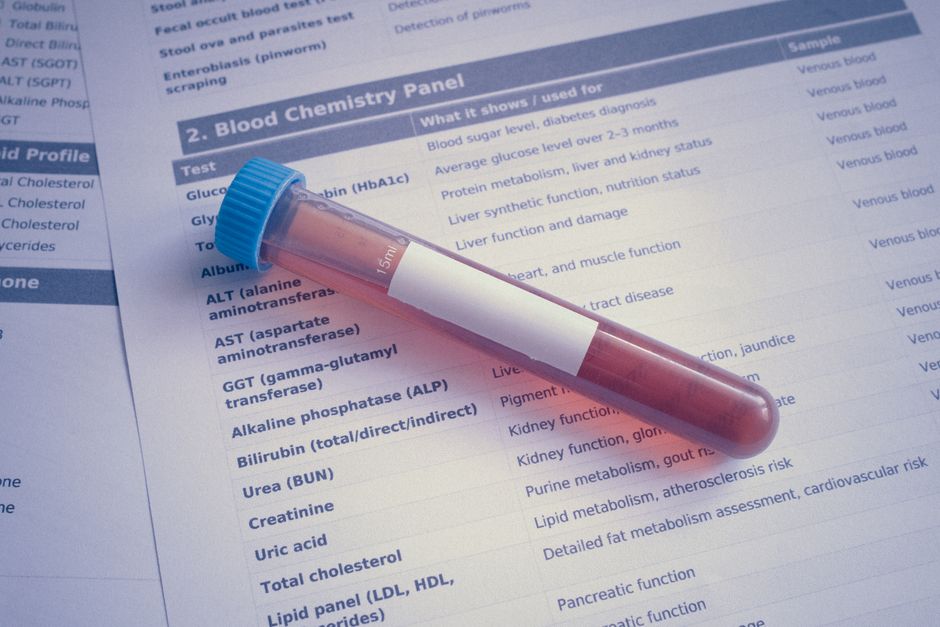
An autoimmune panel is a group of blood tests that look for antibodies your immune system may be making against your own tissues. It usually includes a few broad screening tests, like ANA and CRP, plus specific antibody tests that a doctor adds based on your symptoms. No single panel covers every autoimmune disease, and results only mean something when they are read alongside your history and a physical exam.
What Is Included In An Autoimmune Panel?
There is no single standard panel. “Autoimmune panel” is a general label, and what gets ordered varies by doctor, lab, and symptom.
Most panels start with a small set of broad tests. These do not diagnose a specific disease, but they can point toward or away from autoimmune activity:
- ANA (antinuclear antibody): The most common screening test. It looks for antibodies that target the nucleus of your cells.
- ESR and CRP: These measure general inflammation in the body. They are not specific to autoimmune disease. Infections, injuries, and other conditions can raise them too.
- Complete blood count (CBC): Checks red cells, white cells, and platelets. Low counts can appear in some autoimmune conditions.
- Complement proteins (C3, C4): Part of the immune system. Levels can shift in certain diseases like lupus.
From there, a doctor may add targeted tests based on your symptoms. Common ones include anti-dsDNA and anti-Smith for lupus, rheumatoid factor and anti-CCP for rheumatoid arthritis, and anti-tTG for celiac disease. The exact list depends on what the doctor is looking for.
Why Isn’t There One Standard Panel?
Autoimmune diseases are not one condition. There are more than 80 recognized types, and each involves different antibodies and different organs.
A test that helps confirm one disease may be useless for another. Anti-CCP, for example, is strongly tied to rheumatoid arthritis but tells you nothing about thyroid disease. Ordering every possible antibody test at once would produce a lot of noise and very little useful information.
This is why panels are built around symptoms. A doctor who hears about joint pain and morning stiffness orders different tests than one who hears about fatigue and a butterfly-shaped facial rash. The symptoms guide the tests, not the other way around.
What Does a Positive ANA Result Actually Mean?
A positive ANA does not mean you have an autoimmune disease. It is one of the most misunderstood results in medicine.
ANA is a screening test. It is designed to catch possible cases, which means it also flags many people who are perfectly healthy. A meaningful share of healthy adults test positive, and the rate rises with age. Some studies suggest that a substantial minority of people without any autoimmune disease have a positive ANA.
So a positive result on its own is not a diagnosis. Doctors look at the pattern and strength of the result, along with your symptoms and other tests. A high titer with specific symptoms points one way. A low titer in someone with no symptoms often means very little.
This is the non-obvious part that trips people up. A negative ANA is often more useful than a positive one, because it makes several autoimmune conditions much less likely. A positive result, by contrast, often just opens more questions.





When Would a Doctor Order These Tests?
Doctors order autoimmune testing when symptoms suggest the immune system may be attacking the body. The clues are usually persistent and hard to explain.
Common reasons include:
- Joint pain, swelling, or stiffness that lasts weeks
- Unexplained fatigue that does not improve with rest
- Skin rashes, especially ones that do not respond to usual treatment
- Recurring fevers with no clear cause
- Hair loss, mouth sores, or sensitivity to sun
- Symptoms affecting multiple organs at once
These tests are not routine screening for the general public. Guidelines do not support testing people who have no symptoms, because random testing in healthy people produces false alarms that lead to worry, more tests, and sometimes unnecessary treatment.
What Do the Results Mean Together?
Results are read as a pattern, not as isolated numbers. One abnormal value rarely settles anything.
Doctors combine three things: your symptoms, your exam findings, and the lab pattern. A specific antibody combined with matching symptoms is far more meaningful than either one alone. This is why a rheumatologist may repeat tests over time. Some antibodies and patterns become clearer as a disease develops.
It also matters that not all autoimmune diseases show up in blood tests. Some are diagnosed mainly through symptoms, imaging, or tissue biopsy. A normal panel does not rule out autoimmune disease in every case.
What Are Common False Positives and False Negatives?
Autoimmune testing is prone to both. Understanding this helps you avoid panic or false relief.
False positives happen when a test says something is present that is not. ANA is a frequent example. Infections, certain medications, pregnancy, and simply getting older can all produce a positive ANA in someone without autoimmune disease.
False negatives happen when a test misses something that is there. Early in a disease, antibody levels may be too low to detect. Some people with a confirmed autoimmune disease never test positive on the screening test.
This is a key reason doctors do not treat a lab number by itself. Treatment is based on the whole picture, and often on whether symptoms are affecting your daily life and organs.
Should You Get an Autoimmune Panel on Your Own?
Direct-to-consumer and self-ordered panels are widely available, but they come with real limits. A result without a doctor’s interpretation can mislead you in either direction.
If you order these tests yourself, you may get a positive result that means nothing, or a normal result that gives false comfort. Neither is helpful. The value of these tests depends heavily on being ordered and read by someone who knows your symptoms and history.
If you have persistent symptoms that concern you, the more useful step is to see a doctor who can examine you and decide which tests, if any, make sense. Testing without a clinical reason tends to create more problems than it solves.
What Happens After Abnormal Results?
Abnormal results usually lead to more questions, not immediate answers. The next step is often referral to a specialist such as a rheumatologist.
The specialist may repeat tests, order additional ones, or look for signs the first round did not capture. Sometimes the answer is a specific diagnosis. Sometimes it is watchful waiting, because the pattern is not yet clear. Autoimmune conditions can take time to declare themselves.
It helps to bring your full symptom history to these visits. When symptoms started, what makes them better or worse, and which parts of your body are involved all shape how the results are read.
Frequently Asked Questions
What blood tests are usually in an autoimmune panel?
Most panels include ANA, ESR, CRP, and a complete blood count as broad screening tests. Specific antibody tests are added based on your symptoms rather than ordered all at once.
Does a positive ANA mean I have an autoimmune disease?
No. A positive ANA is common in healthy people, especially as they get older, and it is only a screening clue. It means something only when combined with symptoms and other test results.
Can an autoimmune panel rule out all autoimmune diseases?
No. Some autoimmune conditions are diagnosed mainly through symptoms, imaging, or biopsy, and early disease can produce normal blood tests. A normal panel does not rule everything out.
Should I get an autoimmune panel if I have no symptoms?
Guidelines do not support routine testing in people without symptoms, because it produces false alarms and unnecessary follow-up. Testing is most useful when symptoms point toward a possible autoimmune cause.
