
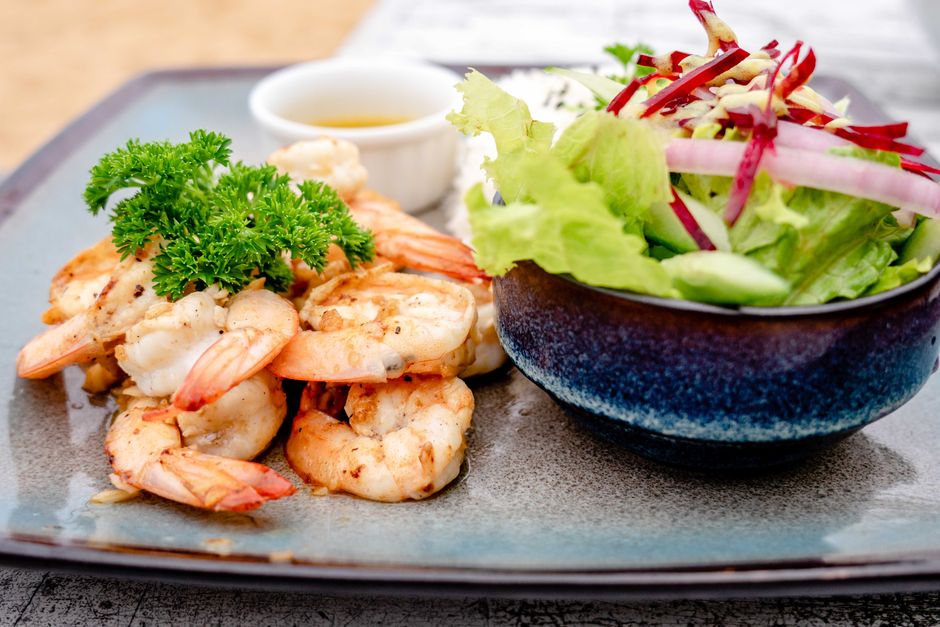
Shrimp is one of the leanest animal proteins you can put on a plate. A 3-ounce cooked serving has roughly 84 calories, about 18 grams of protein, and less than 1 gram of fat. It also delivers iodine, selenium, and vitamin B12. The one number that surprises people is cholesterol: that same serving carries around 130 to 160 milligrams. Whether that matters is a more interesting question than the number itself.
What Is In Shrimp Nutrition Cholesterol More?
Shrimp’s nutrition profile is unusual among animal foods. It is high in protein and very low in saturated fat, yet relatively high in dietary cholesterol. Those two facts sit side by side, and the second one has shaped shrimp’s reputation far more than the first.
Here is the approximate nutrition for a 3-ounce (85-gram) serving of cooked shrimp, based on USDA data:
| Nutrient | Amount per 3 oz cooked |
|---|---|
| Calories | ~84 |
| Protein | ~18 g |
| Total fat | ~0.2 g |
| Saturated fat | ~0.1 g |
| Cholesterol | ~130–160 mg |
| Selenium | ~40–45 mcg |
| Vitamin B12 | ~1.2–1.4 mcg |
| Iodine | Varies widely by source |
| Sodium (plain, unseasoned) | ~100–200 mg |
The cholesterol figure is the one most people fixate on. It is also the one most often misunderstood. Dietary cholesterol and blood cholesterol are related, but not in the simple straight-line way many people assume.
Shrimp is also a source of astaxanthin, the pigment that gives cooked shrimp its pink color. It is a carotenoid with antioxidant properties. That is worth mentioning only as a minor point — the amounts in a serving are not large, and no strong human evidence shows a meaningful health effect from shrimp-derived astaxanthin at typical dietary levels.
Does Shrimp Raise Your Blood Cholesterol?
For most people, eating shrimp does not meaningfully raise LDL cholesterol. That runs against what many people were told for decades, so it deserves a clear explanation.
The body makes most of its own cholesterol. The liver produces it, and the liver also adjusts production based on what you eat. When dietary cholesterol goes up, the liver typically compensates by making less. This feedback loop is why dietary cholesterol has a smaller effect on blood cholesterol than once believed.
Saturated fat and trans fat have a larger effect on LDL cholesterol than dietary cholesterol does for most people. Shrimp is almost free of saturated fat. That combination — high cholesterol, low saturated fat — is why shrimp behaves differently from foods like fatty cuts of meat or butter.
Some people are more responsive to dietary cholesterol than others. This is often called being a “hyper-responder.” For these individuals, eating cholesterol-rich foods does raise blood cholesterol more noticeably. The effect varies from person to person, and there is no simple way to predict who will respond strongly without testing.
People with familial hypercholesterolemia, a genetic condition that causes very high LDL from birth, need to manage their diet and treatment with medical guidance. General population findings do not automatically apply to them.
Is Shrimp Good for Your Heart?
The evidence does not support avoiding shrimp for heart health reasons in most people. Shrimp fits well into dietary patterns associated with lower cardiovascular risk, largely because it replaces foods higher in saturated fat.
Research on shrimp specifically has found that eating it does not raise LDL cholesterol in most study participants, and in some studies it raised HDL cholesterol modestly. Those findings come from relatively small studies, so they should be read as supportive rather than definitive. The larger body of evidence on heart-healthy eating consistently points to reducing saturated fat and increasing unsaturated fat sources, vegetables, and fiber.
Shrimp’s role in that picture is as a lean protein. It is low in calories and saturated fat, and it can replace processed meats or fatty cuts of beef in a meal. That substitution is where the heart benefit comes from — not from shrimp itself doing something special.
How Does Shrimp Compare to Other Proteins?
Shrimp’s cholesterol is higher than chicken breast or white fish, but its saturated fat is lower than most red meat. That distinction matters more than the cholesterol number alone.
- Chicken breast (3 oz cooked): about 128 calories, 26 g protein, roughly 70–85 mg cholesterol, about 1 g saturated fat
- Salmon (3 oz cooked): about 175 calories, 19 g protein, roughly 50–65 mg cholesterol, about 2–3 g saturated fat, plus omega-3 fatty acids
- Lean ground beef, 90% lean (3 oz cooked): about 180 calories, 22 g protein, roughly 65–75 mg cholesterol, about 4–5 g saturated fat
- Shrimp (3 oz cooked): about 84 calories, 18 g protein, roughly 130–160 mg cholesterol, under 1 g saturated fat
Shrimp has the lowest calorie count and the lowest saturated fat of these options. It also has the highest cholesterol. For most people, the low saturated fat and low calorie profile outweighs the cholesterol figure.
One practical note: how shrimp is prepared changes the picture. Breaded and fried shrimp, or shrimp in butter and cream sauces, adds substantial saturated fat and calories. Plain boiled, steamed, grilled, or sautéed in olive oil keeps shrimp in the lean-protein category.
How Much Shrimp Can You Eat?
There is no official recommended limit on shrimp for the general population. Dietary guidelines in the United States no longer set a strict daily cap on cholesterol the way earlier versions did. The focus has shifted toward overall eating patterns and limiting saturated fat.
That said, variety matters. Shrimp is a good protein choice, but so are fish, poultry, legumes, and eggs. Rotating protein sources gives you a broader range of nutrients — including omega-3 fats from fatty fish, which shrimp provides very little of.
Shrimp is also a common allergen. Shellfish allergy is one of the most common food allergies in adults, and it can be serious. People with a known shellfish allergy should avoid shrimp entirely.
Shrimp is a notable source of iodine, but the amount varies significantly depending on where and how it was farmed or caught. Iodine matters for thyroid function. People with thyroid conditions who are watching iodine intake should be aware that shrimp can contribute a meaningful amount, though the exact content is not consistent enough to count on.
What About Shrimp and Purines?
Shrimp is moderately high in purines, compounds that break down into uric acid in the body. For most people this is not a concern. For people with gout, it is worth knowing.
Gout is caused by uric acid crystals forming in joints. High-purine foods can raise uric acid levels. Seafood, including shrimp, is among the foods often discussed in gout management. The relationship is real but more nuanced than simply avoiding all purine-rich foods — some high-purine vegetables, for example, do not appear to raise gout risk the way meat and seafood do.
People with gout should discuss diet with their clinician rather than eliminating shrimp based on general advice. Individual tolerance and overall uric acid control vary.
Is Shrimp Safe to Eat Regularly?
Shrimp is safe for most people when cooked properly. Raw or undercooked shrimp can carry bacteria and parasites, so it should be cooked until opaque throughout. The FDA advises cooking seafood to an internal temperature of 145°F.
For pregnant women, young children, older adults, and people with weakened immune systems, food safety guidance around seafood is especially important. Cooked shrimp is generally considered safe for these groups when properly prepared. Raw shrimp, ceviche made with raw shrimp, and similar preparations carry higher risk.
Shrimp can also be a source of concern around allergens and, in some cases, contamination depending on sourcing. Buying from reputable suppliers and cooking thoroughly addresses the main food safety concerns.
Frequently Asked Questions
Is shrimp high in cholesterol?
Yes, shrimp is relatively high in dietary cholesterol, at roughly 130 to 160 mg per 3-ounce cooked serving. However, it is very low in saturated fat, which has a larger effect on blood cholesterol for most people.
Does eating shrimp raise LDL cholesterol?
For most people, shrimp does not meaningfully raise LDL cholesterol, based on small studies and the understanding of how dietary cholesterol affects the body. Some people are more responsive to dietary cholesterol than others, so individual results vary.
Is shrimp good for you?
Shrimp is a lean, high-protein food that is low in calories and saturated fat, and it provides selenium, vitamin B12, and iodine. It fits well into a balanced diet when prepared without heavy breading, butter, or cream sauces.
Can you eat shrimp every day?
There is no official limit on shrimp for most healthy people, but variety in protein sources is generally recommended. People with shellfish allergy or gout should follow individualized medical advice.
