
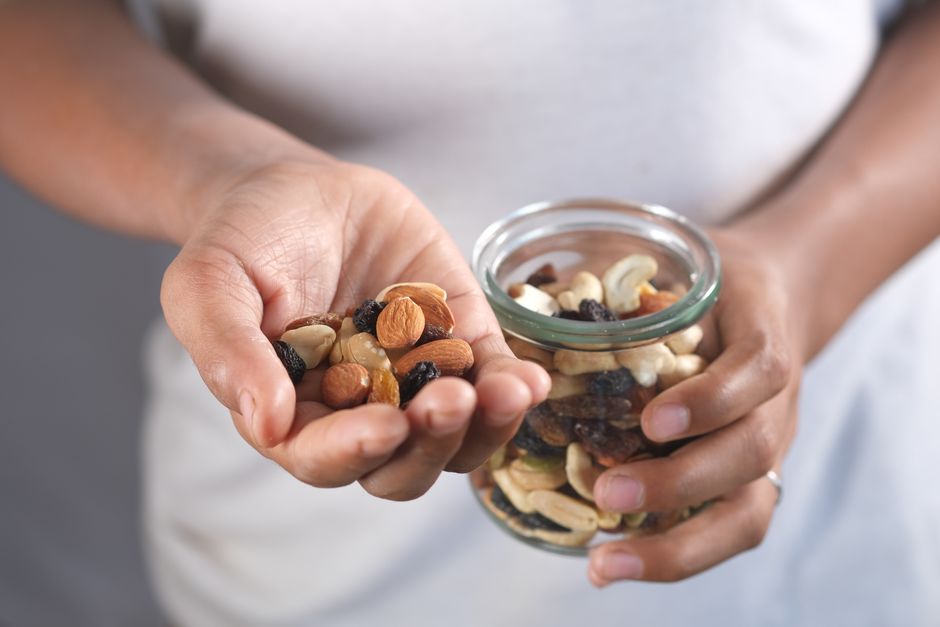
Cashews are the kidney-shaped seeds of the cashew tree, and they are nutritionally closer to nuts like almonds and walnuts than you might expect. A one-ounce serving — about 18 whole cashews — delivers roughly 157 calories, 5 grams of protein, and 12 grams of fat, most of it unsaturated. They are also a meaningful source of magnesium, copper, and zinc, three minerals many Americans do not get enough of.
What Is In Cashew Nuts? The Basics
Cashews are seeds, not true nuts. They grow at the bottom of a fruit called the cashew apple, which is native to Brazil and now grown widely in India, Vietnam, and parts of Africa. The shell around the raw seed contains urushiol — the same irritant found in poison ivy — so cashews are always sold shelled and usually roasted or steamed.
From a nutrition standpoint, a one-ounce serving (28 grams, about 18 kernels) contains:
- 157 calories
- 5 grams of protein
- 12 grams of fat, mostly monounsaturated and polyunsaturated
- 9 grams of carbohydrate, including about 1 gram of fiber
- 69 milligrams of magnesium
- 0.6 milligrams of copper
- 1.6 milligrams of zinc
- 187 milligrams of potassium
- Small amounts of iron, vitamin K, and B vitamins
These figures come from the USDA FoodData Central database and reflect raw cashews. Roasted and salted varieties differ mainly in sodium content, which can climb to around 180 milligrams per ounce depending on the brand.
Are Cashews Good for You or Bad for You?
For most people, cashews fit comfortably into a healthy diet. They are calorie-dense, which means portion size matters, but the fat they contain is predominantly unsaturated. Research consistently shows that nut consumption is associated with lower rates of cardiovascular disease, though most of that research has focused on tree nuts broadly rather than cashews alone.
One nuance worth knowing: cashews contain less fiber and less alpha-linolenic acid (an omega-3 fat) than walnuts. They also contain more starch than most nuts — roughly 9 grams of carbohydrate per ounce, compared to about 3 grams in almonds. That does not make them unhealthy, but it does mean they behave a little differently in the body.
The evidence on cashews specifically is more limited than the evidence on nuts as a category. Most large cohort studies group cashews with other nuts, so separating out their individual effects is difficult. What can be said with confidence is that cashews are not harmful for the general population and appear to be at least neutral, and probably modestly beneficial, when eaten as part of a balanced diet.
What Nutrients Do Cashews Provide?
Cashews are one of the better food sources of copper and magnesium. Copper is involved in iron metabolism, connective tissue formation, and energy production. Magnesium plays a role in muscle and nerve function, blood sugar regulation, and bone structure. A one-ounce serving provides roughly 20% of the daily value for magnesium and about 70% of the daily value for copper for adults.
Zinc is present in smaller but still meaningful amounts. Zinc supports immune function and wound healing. Cashews also contain plant sterols, which can modestly reduce cholesterol absorption in the gut, though the effect from a typical serving is small.
What cashews do not provide in meaningful amounts:
- Omega-3 fatty acids (walnuts and flaxseeds are far better sources)
- Vitamin E (almonds and sunflower seeds are stronger sources)
- Calcium (unless the product is fortified)
- Fiber (about 1 gram per ounce, compared to 3-4 grams in almonds or pistachios)





How Do Cashews Compare to Other Nuts?
The table below compares one-ounce servings of raw cashews with three other common nuts. All figures are from USDA data and are approximate.
| Nut (1 oz) | Calories | Protein | Fat | Carbs | Fiber | Magnesium |
|---|---|---|---|---|---|---|
| Cashews | 157 | 5 g | 12 g | 9 g | 1 g | 69 mg |
| Almonds | 164 | 6 g | 14 g | 6 g | 4 g | 76 mg |
| Walnuts | 185 | 4 g | 18 g | 4 g | 2 g | 45 mg |
| Pistachios | 159 | 6 g | 13 g | 8 g | 3 g | 30 mg |
Cashews land in the middle of the pack. They have slightly more carbohydrate and less fiber than most nuts, but they are competitive on magnesium and copper. If fiber or omega-3s are your priority, cashews are not the best choice. If you want a mineral-rich snack with a creamy texture, they work well.
Do Cashews Cause Weight Gain?
Not on their own, and probably less than their calorie count suggests. This is one of the more interesting findings in nut research: people who eat nuts regularly tend to weigh slightly less than people who do not, even though nuts are calorie-dense. Several factors likely explain this.
First, not all the fat in nuts is absorbed. Some is trapped in cell walls that pass through the digestive tract intact. Second, nuts are satiating — they blunt appetite, which can reduce how much you eat at later meals. Third, chewing nuts takes effort, which slows eating.
That said, none of this is a license to eat cashews by the handful without thinking. A one-ounce serving is about 18 kernels. A typical “small handful” from a party bowl is often two or three times that. The calories still count.
Are There Risks or Downsides to Eating Cashews?
For most people, cashews are safe. There are a few specific situations worth knowing about.
Tree nut allergy. Cashews are a tree nut, and cashew allergy is one of the more common tree nut allergies. It can be severe, including anaphylaxis. Anyone with a known tree nut allergy should avoid cashews unless a clinician has specifically cleared them.
Kidney stones. Cashews contain oxalates, compounds that can contribute to calcium oxalate stones in people who are prone to forming them. The oxalate content of cashews is moderate — lower than spinach or almonds, higher than most other nuts. People with a history of oxalate kidney stones may be advised to limit high-oxalate foods, but this is a conversation to have with a doctor or dietitian, not a blanket rule.
Sodium. Roasted and salted cashews can carry a significant sodium load. For people watching blood pressure, unsalted varieties are the better choice.
Raw cashews and urushiol. Truly raw cashews — straight from the shell — are not sold in stores because the shell oil is irritating. What is labeled “raw” in the US is typically dried or steamed, not straight from the tree. This is a labeling quirk, not a safety issue.
How Should You Store Cashews?
Cashews go rancid faster than many people expect because of their unsaturated fat content. At room temperature in a sealed container, they keep for about one to three months. In the refrigerator, that extends to roughly six months. In the freezer, up to a year.
Signs of rancidity include a bitter or paint-like smell and a stale taste. If cashews smell off, throw them out — rancid fats are not a health food. Buying in smaller quantities more often is usually better than stocking up on a large bag that sits in the pantry.
How Do Cashews Fit Into Specific Diets?
Cashews work in most eating patterns, with a few caveats.
- Plant-based and vegan diets: Cashews are a useful source of protein, zinc, and iron, though the iron is non-heme and less absorbable than iron from meat. Pairing them with vitamin C-rich foods improves absorption.
- Low-carb and keto diets: Cashews are higher in carbs than most nuts. They are usually limited or avoided on strict low-carb plans.
- Diabetes: Cashews have a low glycemic index, but the carbohydrate still counts. Portion control matters more than the type of nut.
- Heart-healthy diets: Unsalted cashews fit well in Mediterranean-style eating patterns, which emphasize nuts as a regular protein source.
Cashew butter and cashew milk are popular alternatives to dairy and peanut products. Cashew milk is very low in protein compared to cow’s milk or soy milk — usually around 1 gram per cup — so it is not a nutritionally equivalent swap if protein is a goal.
Frequently Asked Questions
Are cashews actually a nut?
No, cashews are seeds that grow at the bottom of the cashew apple fruit. They are grouped with tree nuts for culinary and allergy purposes, but botanically they are not true nuts.
How many cashews should I eat in a day?
There is no official recommended number, but a one-ounce serving — about 18 kernels — is the standard reference portion used in nutrition data. Eating more is not harmful for most people, but the calories add up quickly.
Are cashews high in carbs?
They contain about 9 grams of carbohydrate per ounce, which is higher than most other nuts. That is roughly 1 gram of fiber and the rest mostly starch.
Can cashews help lower cholesterol?
Nuts as a category are associated with modest improvements in cholesterol when they replace saturated fat sources, but evidence specific to cashews is limited. They are not a substitute for medical treatment if cholesterol is clinically elevated.
