
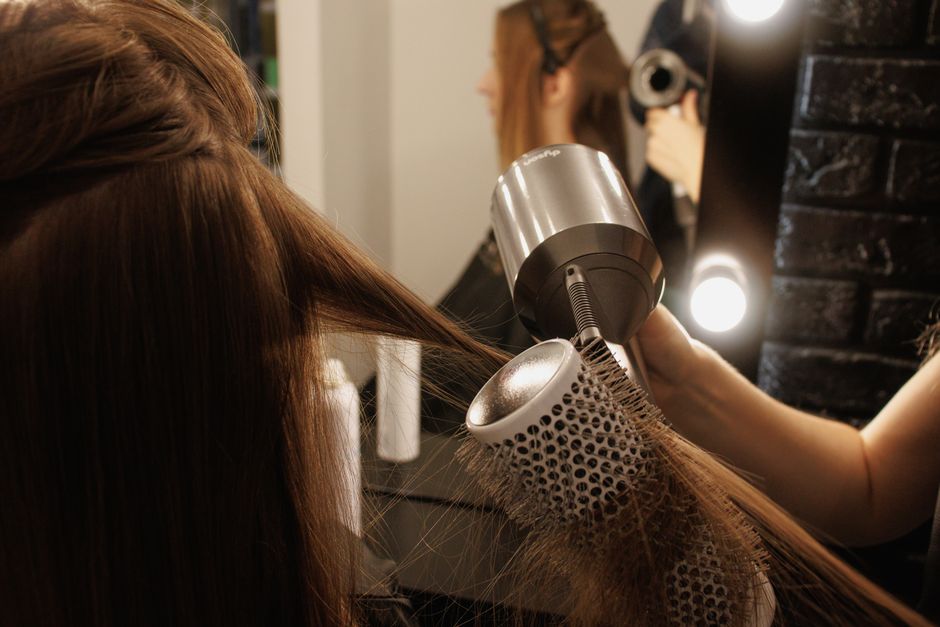
Brazilian Blowout is a professional hair straightening treatment that uses a formaldehyde-based solution to temporarily smooth and straighten hair. The main active ingredient is formaldehyde, which breaks and reforms the protein bonds in the hair shaft. Many versions of the treatment also contain methylene glycol, a liquid form of formaldehyde that releases formaldehyde gas when heated.
What Ingredients Are In a Brazilian Blowout?
The exact formula varies by brand, but the core chemistry is consistent. The original Brazilian Blowout solution contains:
- Formaldehyde or methylene glycol — the active straightening agent
- Water — as a solvent
- Hydrolyzed keratin — a protein meant to coat and strengthen hair
- Conditioners and silicones — to add shine and smoothness
- Preservatives and fragrance
Methylene glycol deserves special attention. Chemically, it is formaldehyde dissolved in water. When the solution is heated with a flat iron during the treatment, methylene glycol releases formaldehyde gas. This is the same chemical that does the straightening — and it is also the one that raises health concerns.
Some newer formulas claim to be “formaldehyde-free.” But many of these still contain other aldehydes, such as glyoxylic acid or glutaraldehyde, that can produce similar chemical effects and similar risks. No independent testing has broadly confirmed that any alternative is safer.
How Does Formaldehyde Straighten Hair?
Formaldehyde is a small, reactive molecule. When applied to wet hair and then heated, it penetrates the hair shaft and reacts with the amino acids in keratin proteins. This reaction creates new cross-links — permanent bonds between protein chains — that lock the hair into a straighter shape.
The process is irreversible at the chemical level. The hair will not return to its original curly state unless it grows out or is cut. Over time, washing and wear can loosen some of the smoothing effect, but the underlying chemical bonds remain. That is why results last about three to five months, until new hair grows from the root.
This is the same mechanism used in some formaldehyde-based embalming fluids. The chemical does not discriminate between living and dead tissue. It cross-links proteins wherever it contacts them — which is also why it can irritate the skin, eyes, and lungs of the person applying it and the person receiving it.
Is Brazilian Blowout Safe?
The safety of Brazilian Blowout treatments depends on dose and exposure. Formaldehyde is classified as a known human carcinogen by the International Agency for Research on Cancer (IARC) and the National Toxicology Program. Occupational exposure — meaning exposure for salon workers who apply the treatment daily — is the highest concern.
Studies have found that formaldehyde levels in the air during a Brazilian Blowout can exceed workplace safety limits set by the Occupational Safety and Health Administration (OSHA). In one well-documented case, OSHA cited the manufacturer for mislabeling the product as formaldehyde-free when it actually contained significant amounts of methylene glycol.
For the client receiving a single treatment every few months, the risk is lower but not zero. The formaldehyde gas is released near the face and scalp, and inhalation during the 30- to 90-minute application process is unavoidable. Some salons use ventilation, fans, or masks, but these measures reduce — not eliminate — exposure.
The FDA has issued warnings about Brazilian Blowout and similar products. The agency does not approve cosmetics before they go on the market, but it has taken action against companies for false labeling. As of 2023, the FDA continues to monitor formaldehyde levels in hair straighteners and has proposed a ban on formaldehyde in hair smoothing products. That ban has not yet been finalized.





What Are the Health Risks?
The most immediate risk is irritation. Formaldehyde gas is a strong irritant to the eyes, nose, throat, and skin. Common short-term symptoms during or after a treatment include:
- Watery, burning eyes
- Runny or stuffy nose
- Sore throat or coughing
- Headache
- Scalp redness or burning
Long-term risks from repeated exposure — mainly for salon workers — include an increased risk of certain cancers, particularly leukemia and nasopharyngeal cancer. The evidence comes from occupational studies of embalmers, pathologists, and industrial workers who are exposed to formaldehyde regularly. No large studies have specifically followed salon workers who apply straightening treatments, but the biological mechanism is the same.
For the occasional client, the cancer risk from a once-every-few-months treatment is not well studied. Small amounts of formaldehyde are normally produced by the body as part of metabolism, and the body can break it down. But breathing in concentrated formaldehyde gas, even sporadically, is not considered harmless by any health authority.
How Does Brazilian Blowout Compare to Other Straightening Treatments?
Other popular straightening methods use different chemicals, each with its own safety profile.
| Treatment | Active Ingredient | Key Safety Concern |
|---|---|---|
| Brazilian Blowout | Formaldehyde / methylene glycol | Known carcinogen; respiratory irritant |
| Keratin treatments (generic) | Often formaldehyde or other aldehydes | Same risks if formaldehyde-based |
| Japanese thermal straightening | Ammonium thioglycolate and heat | Strong odor; can damage hair with overuse |
| Keratin complex smoothing | Glyoxylic acid | Less studied; may still release formaldehyde when heated |
No straightening method is risk-free. The key difference is that formaldehyde is the only active ingredient proven to cause cancer in humans at occupational exposure levels. Other chemicals have not been studied as thoroughly, so absence of evidence is not evidence of safety.
Can You Find a Formaldehyde-Free Brazilian Blowout?
Many salons now offer treatments labeled “formaldehyde-free” or “no formaldehyde.” But these labels are not regulated by the FDA, and independent testing has repeatedly found formaldehyde in products that claim to be free of it. In one investigation by the Environmental Working Group, several “formaldehyde-free” hair straighteners still contained measurable levels of the chemical.
Some newer formulas use glyoxylic acid, citric acid, or other plant-based acids to straighten hair through a different mechanism. These treatments do not cross-link proteins the same way formaldehyde does. Instead, they temporarily break disulfide bonds and reset the hair shape with heat. The results are generally less durable — lasting a few weeks to a couple of months — and the long-term safety data is limited.
If you are considering a straightening treatment, ask the salon for the ingredient label. Look up the product on the FDA’s list of cosmetic ingredients or search for any safety warnings. A salon that cannot or will not tell you the ingredients is not a salon you should trust.
Frequently Asked Questions
Does Brazilian Blowout contain formaldehyde?
Yes, most Brazilian Blowout formulas contain formaldehyde or methylene glycol, which releases formaldehyde gas when heated. Some brands claim to be formaldehyde-free, but independent tests have often found formaldehyde in those products as well.
Is Brazilian Blowout safe during pregnancy?
No health authority recommends using formaldehyde-based hair straighteners during pregnancy because the chemical is a known carcinogen and respiratory irritant. The safest choice is to avoid any chemical straightening treatment while pregnant or nursing.
How long does a Brazilian Blowout last?
The smoothing effect typically lasts three to five months, depending on hair type and how often you wash it. The chemical bonds remain until the treated hair is cut off or grows out.
Can Brazilian Blowout cause hair loss?
No large studies have linked Brazilian Blowout directly to hair loss, but excessive heat styling and chemical damage can weaken hair and lead to breakage. Some people also experience scalp irritation that may temporarily affect hair growth.
