
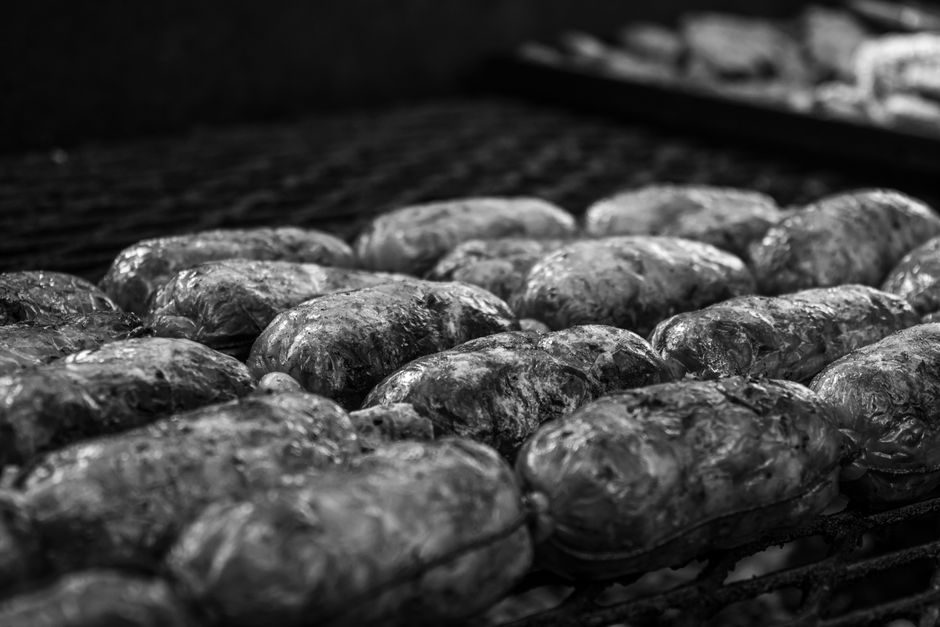
A sausage is ground meat mixed with salt, spices, and often other ingredients, stuffed into a casing. That is the basic definition. But what you actually find inside a commercial sausage can be far more complex than meat and seasoning. Understanding the label, the ingredients, and the processing methods helps you make a more informed choice at the grocery store. Here is a clear breakdown of what is really in a sausage.
What Are the Main Ingredients in a Sausage?
All sausages start with the same foundation: meat, fat, salt, and a casing. The meat is typically pork, beef, or chicken, though turkey and veal are also common. The fat is essential. It keeps the sausage moist during cooking and carries flavor. Without enough fat, a sausage turns dry and crumbly.
Salt does more than add taste. It helps extract proteins from the meat, which bind the sausage together. It also acts as a preservative. Spices and herbs vary by style. Fennel and anise mark Italian sausage. Paprika and garlic define chorizo. Breakfast sausage relies on sage and black pepper.
The casing holds everything together. Natural casings come from animal intestines, usually pork or sheep. Collagen casings are made from animal hides and are more uniform in size. Cellulose casings are plant-based and are often removed before the sausage is packaged. Some sausages have no casing at all and are sold as bulk sausage meat.
What Fillers and Binders Are Used?
Many commercial sausages contain ingredients beyond meat and seasoning. Fillers and binders improve texture, reduce cost, and help the sausage hold its shape. Common examples include breadcrumbs, wheat flour, rice flour, and potato starch. These absorb moisture and give the sausage a softer bite.
Binders serve a different purpose. They help the meat proteins hold onto water and fat during cooking. This prevents the sausage from shrinking excessively or becoming greasy. Isolated soy protein, milk powder, and carrageenan (a seaweed extract) are frequently used for this role.
These ingredients are not inherently harmful. But they change the nutritional profile. A sausage with significant fillers will have fewer calories from meat protein and more calories from carbohydrates. If you are counting carbohydrates or following a low-carb diet, checking the ingredient list matters.
What Preservatives and Additives Are Common?
Sausages are perishable, so manufacturers rely on preservatives to extend shelf life and prevent bacterial growth. The most important are curing salts, specifically sodium nitrite and sodium nitrate. These prevent Clostridium botulinum spores from producing the toxin that causes botulism. They also give cured sausages their characteristic pink color and distinct flavor.
The safety of nitrites is a topic of ongoing discussion. The World Health Organization’s International Agency for Research on Cancer has classified processed meats containing nitrites as a Group 1 carcinogen, meaning there is sufficient evidence that they cause cancer in humans, specifically colorectal cancer. This does not mean eating a sausage occasionally guarantees cancer. It means the risk increases with higher consumption over time.
Other additives include erythorbate or ascorbate (vitamin C), which speed up the curing process and reduce residual nitrite levels. Phosphates are sometimes added to retain moisture. Antioxidants like BHA and BHT prevent fats from going rancid. All of these are regulated by the FDA and USDA and must appear on the ingredient label.





How Much Meat Is Actually in a Sausage?
This is where labels require careful reading. In the United States, the FDA and USDA set standards of identity for certain sausages. A product labeled “pork sausage” must contain pork, but the standard does not mandate a specific percentage of meat. The same applies to “beef sausage” or “chicken sausage.”
Products labeled “breakfast sausage” or “Italian sausage” follow similar loose rules. However, if a label says “all beef” or “all pork,” it means the only meat used is that animal. If it says “contains pork and beef,” both must be present, but the proportions are not required to be disclosed.
Water is a significant factor. Sausages can legally retain a certain amount of water, and some manufacturers add water or ice during grinding to keep the meat cold and improve texture. This added water can inflate the weight of the product. The ingredient list will show “water” if it is added, but the exact percentage is rarely disclosed.
Are There Health Risks Beyond Nitrites?
Processed meat consumption has been studied extensively. Research published in major medical journals has consistently linked high intake of processed meats to an increased risk of colorectal cancer, heart disease, and type 2 diabetes. The evidence is strongest for colorectal cancer. The exact mechanism is not fully understood, but it likely involves a combination of nitrites, heme iron, and compounds formed during high-temperature cooking.
Sausages are also high in saturated fat and sodium. A typical pork sausage contains several grams of saturated fat and 400 to 600 milligrams of sodium per link. For someone following a 2,000-calorie diet, the American Heart Association recommends limiting saturated fat to about 13 grams per day and sodium to under 2,300 milligrams. One or two sausages can consume a significant portion of that allowance.
Cooking method matters. Grilling or pan-frying sausages at high heat can produce heterocyclic amines and polycyclic aromatic hydrocarbons, compounds linked to cancer risk in animal studies. Lower-temperature methods like simmering in sauce or baking in the oven produce fewer of these compounds.
What About Plant-Based Sausages?
Plant-based sausages are made from pea protein, soy protein, or wheat gluten (seitan). They are formulated to mimic the texture and flavor of meat sausages. They contain added fats like coconut oil or canola oil, plus a long list of flavorings, colorings, and binders.
They are not automatically healthier than meat sausages. Many plant-based sausages are high in sodium and saturated fat from coconut oil. They are also heavily processed. However, they do not contain nitrites or heme iron, which removes one pathway of cancer risk associated with processed meats.
If you are choosing plant-based for health reasons, compare nutrition labels directly. Sodium and saturated fat content varies widely between brands. Some are comparable to meat sausages; others are significantly lower in both.
How to Read a Sausage Label Like a Professional
The ingredient list is the only reliable source of truth. Ingredients are listed in descending order by weight. If “pork” or “beef” is first, the product is mostly meat. If “water” or “breadcrumbs” appears early, the product is diluted.
Look for the “Meat” or “Poultry” inspection stamp. This indicates the product was inspected by the USDA Food Safety and Inspection Service. This inspection verifies the product is safe and accurately labeled, but it does not speak to nutritional quality.
Be wary of marketing terms. “Natural” means no artificial ingredients or added colors, but it does not mean low sodium or low fat. “Uncured” or “no nitrites added” sausages use celery juice or celery powder as a curing agent. These plant sources naturally contain nitrates, which convert to nitrites during processing. The final nitrite content can be similar to conventionally cured sausages, despite the cleaner-sounding label.
Frequently Asked Questions
Are sausages bad for you?
Regular consumption of processed meats like sausage is linked to an increased risk of colorectal cancer and heart disease. Occasional consumption is unlikely to cause harm, but they are not a health food and should be limited.
What is the pink color in sausages?
The pink color comes from sodium nitrite, a curing agent that reacts with myoglobin in the meat. It also prevents bacterial growth and gives cured sausage its characteristic flavor.
Is there a difference between “uncured” and “cured” sausage?
Uncured sausage uses celery juice or powder, which contains natural nitrates that convert to nitrites during processing. The final nitrite levels can be similar to conventionally cured sausage, despite the “no nitrites added” label.
Do plant-based sausages contain nitrites?
Most plant-based sausages do not contain added nitrites or nitrates. However, they can still be high in sodium and saturated fat, so reading the nutrition label is still necessary.
