
Imitation crab is made from surimi, a paste of minced white fish that is shaped, colored, and flavored to look and taste like crab meat. The fish used is usually something mild and inexpensive, like Alaska pollock, Pacific whiting, or tilapia. It contains no crab at all. That single fact surprises a lot of people, and it matters if you have a shellfish allergy or you are watching your sodium.
What Is Imitation Crab Made From?
The core ingredient is surimi. Surimi is a Japanese term for fish that has been minced, washed repeatedly, and pressed into a concentrated protein paste. Washing removes fats, blood, and enzymes that would otherwise cause the fish to spoil or develop a fishy taste. What remains is a bland, rubbery, nearly tasteless protein base.
From there, manufacturers add ingredients that build texture, flavor, and color:
- Water and starch — often wheat, potato, or tapioca starch — to bind the paste and create a firm, springy bite
- Egg white or soy protein to strengthen the gel structure
- Sugar or sorbitol to keep the product from drying out and to balance flavor
- Salt for taste and to help proteins bind
- Crab flavoring — which is usually a blend of natural and artificial flavor compounds, sometimes derived from actual crab or other shellfish, sometimes synthesized
- Colors like carmine (a red pigment from insects), paprika, or annatto to mimic the orange-red surface of cooked crab
- Preservatives such as sodium benzoate or potassium sorbate to extend shelf life
The mixture is heated, shaped into fibers or sticks, and often coated with a thin layer of the red coloring. That is why imitation crab looks like a snow crab leg on the outside and white on the inside. It is engineered to mimic the appearance and texture of real crab, not to replicate its nutritional profile.
Is Imitation Crab Actually Crab?
No. Imitation crab contains no crab meat. The name is a marketing convention, not a legal description of ingredients. In the United States, the Food and Drug Administration does not permit a product to be labeled simply as “crab” if it contains no crab. That is why you see names like “imitation crab,” “crab-flavored surimi,” or “surimi seafood” on packaging.
This distinction is not just semantic. For someone with a shellfish allergy, imitation crab is a real concern. The fish itself is usually not a shellfish, but the crab flavoring may be derived from actual shellfish. Cross-contamination during manufacturing is also possible. If you have a shellfish allergy, check the label carefully and contact the manufacturer if the flavoring source is unclear. Some products are made with shellfish-free flavoring, but you cannot assume that from the front of the package.
For people with a fish allergy, imitation crab is a straightforward problem. It is made from fish. Alaska pollock and Pacific whiting are common, and both can trigger reactions in people allergic to those species.
How Is Imitation Crab Different From Real Crab?
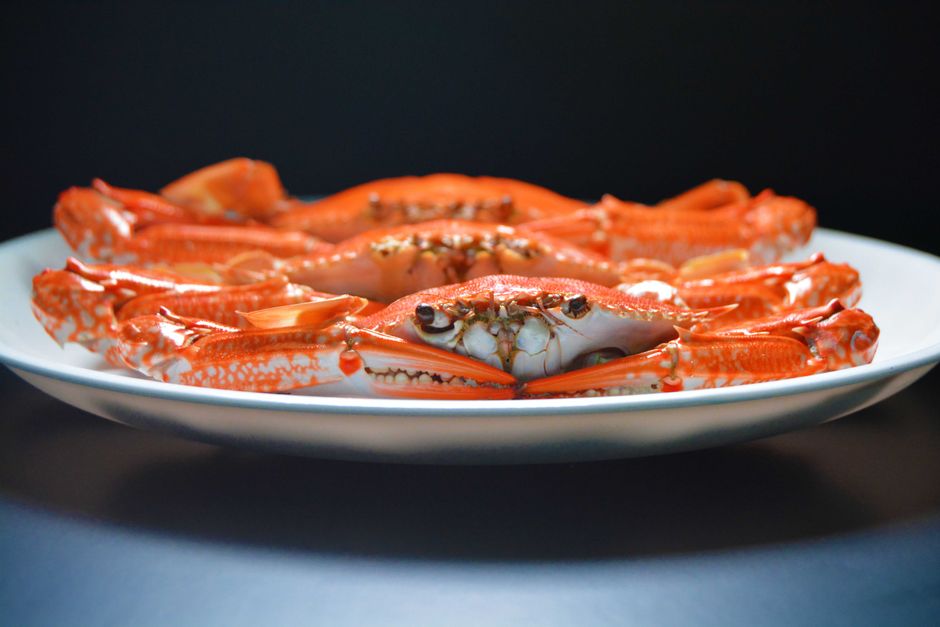
Real crab is a crustacean. Imitation crab is a processed fish product. That difference shows up in nutrition, taste, and price.
Real crab meat is naturally high in protein, low in carbohydrates, and provides minerals like zinc, selenium, and copper. It also contains omega-3 fatty acids, though the amounts vary by species. Imitation crab has protein too, but it also contains added starch and sugar, which means more carbohydrates per serving. The sodium content is often higher because salt is used both for flavor and as a processing aid.
The table below compares the two on a per-100-gram basis. These figures come from USDA nutritional data and are approximate, since brands vary.
| Nutrient (per 100g) | Imitation Crab (surimi) | Real Crab (cooked, mixed species) |
|---|---|---|
| Calories | ~99 kcal | ~87 kcal |
| Protein | ~7–8 g | ~18–20 g |
| Carbohydrates | ~15 g | ~0 g |
| Sugars | ~5–6 g | ~0 g |
| Fat | ~0.5 g | ~1 g |
| Sodium | ~500–800 mg | ~300–400 mg |
The protein gap is the most significant difference. Imitation crab has roughly half the protein of real crab per gram. If you are eating it as a protein source, you would need a larger portion to match what real crab provides. The carbohydrate and sugar content is also higher, which matters for people managing blood sugar or tracking macros.
Taste-wise, imitation crab is sweeter and softer than real crab. Real crab has a distinct brininess and a more delicate, flaky texture. Some people prefer one over the other. That is a matter of preference, not nutrition.





Is Imitation Crab Healthy?
It depends on what you are comparing it to and how you eat it. Imitation crab is not a health food, but it is not inherently unhealthy either. It is a processed food with moderate protein, added starch, and a fair amount of sodium.
The sodium is the main concern for most people. A typical serving of imitation crab — about 85 grams, or three ounces — can contain 400 to 700 milligrams of sodium. The Dietary Guidelines for Americans recommend keeping daily sodium intake below 2,300 milligrams for most adults. If you are watching your blood pressure or you have been told to limit sodium, imitation crab can add up quickly, especially if you eat it in a salad with other salty ingredients.
The carbohydrate content is another consideration. Because it contains added starch and sugar, imitation crab has more carbs than real crab or most plain fish. For someone with diabetes or insulin resistance, that is worth noting. It is not a large amount per serving, but it is not zero either.
On the positive side, imitation crab is low in fat and provides some protein. It also contains selenium and other minerals from the fish, though processing may reduce some of them. It is not a rich source of omega-3 fatty acids, because the washing process removes much of the fish oil.
No large human trials have looked specifically at imitation crab and health outcomes. The evidence here is limited to nutrient composition and general dietary principles. What is clear is that it is a processed food, and like most processed foods, it is best eaten in moderation as part of a varied diet.
Who Should Avoid Imitation Crab?
People with shellfish allergies should be cautious. The crab flavoring may contain shellfish derivatives, and cross-contamination is possible. If your allergy is severe, treat imitation crab as a potential risk unless you have confirmed with the manufacturer that it is shellfish-free.
People with fish allergies should avoid it entirely. It is made from fish, and the specific species may vary by brand. Even if you are not allergic to the fish listed, the risk of cross-contamination during processing is real.
People with celiac disease or gluten sensitivity should check the label. Some brands use wheat starch as a binder. Not all do, but you cannot assume it is gluten-free unless the package says so.
People watching their sodium or carbohydrate intake should be aware of the numbers. It is not off-limits, but it is not a free food either. Portion size and frequency matter.
Pregnant women and young children should follow general food safety guidance for processed seafood. Imitation crab is typically fully cooked and ready to eat, but if you are heating it or using it in a recipe, follow standard food safety practices. There are no specific clinical guidelines for imitation crab consumption in these groups.
How Can You Tell If a Product Is Imitation Crab?
Read the ingredient list. If the first ingredient is fish or surimi, and there is no crab listed, it is imitation. The front of the package may say “crab” in large letters, but the ingredient panel tells the real story.
Look for the word “surimi” or “imitation” on the label. If the product is called “crab-flavored” or “crab-style,” that is another clue. Real crab will list crab as an ingredient, and it will usually be more expensive.
Texture and appearance can also help. Imitation crab is uniformly shaped and colored. Real crab has irregular flakes and a more natural texture. Imitation crab is often sold as sticks, flakes, or chunks, while real crab is usually sold as lump, claw, or jumbo lump meat.
Price is a rough indicator. Real crab is significantly more expensive per pound than imitation crab. If the price seems too good to be true for crab, it probably is not crab.
Frequently Asked Questions
Is imitation crab made from real crab?
No, imitation crab contains no crab meat. It is made from surimi, a paste of minced white fish, along with starch, flavoring, and coloring.
What fish is used to make imitation crab?
Alaska pollock is the most common fish, though Pacific whiting, tilapia, and other mild white fish are also used. The specific fish can vary by brand and region.
Is imitation crab safe for a shellfish allergy?
Not necessarily. The crab flavoring may be derived from shellfish, and cross-contamination is possible. Check the label and contact the manufacturer if you are unsure.
Is imitation crab healthier than real crab?
No. Real crab has more protein and fewer carbohydrates. Imitation crab is higher in sodium and added starch, though it is lower in cost.
