
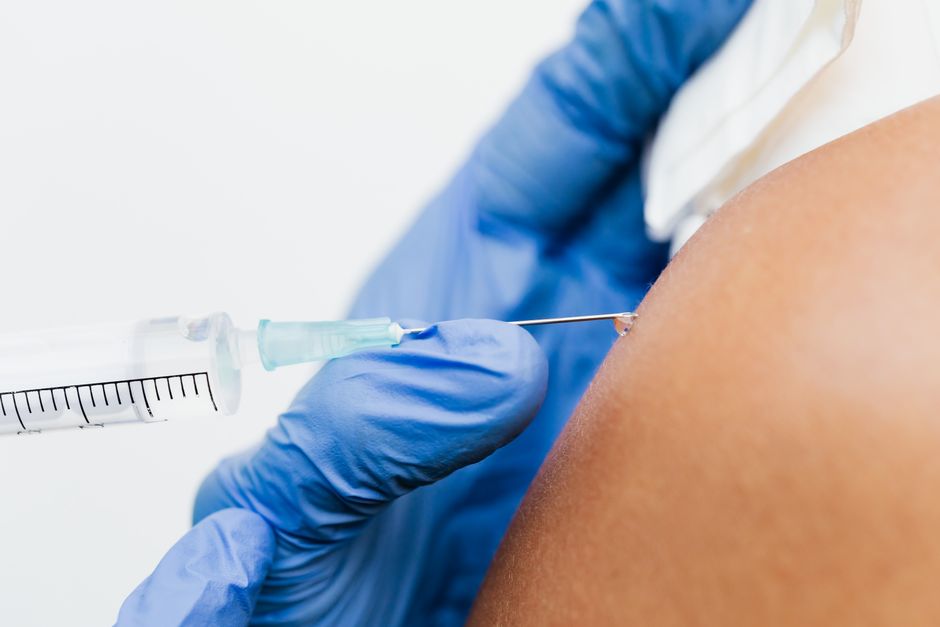
An intramuscular (I.M.) injection is a shot that delivers medication directly into a muscle. The muscle tissue acts as a reservoir, holding the drug so it can be absorbed into the bloodstream over time. It is one of the most common ways medicines are given in clinics, hospitals, and at home.
What Is I.M Injection?
I.M. stands for intramuscular, which simply means “within the muscle.” A healthcare provider inserts a needle through the skin and fatty tissue until the tip reaches muscle. The medication is then pushed into the muscle and absorbed from there.
Muscle tissue has a rich blood supply. That blood flow is why muscles work well as an injection site. A drug placed in muscle gets picked up by surrounding blood vessels and carried into general circulation. Absorption is usually faster than it would be from under the skin (subcutaneous), but slower than directly into a vein (intravenous).
The three muscles most often used are the deltoid in the upper arm, the vastus lateralis on the outer thigh, and the gluteus maximus in the buttock. Each site has trade-offs. The deltoid is convenient but small, so it holds only a limited volume. The gluteal site can hold more but sits near the sciatic nerve, so correct placement matters. The vastus lateralis is a common choice in infants and young children because the muscle is well developed at birth.
Why Are Some Medications Given Into Muscle Instead of a Vein or Under the Skin?
The route is chosen to match how a drug behaves in the body. Not every medicine works the same way, and the delivery method changes how fast it enters the blood and how long it lasts.
Some drugs are absorbed too slowly or too unpredictably from under the skin. Others need to reach the bloodstream quickly but do not require the immediate, second-by-second control that an intravenous line provides. Muscle sits in a useful middle ground.
There are also practical reasons. An I.M. injection does not require an IV line, which means it can be given in a standard exam room or at home. For medications that irritate veins or are poorly absorbed through the gut, muscle can be a better option.
Some drugs are formulated specifically for muscle. The medicine may be dissolved in an oil rather than water, or it may be a suspension of solid particles. These formulations release slowly, which can stretch a single dose over days or weeks. That is one reason some long-acting contraceptives and certain antipsychotic medications are given by I.M. injection.
How Is an I.M. Injection Given?
Technique matters because the goal is to place the drug in muscle, not in fat or a blood vessel. The steps are fairly consistent across settings.
- The site is cleaned with an antiseptic wipe.
- A needle long enough to reach muscle is chosen. Needle length depends on the person’s body size and the chosen site.
- The skin may be stretched or pinched, depending on the site and technique.
- The needle is inserted at an angle — often 90 degrees for a deep muscle.
- The plunger is pulled back slightly to check for blood. If blood appears, the needle has entered a vessel and the injection is repositioned.
- The medication is injected slowly, then the needle is withdrawn and the site is covered.
Aspiration — the pull-back step — has become more debated in recent years. Some guidelines have moved away from it for certain sites because the evidence that it prevents complications is limited. Practice varies. What is not debated is that correct site selection and needle length reduce the risk of injecting into the wrong tissue layer.





Which Medications Are Commonly Given by I.M. Injection?
A wide range of medicines use this route. The list below covers common categories, not every drug.
- Vaccines. Many vaccines are given into the deltoid, including some influenza, hepatitis, and tetanus vaccines.
- Antibiotics. Certain antibiotics are given by I.M. injection when oral or IV routes are not suitable.
- Hormonal contraceptives. Some long-acting birth control is delivered by deep I.M. injection.
- Pain and anti-inflammatory drugs. Some nonsteroidal anti-inflammatory drugs and certain other pain medicines can be given this way.
- Epinephrine. For severe allergic reactions, epinephrine is typically given into the outer thigh, often through an auto-injector.
- Vitamin B12. Some people with certain absorption problems receive B12 by injection.
- Long-acting psychiatric medications. Some antipsychotics are formulated as depot injections given at intervals.
The specific drug and formulation determine whether I.M. is appropriate. The same medicine may be available in several forms, and only some are designed for muscle.
How Does an I.M. Injection Compare to Other Routes?
Each route has strengths and limits. The table below summarizes the general differences. Exact absorption speed varies by drug, formulation, and the person receiving it.
| Route | Where It Goes | Typical Absorption Speed | Common Use |
|---|---|---|---|
| Intramuscular (I.M.) | Into muscle | Moderate | Vaccines, depot drugs, some antibiotics |
| Subcutaneous | Into fatty tissue under skin | Slower than I.M. | Insulin, some vaccines |
| Intravenous (IV) | Directly into a vein | Immediate | Emergency drugs, fluids, precise dosing |
| Oral | Swallowed | Variable | Most everyday medicines |
One detail worth knowing: the fatty layer under the skin varies a lot between people. That is why needle length is not one-size-fits-all. A needle that is right for one person may be too short to reach muscle in another, which can lead to the drug being deposited in fat instead. This is a known issue in some vaccine delivery, and it is why training on site and needle selection matters.
What Are the Risks and Side Effects?
Most I.M. injections are well tolerated. Side effects are usually local and short-lived, but more serious reactions can occur.
Common local effects include soreness, redness, and mild swelling at the injection site. A small amount of bleeding or bruising is possible. These typically ease within a day or two.
Less common but more serious complications include infection at the site, nerve injury if the needle contacts a nerve, and accidental injection into a blood vessel. Injecting into a vessel can be dangerous for certain drugs and is one reason proper technique is emphasized.
Allergic reactions are possible with any injected drug. Severe reactions are rare but can be serious. Signs include widespread rash, swelling of the face or throat, and difficulty breathing. These require emergency care.
Some medications carry specific warnings. For example, certain injected drugs can cause tissue damage if they leak into surrounding tissue. This is another reason correct placement matters.
Can You Give Yourself an I.M. Injection at Home?
Some people do self-administer I.M. injections, but only under proper instruction. This is not something to attempt based on a video or a friend’s advice.
If a clinician decides home injection is appropriate, they typically provide training on site selection, needle handling, dose measurement, and safe disposal of used needles. Sharps containers are used to prevent injury and the spread of infection.
Not every drug or every person is a good candidate for self-injection. Factors like body size, the specific medication, and the ability to follow technique correctly all matter. When in doubt, a trained professional should give the injection.
One non-obvious point: the angle and depth are not universal. A technique that works for a slim arm may not work for a larger thigh. This is why individualized instruction beats general advice.
What Should You Expect After an I.M. Injection?
Most people feel a brief sting or pressure during the injection. Afterward, the site may be tender for a day or so. Movement of the limb is usually fine, though some soreness is normal.
If a vaccine was given, mild flu-like feelings, fatigue, or a low fever can occur. These are signs the immune system is responding and generally pass within a couple of days.
Seek medical care if you notice increasing pain, spreading redness, fever, numbness, or weakness in the limb. These are not typical and should be checked.
Frequently Asked Questions
What does I.M. injection mean?
I.M. stands for intramuscular, meaning the medication is injected into a muscle. The muscle absorbs the drug and releases it into the bloodstream.
Is an I.M. injection painful?
Most people feel a brief sting or pressure during the shot, followed by mild soreness for a day or two. The discomfort is usually minor and short-lived.
How fast does medication work after an I.M. injection?
Absorption is generally faster than under the skin but slower than directly into a vein. The exact speed depends on the drug, its formulation, and the person’s blood flow at the site.
Can I give myself an I.M. injection?
Only if a clinician has trained you and determined it is appropriate for your medication. Self-injection without proper instruction can lead to incorrect placement or injury.
