
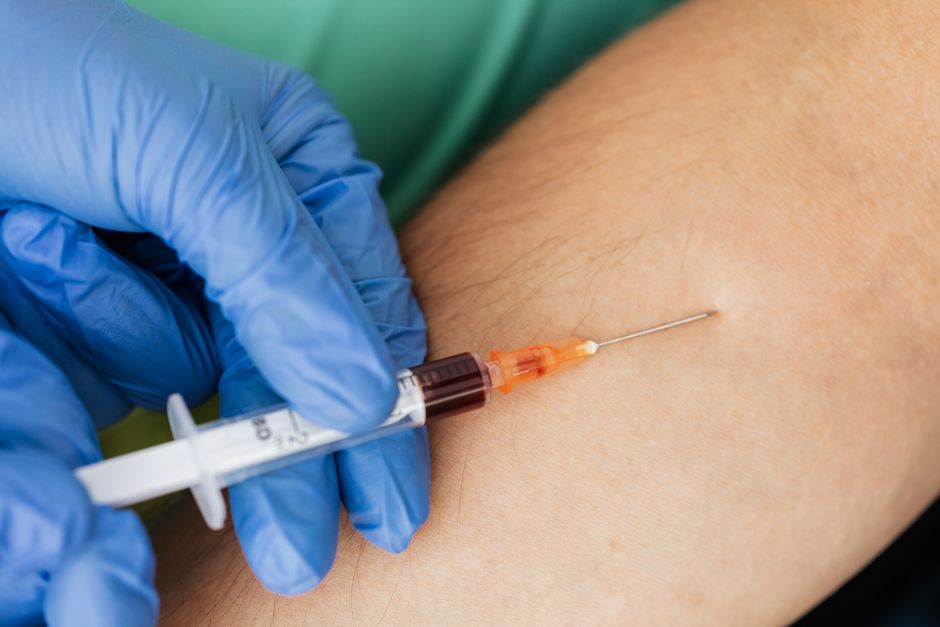
Human platelet lysate is a liquid made from human platelets that have been broken open to release the growth factors and proteins stored inside them. It is produced by collecting platelets from donated blood or from a blood component called buffy coat, then freezing and thawing them so the cell membranes rupture. The resulting material is filtered or centrifuged to remove cell debris, leaving a clear liquid rich in signaling proteins that is used mainly as a laboratory growth supplement for culturing cells.
If you have come across the term in a news story about stem cell clinics or “regenerative” injections, the laboratory definition above is the one that matters most. Human platelet lysate is primarily a research and manufacturing tool, not an approved drug. Understanding how it is made explains both why it interests scientists and why its clinical use is far more limited than marketing language often suggests.
What Is Human Platelet Lysate And How Is It Made?
Platelets are small cell fragments circulating in blood. Their familiar job is clotting, but they also carry packets of growth factors — proteins such as platelet-derived growth factor, transforming growth factor beta, and vascular endothelial growth factor — inside storage compartments called alpha granules.
Human platelet lysate is what you get when those compartments are deliberately ruptured. The process, in outline:
- Collection. Platelets are obtained from donated whole blood, from a buffy coat layer separated during blood processing, or through apheresis, a method that collects specific blood components and returns the rest to the donor.
- Concentration. The platelet-rich material may be pooled from multiple donors to standardize growth factor content.
- Lysis. Freeze-thaw cycles are the most common method. Ice crystals and osmotic shifts break the platelet membranes open. Some protocols add water or detergents to complete the process.
- Clarification. Centrifugation or filtration removes membranes and debris, leaving a liquid lysate.
- Testing and storage. Donated material is screened for infectious disease, and the final lysate is typically stored frozen.
The word “lysis” simply means breaking apart. Nothing is synthesized or engineered in this process. The lysate is a concentrated extract of what platelets already contained.
Why Do Scientists Use Platelet Lysate To Grow Cells?
Growing human cells in a lab requires more than sugar and salts. Cells need a complex mixture of proteins and hormones to divide and stay healthy. For decades the standard supplement has been fetal bovine serum, a product derived from the blood of cow fetuses collected at slaughter.
Fetal bovine serum works well, but it has real drawbacks. Its composition varies from batch to batch, it carries a small risk of introducing animal viruses or prion proteins, and it raises ethical concerns. It is also not a defined substance — no one can say exactly what is in a given lot.
Human platelet lysate solves several of these problems at once. It is human in origin, so it contains growth factors that human cells recognize. It can be pooled and standardized. And because it comes from screened blood donors, the infectious disease testing is more rigorous than what applies to animal serum. Research in cell biology journals has generally found that many human cell types grow at least as well in platelet lysate as in fetal bovine serum, and sometimes faster.
That last point is worth stating carefully. “Grows at least as well in the lab” is not the same as “treats disease in people.” Those are different claims, and only the first one has broad experimental support.
Is Human Platelet Lysate The Same As PRP?
No, and the confusion is common.
Platelet-rich plasma, or PRP, is made by spinning a sample of a person’s own blood to concentrate the platelets. Those platelets stay intact. The idea behind PRP injections is that platelets will gradually release their growth factors at the injection site over hours to days.
Platelet lysate has already done that releasing, in a lab, before anything touches a patient. The platelets are destroyed on purpose. What remains is a cell-free liquid.
| Feature | PRP | Platelet lysate |
|---|---|---|
| Platelet state | Intact | Broken open |
| Contains whole cells or fragments | Yes | No |
| Typical use | Injections in clinical settings | Cell culture, research, some topical products |
| Regulatory status in the US | Generally regulated as a blood product used in the same procedure | Not an approved drug; used mainly in manufacturing and research |
Because PRP uses the patient’s own blood in a single procedure, it falls under different regulatory expectations than a manufactured lysate product that might be shipped, stored, and sold. That distinction matters more than most people realize.



What Is Human Platelet Lysate Used For In Medicine?
Its established role is in cell manufacturing and laboratory research. When companies grow cells for therapy development, or when researchers study how human cells behave, platelet lysate is one of the standard supplements used to keep those cells alive and dividing.
Beyond the lab, the picture gets murky. Some clinics offer platelet lysate in eye drops for dry eye or corneal surface problems, and some offer it in injections or topical preparations for skin and joint complaints. Some clinicians report benefit. The published evidence, however, is limited. Most studies are small, lack control groups, or come from single centers, which makes it hard to separate a real effect from placebo or natural recovery.
Two things are worth separating here:
- Regulatory status. In the United States, a manufactured platelet lysate product intended to treat disease would generally need approval as a biologic. Most lysate on the market is sold for research use only, labeled “not for human use.”
- Evidence status. Even where clinicians use it, no large randomized trials have established that it works better than established treatments for most conditions.
A product being biologically plausible is not the same as a product being proven. Growth factors do influence tissue repair. That does not mean delivering a concentrated mix of them to a joint or an eye produces a measurable clinical benefit.
What Are The Risks And Safety Concerns?
The main theoretical risks of any human blood-derived product are infectious disease transmission and immune reactions. Blood donors are screened for HIV, hepatitis B and C, and other pathogens, and manufacturing generally includes steps intended to reduce risk further. Screening reduces risk substantially but cannot eliminate it entirely, which is one reason regulators treat blood-derived products with caution.
There is also an immune consideration. Because lysate is often pooled from many donors, it contains proteins from multiple people. For cell culture this is usually fine. For injection into a person, repeated exposure to foreign proteins could in principle provoke an immune response, though how often this occurs in practice is not well documented.
For eye drop preparations, some research has raised questions about whether growth factors in these products are stable and consistent between batches. That is a quality-control issue rather than a proven harm, but it affects whether a given product does anything at all.
Anyone considering a platelet lysate treatment should ask a direct question: is this product approved by a regulatory agency for this use, and what controlled trials support it? If the answer is vague, that is information in itself.
Why The Term Shows Up In Regenerative Medicine Marketing
Platelet lysate sounds scientific, and it is. That makes it useful in advertising. Phrases like “growth factor therapy” or “regenerative formula” borrow credibility from real laboratory science without carrying the evidence that clinical medicine requires.
Two clarifications help here. First, the growth factors in platelet lysate are not a drug with a defined dose and effect. They are a mixture whose composition varies by donor, by pooling method, and by how the lysate was processed. Second, most published work on platelet lysate is about cells in dishes, not people. A study showing that fibroblasts divide faster in a culture flask tells you nothing about whether an injection will help a knee.
None of this means the field is worthless. Platelet lysate has genuinely improved how human cells are grown for research and for the manufacturing of cell-based therapies, and that is a real contribution. It just is not the same contribution that marketing materials often imply.
Frequently Asked Questions
Is human platelet lysate the same as PRP?
No. PRP contains intact platelets that release growth factors gradually after injection, while platelet lysate is made by breaking the platelets open in a lab so the growth factors are already released. The two are used differently and are regulated differently.
Is human platelet lysate approved by the FDA for treating disease?
Manufactured platelet lysate intended to treat disease would generally require approval as a biologic, and most lysate sold today is labeled for research use only. Some clinics still offer it, which is a separate question from whether regulators have cleared it.
Does platelet lysate actually work for joint pain or dry eye?
The evidence is limited. Most studies are small or lack control groups, and no large randomized trials have established that it outperforms standard treatments for these conditions.
Is platelet lysate safer than fetal bovine serum for growing cells?
It reduces certain concerns, since it is human in origin and comes from screened donors, which lowers the risk of introducing animal viruses. Batch-to-batch consistency and cost remain practical challenges.
