
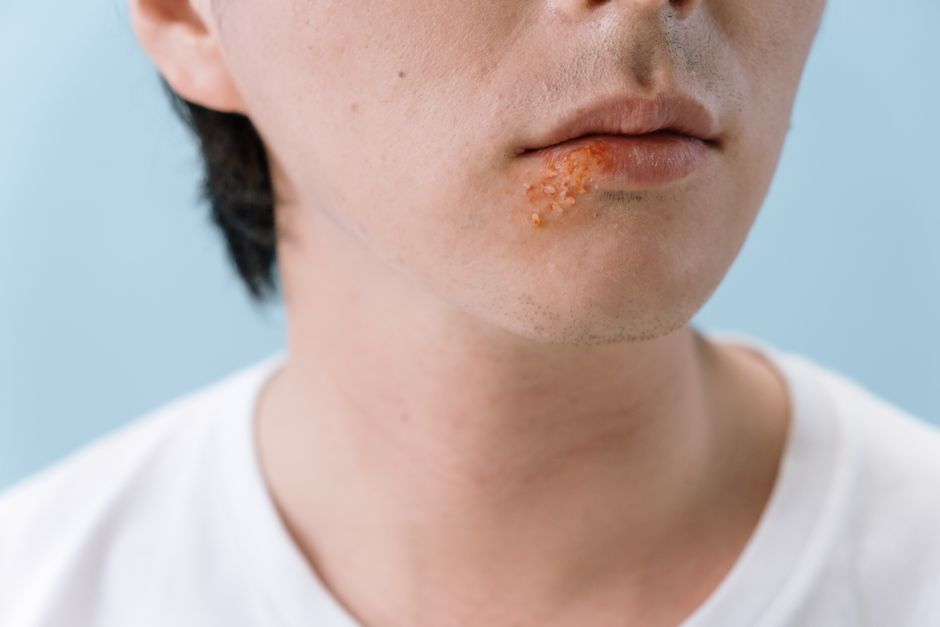
Herpetic stomatitis is a viral infection of the mouth caused by herpes simplex virus type 1, usually appearing as a crop of painful blisters and open sores on the gums, lips, tongue, and inside of the cheeks. It is most common in young children between 6 months and 5 years old, though it can affect people of any age. The first episode tends to be the worst, and the virus then stays in the body for life, usually quietly.
What Is Herpetic Stomatitis?
Stomatitis means inflammation of the mouth. Herpetic stomatitis means that inflammation is caused by a herpes virus, almost always herpes simplex virus type 1, or HSV-1.
This is the same virus that causes cold sores. When it first enters the body, it can set off a widespread outbreak inside the mouth rather than a single sore on the lip. Clinicians often call this primary herpetic gingivostomatitis, because the gums (gingiva) are heavily involved along with the rest of the mouth.
After that first infection, HSV-1 travels along a nerve and settles into a bundle of nerve cells near the spine called the trigeminal ganglion. It stays there permanently. Most of the time it does nothing. When it reactivates, it usually causes a cold sore on or near the lip rather than the full mouth outbreak seen the first time.
One point that surprises many people: HSV-1 infection is extremely common worldwide. The World Health Organization estimates that billions of people carry it. Most of them have no symptoms at all or a mild illness they never recognize as herpes. A severe mouth outbreak is the exception, not the rule.
What Is Herpetic Stomatitis Symptoms And Treatment?
Symptoms of herpetic stomatitis begin with fever, fussiness, and a sore mouth, followed by blisters that break open into painful ulcers. Treatment focuses on keeping the person hydrated and comfortable, and in some cases a clinician may prescribe an antiviral medicine.
The first episode usually unfolds in a recognizable pattern:
- Fever, headache, and a general feeling of being unwell come first.
- Within a day or two, the mouth becomes sore and the gums turn red and swollen.
- Small fluid-filled blisters appear on the gums, tongue, inner cheeks, and lips.
- The blisters burst and leave shallow, yellowish-gray sores with red edges.
- Drooling, refusing to eat or drink, and bad breath are common in children.
- Neck lymph nodes may feel swollen and tender.
The sores can be widespread and genuinely painful. The illness usually runs its course over roughly one to two weeks. The fever typically settles before the sores do.
The single biggest risk in a young child is dehydration. A child with a sore mouth may refuse fluids entirely. Signs to watch for include fewer wet diapers, no tears when crying, a dry mouth, and unusual sleepiness. Those signs warrant prompt medical attention.
Treatment is mostly supportive. That means fluids, soft bland foods, and pain relief. Antiviral medicines such as acyclovir are sometimes prescribed, and they tend to work best when started early in the illness. Whether an antiviral is appropriate depends on the person’s age, health, and how severe the episode is. This is a decision for a clinician, not something to manage at home with leftover medicine.
How Does Someone Catch HSV-1?
HSV-1 spreads through direct contact with infected saliva, sores, or skin. A kiss from a relative with a cold sore, shared cups, shared utensils, or a toy that has been in an infected child’s mouth can all pass the virus along.
The virus can also spread when a person has no visible sore. This is called asymptomatic shedding, and it is one reason herpes spreads so easily within families. A person can be contagious without knowing it.
Because the virus is so widespread, avoiding all exposure is not realistic. The practical goal is to reduce exposure during active outbreaks, especially around newborns and people with weakened immune systems, who are at higher risk of serious illness.




Is Herpetic Stomatitis the Same as a Cold Sore or Canker Sore?
No. These three terms get used interchangeably in everyday conversation, but they describe different things.
A cold sore is a herpes simplex sore, usually on or around the lip. It is caused by the same virus family as herpetic stomatitis, but it appears as a single cluster rather than a full mouth outbreak.
A canker sore is not caused by herpes at all. It is a shallow, painful ulcer inside the mouth with no known single cause. Canker sores are not contagious. This distinction matters, because a person with recurrent canker sores does not have herpes and cannot pass anything to anyone.
Herpetic stomatitis is the widespread primary infection inside the mouth. It can look similar to a canker sore in a single spot, but the overall picture, with fever, swollen gums, and many sores, is different.
| Condition | Cause | Contagious? | Typical pattern |
|---|---|---|---|
| Herpetic stomatitis | HSV-1 | Yes | Fever plus many mouth sores, most often a first infection |
| Cold sore | HSV-1 | Yes | Single cluster on or near the lip, often recurring |
| Canker sore | Not herpes | No | One or a few ulcers inside the mouth, recurring |
Who Is Most at Risk?
Young children are the group most likely to develop herpetic stomatitis, because they have not yet been exposed to the virus and have no immunity. The first infection is the one that tends to be severe.
Newborns deserve special mention. A herpes infection in a newborn is a medical emergency, because a newborn’s immune system cannot contain the virus the way an older child’s can. Anyone with an active cold sore should avoid kissing a newborn or handling a newborn’s feeding items.
People with weakened immune systems, including those receiving certain cancer treatments or immune-suppressing medicines, can also develop more severe herpes infections. In these groups, herpes can occasionally affect organs beyond the mouth, which is why medical care matters.
Once a person has had HSV-1, they carry it for life. Recurrences usually take the form of a cold sore rather than a full mouth outbreak, and they often become less frequent over time.
How Is It Diagnosed?
Most of the time, a clinician diagnoses herpetic stomatitis by examining the mouth and asking about symptoms. The pattern of fever, swollen gums, and multiple sores is distinctive enough that testing is often unnecessary.
When the diagnosis is unclear, or when a person has a weakened immune system, a clinician may swab a sore and send it to a lab to confirm HSV-1. This is more common in hospital settings or when the appearance is atypical.
It is worth knowing that herpes inside the mouth can be confused with other conditions that cause mouth ulcers, including hand-foot-and-mouth disease and certain drug reactions. A clinician sorts these out based on the full picture, not a single sore.
What Helps During Recovery?
The main job during recovery is keeping the person comfortable and hydrated while the body clears the infection. There is no home remedy that shortens the illness in a proven way.
Practical steps that clinicians commonly suggest include:
- Offer cool fluids and soft foods. Cold items like popsicles or yogurt can numb a sore mouth.
- Avoid acidic, salty, or spicy foods that sting open sores.
- Use a pain reliever appropriate for the person’s age if a clinician approves it.
- Keep the mouth clean with gentle rinsing.
- Wash hands often and keep cups and utensils separate during the active illness.
For children, watch fluid intake closely. If a child will not drink and shows signs of dehydration, seek medical care rather than waiting it out.
One honest note: many over-the-counter products marketed for mouth sores have limited evidence behind them. Some provide temporary numbing, which can help a person eat, but they do not treat the infection itself.
Can Herpetic Stomatitis Be Prevented?
You cannot fully prevent exposure to HSV-1, because it is so common and can spread without visible sores. What you can do is lower the chance of passing it during an active outbreak.
During a cold sore or mouth outbreak, avoid kissing, especially babies and young children. Do not share cups, utensils, towels, or lip products. Wash hands after touching a sore. These steps reduce spread but do not eliminate it.
There is no vaccine for HSV-1 currently available. Research into one continues, but no product has been approved for prevention.
Frequently Asked Questions
Is herpetic stomatitis contagious?
Yes. It spreads through direct contact with infected saliva, sores, or skin, and can spread even when no sore is visible. Avoiding shared cups and utensils during an outbreak lowers the risk of passing it on.
How long does herpetic stomatitis last?
The illness usually runs its course over about one to two weeks, with fever often settling before the sores heal. Severe or prolonged cases should be evaluated by a clinician.
Is herpetic stomatitis the same as a canker sore?
No. Herpetic stomatitis is caused by herpes simplex virus type 1, while canker sores are not caused by herpes and are not contagious.
When should I see a doctor for mouth sores?
Seek care if a child shows signs of dehydration, if a newborn has any mouth sores, or if sores last longer than about two weeks. A weakened immune system also makes prompt evaluation important.
