
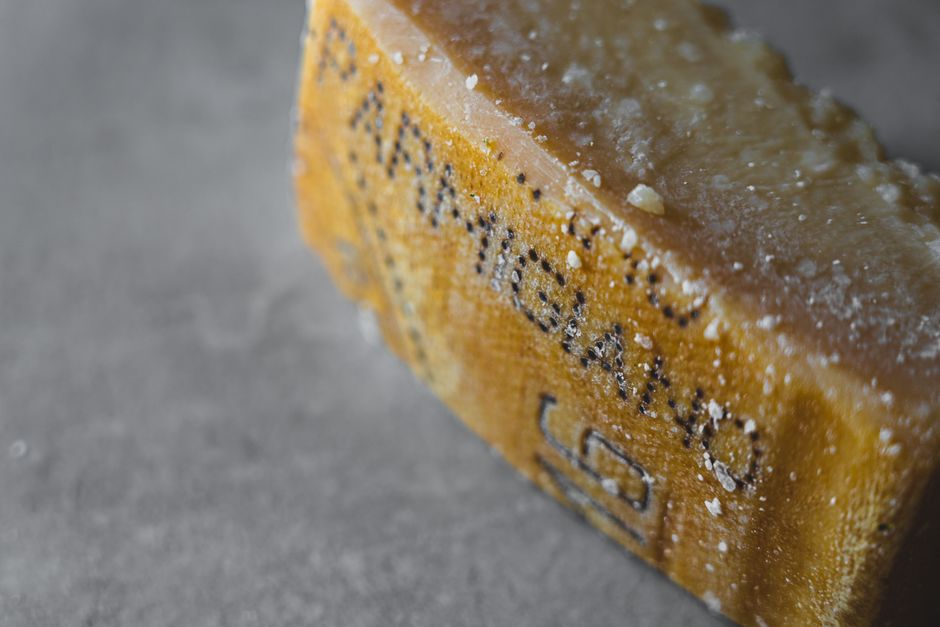
Grated Parmigiano Reggiano is the aged, hard Italian cheese that has been finely shredded or coarsely ground for use in cooking and at the table. It is made from cow’s milk, salt, and rennet, and it must be aged for at least 12 months to legally carry the Parmigiano Reggiano name. True Parmigiano Reggiano comes only from a specific region in northern Italy, and the grated form you buy should contain nothing but the cheese itself — no anti-caking agents, no cellulose, and no other cheeses.
What Is Grated Parmigiano Reggiano Made Of?
Authentic Parmigiano Reggiano has just three ingredients: raw cow’s milk, salt, and rennet. The milk comes from cows raised in the designated production area, which includes parts of the provinces of Parma, Reggio Emilia, Modena, and Bologna, plus the province of Mantua.
The cheese is made the same way it has been for centuries. The curd is cooked, pressed into large wheels, and then brined in salt water. After that, the wheels rest on wooden shelves in aging rooms for a minimum of 12 months. Many wheels age for 24 months or longer, and the flavor deepens with time.
When you buy grated Parmigiano Reggiano, you are buying cheese that has been aged, then ground. The aging process creates the crystals that give the cheese its signature crunch. Those crystals are naturally occurring amino acid clusters, not salt or additives.
How Is Grated Parmigiano Reggiano Different From Regular Parmesan?
In the United States, the word “Parmesan” is not legally protected the way it is in Europe. This means many products labeled “Parmesan” are not Parmigiano Reggiano at all. They may be made from different milk, different aging processes, or blended with other cheeses.
Real Parmigiano Reggiano is a protected designation of origin (PDO) product. That means the name can only be used for cheese produced in the specific region, using the specific methods, and aged for the required time. If a product does not meet those standards, it cannot legally be called Parmigiano Reggiano in the European Union.
Grated Parmigiano Reggiano also differs from pre-grated “Parmesan” products in what it contains. Many supermarket grated cheeses include cellulose powder to prevent clumping, potassium sorbate as a preservative, or other cheeses like Grana Padano. Authentic grated Parmigiano Reggiano contains only the cheese itself.
What Is the Nutritional Profile of Grated Parmigiano Reggiano?
Parmigiano Reggiano is a nutrient-dense food. A typical 1-ounce (28-gram) serving of grated Parmigiano Reggiano contains roughly 110 calories, 8 grams of protein, and 7 grams of fat. It is also naturally low in lactose, which makes it easier to digest for many people with lactose sensitivity.
The cheese is a good source of calcium and phosphorus, both important for bone health. It also provides vitamin A and several B vitamins. Because it is aged, the protein is partially broken down, which some research suggests may make it easier to absorb.
One thing to watch is sodium. Parmigiano Reggiano is brined in salt, so it is naturally high in sodium. A 1-ounce serving contains approximately 330-400 milligrams of sodium, which is about 15% of the daily recommended limit for most adults. If you are watching your salt intake, use it sparingly.





Why Does Grated Parmigiano Reggiano Taste Different From Other Cheeses?
The flavor of Parmigiano Reggiano comes from its long aging process and the specific bacteria used in production. During aging, enzymes break down milk proteins and fats into smaller compounds. These compounds create the cheese’s savory, nutty, and slightly fruity flavor.
The crunchy crystals in aged Parmigiano Reggiano are a key part of its appeal. These crystals are formed by the amino acid tyrosine, which crystallizes as the cheese ages. The longer the cheese ages, the more crystals it develops, and the more pronounced the crunch becomes.
Younger Parmigiano Reggiano, aged 12-18 months, has a milder, creamier flavor. Older wheels, aged 24-36 months, become more intense, crumbly, and savory. The grated form you buy will taste different depending on how long the original wheel was aged.
How Should You Store Grated Parmigiano Reggiano?
Grated Parmigiano Reggiano stays fresh longest when kept in the refrigerator. Store it in an airtight container or a resealable bag with as much air removed as possible. Properly stored, it will keep for about one to two weeks after opening.
You can also freeze grated Parmigiano Reggiano. It freezes well because the cheese is dry and hard. Place it in a freezer-safe bag, press out the air, and it will keep for up to six months. Frozen grated cheese may clump slightly, but it will still melt and flavor dishes normally.
Do not leave grated Parmigiano Reggiano at room temperature for long periods. Like all hard cheeses, it can develop mold if exposed to moisture and warmth. If you see mold on grated cheese, discard it — unlike a wedge of hard cheese where you can cut off the moldy part, grated cheese cannot be safely salvaged.
What Are the Best Uses for Grated Parmigiano Reggiano?
Grated Parmigiano Reggiano is one of the most versatile ingredients in cooking. It adds depth and savory flavor to pasta dishes, risotto, soups, and salads. It also works well as a finishing cheese, sprinkled over finished dishes just before serving.
In Italian cooking, Parmigiano Reggiano is often paired with simple ingredients. A classic dish of pasta with olive oil, garlic, and grated Parmigiano Reggiano shows how the cheese can elevate a basic meal. It also pairs well with balsamic vinegar, fresh figs, and pears.
One common mistake is cooking grated Parmigiano Reggiano at high heat for a long time. The cheese can separate and become greasy when overheated. It is better to add it at the end of cooking or use it as a topping. When making sauces, add the cheese off the heat and stir it in gently.
How Can You Tell If Your Grated Parmesan Is Real Parmigiano Reggiano?
Check the label first. Real Parmigiano Reggiano will clearly state “Parmigiano Reggiano” on the package. It should also list only one ingredient: Parmigiano Reggiano cheese (or pasteurized milk, salt, rennet). If the label lists cellulose, potato starch, or other additives, it is not authentic.
Look for the PDO mark and the words “Protected Designation of Origin” on the packaging. This certification confirms the cheese comes from the designated region and meets production standards. Many authentic packages also feature the Parmigiano Reggiano Consortium’s logo.
Be cautious with products simply labeled “Parmesan” or “Italian-style hard cheese.” These are often blends that include cheaper cheeses like Grana Padano or domestic parmesan-style cheeses. They may taste similar but do not have the same production standards or flavor profile.
Is Grated Parmigiano Reggiano Safe During Pregnancy?
Parmigiano Reggiano is generally considered safe to eat during pregnancy because it is a hard cheese with very low moisture content. The aging process creates conditions that prevent the growth of Listeria, the bacteria that poses the main risk in unpasteurized soft cheeses.
However, the cheese is made from raw milk, which raises questions for some people. The cheese is aged for at least 12 months, and during that time, the moisture drops below levels that support bacterial growth. Regulatory agencies in both Europe and the United States classify aged hard cheeses made from raw milk as safe for pregnant women.
If you are pregnant and unsure, talk to your healthcare provider. They can give you guidance based on your specific situation. The same safety considerations apply to grated Parmigiano Reggiano as to the whole cheese, since grating does not change its safety profile.
Frequently Asked Questions
Can you freeze grated Parmigiano Reggiano?
Yes, grated Parmigiano Reggiano freezes well for up to six months. Store it in an airtight freezer bag and press out as much air as possible before freezing.
How long does grated Parmigiano Reggiano last in the fridge?
Properly stored in an airtight container, grated Parmigiano Reggiano lasts about one to two weeks in the refrigerator. Discard it if you see any signs of mold.
Is grated Parmigiano Reggiano the same as Parmesan cheese?
No. Parmigiano Reggiano is a specific protected cheese from northern Italy, while “Parmesan” can legally be used for many similar cheeses in the United States. Check the label for additives like cellulose to know what you are buying.
Why does my grated Parmigiano Reggiano have white crystals?
Those white crystals are naturally occurring tyrosine amino acids that form during the aging process. They are a sign of a properly aged cheese and are completely safe to eat.
