
Fingernails are mostly keratin, a tough protein also found in hair and skin. What is good for fingernails — diet, care, and habits — comes down to steady nutrition, keeping nails dry and protected, and avoiding harsh chemicals and mechanical damage. Nails grow slowly, so changes take months to show. The average fingernail grows about 3.5 millimeters per month, and a full replacement of a fingernail takes roughly six months. That timeline matters: nothing you eat or apply will change your nails overnight.
What Is Good For Fingernails Diet Care And Habits?
The strongest evidence for nail health points to adequate protein, iron, zinc, and overall nutritional status, combined with simple protective habits. Nails are a fast-growing tissue, which makes them sensitive to shortages of nutrients the body needs to build keratin and maintain cell turnover.
Protein matters most. Keratin is a protein, and the body prioritizes vital organs over nails and hair when protein intake falls short. People eating very low protein diets, or those with malabsorption conditions, sometimes notice thin, slow-growing nails.
Iron is the nutrient most consistently linked to nail changes. Iron deficiency is a well-documented cause of koilonychia — spoon-shaped nails that curve upward at the edges. This is not a subtle cosmetic issue; it is a recognized clinical sign that prompts doctors to check iron status.
Zinc supports cell division and tissue repair, and severe zinc deficiency is associated with nail changes including white spots and slowed growth. These deficiencies are uncommon in people eating varied diets, but they occur with restrictive eating, certain gut conditions, and bariatric surgery.
Biotin deserves a direct note. Biotin is a B vitamin, and true biotin deficiency is rare. Some studies suggest biotin supplements may strengthen brittle nails in people who are deficient, but evidence in people with normal biotin levels is limited. The FDA has also warned that high-dose biotin can interfere with certain lab tests, including thyroid and heart tests, producing falsely abnormal results. Anyone taking biotin should tell their doctor before blood work.
Which Foods Actually Support Nail Growth?
No single food strengthens nails. A varied diet that covers protein, iron, zinc, and B vitamins gives your body the raw materials it needs.
- Protein sources: eggs, fish, poultry, beans, lentils, tofu, Greek yogurt
- Iron: lean red meat, lentils, spinach, fortified cereals — pair plant iron with vitamin C (citrus, peppers, tomatoes) to improve absorption
- Zinc: oysters, beef, pumpkin seeds, chickpeas, cashews
- B vitamins and biotin: eggs, nuts, seeds, whole grains, salmon
- Vitamin C: supports collagen production and iron absorption — citrus, strawberries, broccoli, bell peppers
Vitamin C is worth a mention because it is required for collagen synthesis, and collagen is part of the nail plate’s structure. Most people meet vitamin C needs easily through diet.
One clarification that surprises people: gelatin and collagen supplements are widely marketed for nails, but large controlled trials showing they strengthen nails are lacking. The evidence is limited. Some small studies suggest possible benefits, but nothing strong enough to call established.
Does Drinking Enough Water Help Your Nails?
Hydration supports overall health, but drinking more water does not directly make nails stronger. Nails get their moisture mainly from the nail bed beneath them and from oils at the surface, not from water you drink passing through to the nail plate.
What does help is keeping the nail plate from drying out. Nails become brittle when they lose moisture, especially in dry climates, in winter, or with frequent hand washing. Applying a moisturizer or cuticle oil after washing hands helps trap moisture at the surface. This is a topical effect, not a hydration effect from within.
So the honest answer: drink water for your general health, but do not expect it to fix brittle nails. Surface moisture is what matters for the nail itself.
What Nail Care Habits Protect Fingernails?
Mechanical damage and chemical exposure cause more nail problems than diet does for most people. Protecting the nail plate is often the highest-yield change.
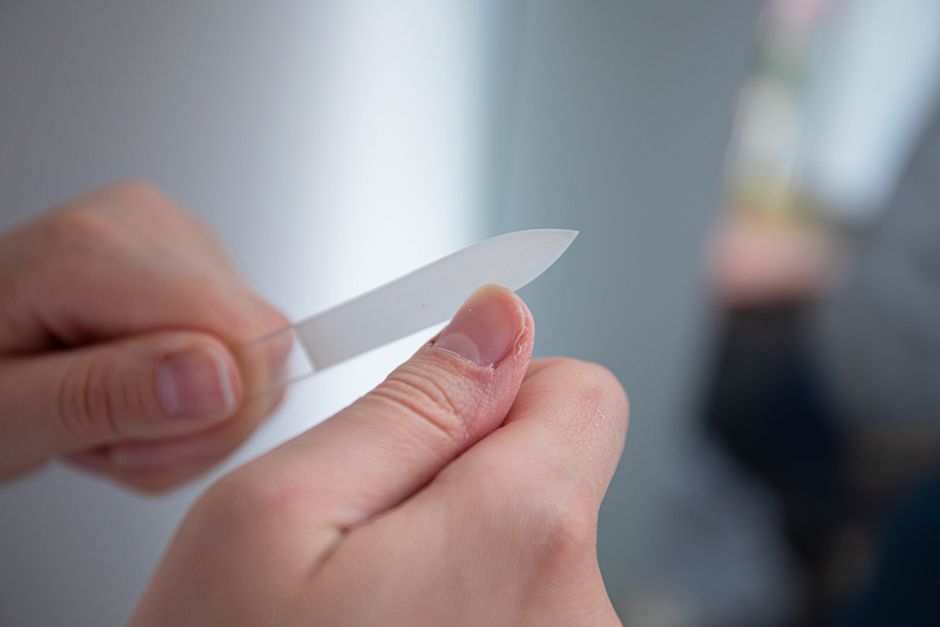
Keep nails trimmed and filed. File in one direction rather than sawing back and forth, which can cause splitting. Round or slightly squared tips reduce snagging.
Wear gloves for wet work and cleaning. Detergents, cleaning products, and prolonged water exposure strip oils and weaken the nail plate. Rubber gloves for dishwashing and household cleaning protect nails more than any supplement.
Moisturize after washing. Hand cream or cuticle oil applied while hands are still slightly damp helps seal in moisture. Look for products with glycerin or lanolin.
Avoid using nails as tools. Opening cans, peeling labels, and prying things apart cause small splits that grow into breaks.
Do not cut cuticles. The cuticle is a seal that keeps bacteria and fungi out of the nail fold. Pushing it back gently is fine; cutting it opens the door to infection. This is a common habit that dermatologists routinely advise against.
What Weakens Nails — And What to Avoid?
Several everyday exposures damage nails more than most people realize.
Acetone and harsh polish removers dry out the nail plate. Using them frequently, especially without moisturizing afterward, contributes to brittleness. Non-acetone removers are gentler but still drying.
Gel and acrylic manicures involve filing the nail surface and chemical bonding. Removal, especially if done by peeling or scraping, removes layers of the nail plate. Repeated cycles can leave nails thin and weak until they grow out.
Frequent hand sanitizer and hot water strip oils. This is not a reason to skip hand hygiene — it is a reason to moisturize afterward.
Nail-biting and picking damage the nail and surrounding skin and raise the risk of infection. Habit reversal techniques and bitter-tasting polishes are commonly used, though success varies.
Certain medications and health conditions affect nails. Chemotherapy, some antibiotics, psoriasis, thyroid disease, and fungal infections can all cause nail changes. If nails change suddenly, see a doctor rather than assuming a nutrient gap.
When Should Nail Changes Prompt a Doctor Visit?
Most nail changes are harmless and cosmetic. Some are not, and it is worth knowing the difference.
See a doctor if you notice:
- A dark streak or spot under a nail that appears or changes, especially on one nail only
- Separation of the nail from the nail bed (onycholysis)
- Thickening, crumbling, or discoloration that could be a fungal infection
- Deep grooves or pitting across multiple nails
- Spoon-shaped nails, which can signal iron deficiency
- Redness, swelling, or pus around the nail fold, suggesting infection
- Sudden changes in many nails at once
A single dark streak deserves specific attention. While most are benign, a new or changing dark band under one nail should be evaluated by a clinician, because a small number are associated with melanoma of the nail unit. This is uncommon but worth checking.
Doctors can check iron, ferritin, thyroid function, and other markers if a nutritional or systemic cause is suspected. Self-treating with supplements before testing can mask the real issue.
Do Nail Supplements Work?
Most nail supplements have weak evidence behind them. Biotin is the most studied, and even there, the strongest data come from people with deficiency or brittle nail syndrome, not the general population.
Other common ingredients — collagen, silica, horsetail extract, vitamin E — have limited or no large controlled trials supporting nail strength. Some small studies suggest possible benefits, but the evidence is not strong enough to call these proven. Marketing claims often outrun the science.
If you suspect a deficiency, testing is more useful than guessing. A blood test can identify low iron or other issues, and treatment can then be targeted. Taking supplements without a known deficiency is unlikely to help and can occasionally cause harm — high-dose biotin, for example, interferes with lab tests.
Frequently Asked Questions
How long does it take to see improvement in your nails?
Fingernails grow about 3.5 millimeters per month, so visible improvement typically takes several months. A full fingernail replacement takes roughly six months, and toenails take longer.
Does biotin really strengthen nails?
Some studies suggest biotin may help brittle nails in people who are deficient, but evidence in people with normal biotin levels is limited. High-dose biotin can also interfere with certain lab tests, so tell your doctor if you take it.
What deficiency causes spoon-shaped nails?
Iron deficiency is the best-documented cause of koilonychia, or spoon-shaped nails. A doctor can confirm with blood tests and rule out other causes.
Are gel manicures bad for your nails?
Gel manicures can thin the nail plate, especially with repeated cycles or improper removal. Peeling or scraping off gel causes more damage than professional removal, and nails often need a break to recover.
