
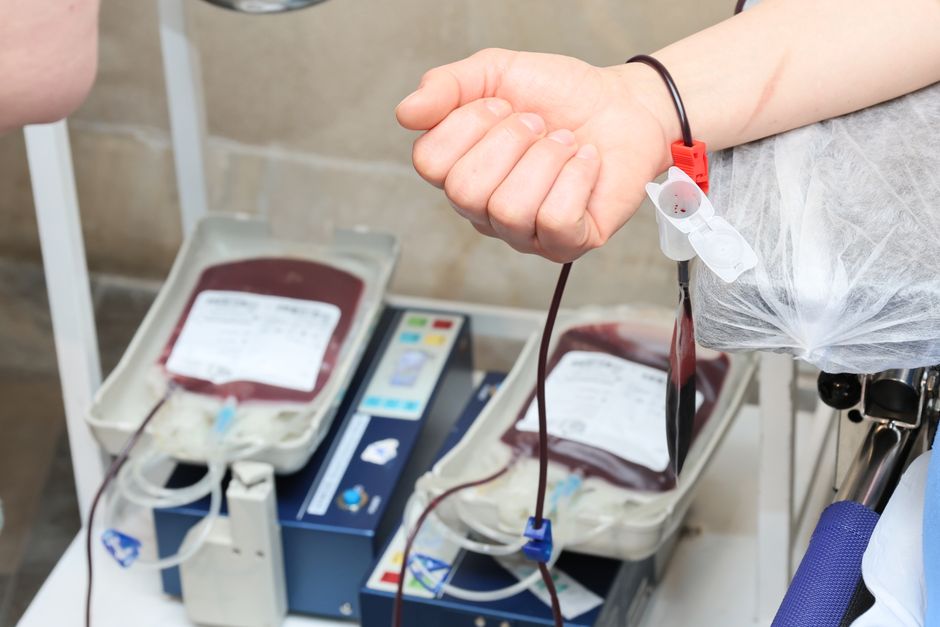
Giving plasma is a medical process where a person donates the liquid portion of their blood to help others. Unlike whole blood donation, a machine separates your plasma from your red blood cells and returns most of the blood back to you. Plasma is critical for treating burn victims, trauma patients, and people with rare immune disorders.
What Exactly Happens During a Plasma Donation?
The process is called plasmapheresis. A needle draws blood from your arm into a machine called a centrifuge. The machine spins the blood to separate the plasma — a pale yellow liquid — from the red cells, white cells, and platelets.
The machine collects the plasma into a bag. The rest of your blood mixes with a sterile saline solution and flows back into your arm through the same needle. The total cycle repeats several times during one donation session.
A typical session takes about 90 minutes from check-in to finish. The actual donation time is usually 45 to 60 minutes depending on your body size and hydration. Your body replaces the donated plasma within 24 to 48 hours, which is much faster than red blood cell replacement.
Plasma donation centers screen donors before each session. They check your vital signs, protein levels, and hemoglobin. You cannot donate if your protein levels are too low or if you have certain medical conditions.
Who Can Donate Plasma and How Often?
The FDA sets the rules for plasma donation in the United States. You must be at least 18 years old and weigh a minimum of 110 pounds. You need to pass a medical history screening and test negative for infectious diseases like HIV, hepatitis B, and hepatitis C.
You can donate plasma much more frequently than whole blood. The FDA allows up to two donations per week, with at least 48 hours between sessions. Some states have stricter limits, so check with your local center.
Research published in the journal Transfusion found that frequent plasma donors maintain stable protein levels when they eat a balanced diet. The study tracked donors over 12 months and found no long-term health problems in those who donated regularly.
Donors with blood type AB are especially valuable because their plasma is universal — it can be given to any patient regardless of blood type. Only about 4 percent of the US population has AB blood type.
What Are the Immediate Side Effects of Giving Plasma?
Most people tolerate plasma donation well, but side effects do happen. The most common is bruising at the needle site, which affects about 1 in 10 donors. You might also feel dizzy or lightheaded during or after the procedure.
A citrate reaction is unique to plasma donation. The machine uses an anticoagulant called citrate to keep your blood from clotting during the process. Some people experience tingling in their lips, fingers, or toes as a result. This is temporary and usually mild.
Serious side effects are rare. The FDA reports that severe allergic reactions or fainting occur in less than 1 percent of donations. Centers are equipped to handle these situations if they arise.
Dehydration is a preventable side effect. Your body loses fluid during the donation, and the saline solution does not fully replace water. Drinking plenty of water before and after donation reduces your risk of feeling unwell.





Does Giving Plasma Affect Your Health Long Term?
Research shows that regular plasma donation does not harm your health when you follow the recommended schedule. Your liver produces new plasma proteins quickly, and your body replenishes the fluid volume within a day or two.
Some studies suggest that frequent plasma donation may lower your total protein and immunoglobulin levels over time. A 2021 study in Vox Sanguinis found that donors who gave plasma more than 15 times per year had slightly lower IgG antibody levels compared to first-time donors. The levels remained within normal range for healthy adults.
Your diet matters. Plasma contains proteins, electrolytes, and antibodies. If you donate frequently, your body needs enough protein to rebuild what you lose. The American Red Cross recommends eating a protein-rich meal within two hours of donating.
There is no evidence that plasma donation weakens your immune system in a meaningful way. The temporary drop in antibodies is small and your body restores normal levels within a few weeks.
What Is Giving Plasma Compared to Donating Whole Blood?
Many people confuse plasma donation with whole blood donation. The two processes are different in several important ways. The table below shows the key differences.
| Feature | Plasma Donation | Whole Blood Donation |
|---|---|---|
| Time required | 45-90 minutes | 10-15 minutes |
| Frequency allowed | Up to 2 times per week | Every 56 days |
| Blood returned to you | Yes | No |
| Primary use | Burn treatment, clotting disorders | Trauma, surgery, anemia |
| Fluid replacement | Saline given during donation | Body replaces naturally |
Whole blood donation takes less time but you can do it less often. Plasma donation takes longer but you can go more frequently. Both are needed. Hospitals use them for different patient needs.
Your body recovers differently from each. After whole blood donation, your red blood cell count takes 4 to 6 weeks to fully return to normal. After plasma donation, your plasma volume normalizes in 24 to 48 hours.
What Are Common Misconceptions About Plasma Donation?
A widespread myth is that plasma donation hurts more than whole blood donation. The needle insertion feels the same. The longer session time can make some people more uncomfortable, but the pain level is identical.
Another myth is that you cannot donate plasma if you take medication. Many medications are allowed. Blood thinners, insulin, and thyroid medication are all acceptable in most cases. You need to disclose everything at screening.
Some people believe plasma donation causes weight gain or weight loss. There is no clinical evidence for either. The saline solution adds temporary fluid weight that your body eliminates within hours.
A persistent rumor claims that plasma centers sell your plasma for huge profits. The reality is that plasma is expensive to process. It undergoes pathogen reduction, testing, and fractionation into multiple medical products. The cost reflects the complex manufacturing, not a markup on free blood.
What Should You Do Before and After Donating Plasma?
Preparation makes the experience smoother. Hydrate well in the 24 hours before your appointment. Drink at least 64 ounces of water spread throughout the day. Avoid alcohol the night before because it dehydrates you.
Eat a balanced meal with protein and complex carbohydrates about two hours before donating. Good options include eggs, oatmeal, chicken, or beans. Avoid fatty foods because they can make your plasma appear cloudy and may cause the machine to reject it.
After donation, rest for 10 to 15 minutes at the center. Drink more water and eat a protein-rich snack. Avoid heavy lifting or intense exercise for the rest of the day. The needle site needs time to heal.
Some people report feeling tired the next day. This is normal and usually passes within 24 hours. If you feel unwell longer than that, contact your donation center or your doctor.
Frequently Asked Questions
Can I donate plasma if I have tattoos or piercings?
Yes, but you may need to wait 3 to 12 months depending on your state and whether the tattoo was done at a licensed facility.
Does plasma donation hurt as much as blood donation?
No, the needle stick feels the same but the longer session can cause more arm discomfort for some people.
How much money can I make donating plasma?
Compensation varies by center and location but typically ranges from $20 to $60 per donation.
Can I donate plasma if I have high blood pressure?
It depends on your blood pressure reading at screening, but many centers accept donors whose pressure is controlled with medication.
