
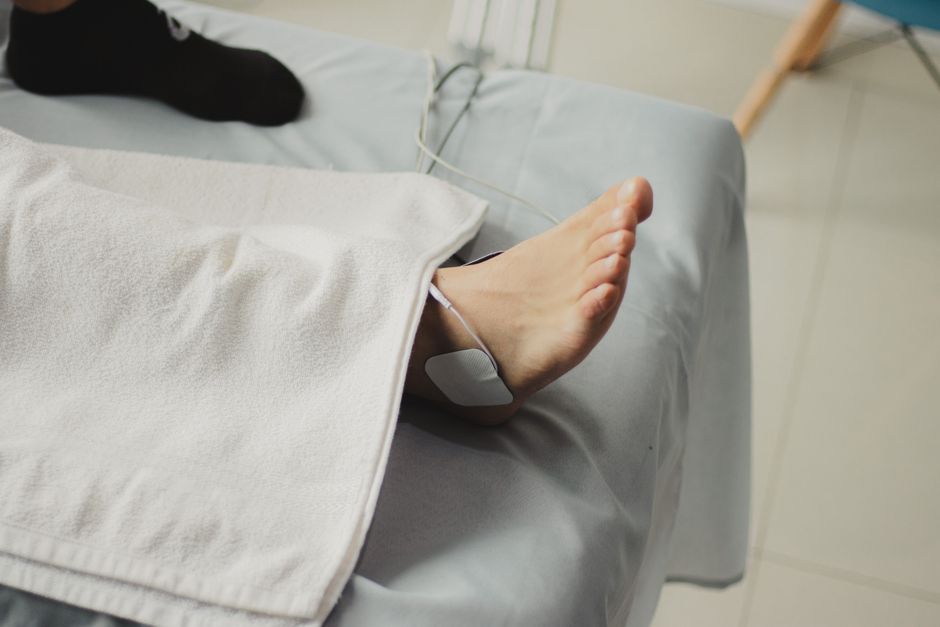
Galvanic treatment is a skincare technique that uses a small, continuous electrical current to move charged substances into or out of the skin. It has been used in professional facials and dermatology settings for decades. The two most common forms are iontophoresis, which pushes water-soluble products into the skin, and desincrustation, which uses the same current to loosen oil and debris in pores.
What Is Galvanic Treatment How It Works On Skin?
The core principle is simple: like charges repel, opposite charges attract. A galvanic device creates a direct current — a steady, one-directional flow of electricity — between an electrode held by the esthetician or attached to the client and a return electrode the client holds or rests on.
When the active electrode carries the same charge as a product applied to the skin, that product is pushed away from the electrode and toward the skin. When the charge is reversed, the process pulls material toward the electrode and away from the skin. The skin itself acts as a resistive barrier, which is why the current is kept low and the treatment is applied in a controlled setting.
The current also produces mild electrochemical changes at the skin surface. At the negative electrode, alkaline conditions form. At the positive electrode, acidic conditions form. These shifts are what make desincrustation possible — the alkaline environment helps soften sebum, the oily substance that clogs pores.
Iontophoresis vs. desincrustation
These are the two main modes, and they do different things.
- Iontophoresis uses the current to drive charged, water-soluble molecules into the upper layers of the skin. It is the mode most studied for delivering specific compounds.
- Desincrustation uses the alkaline reaction at the negative electrode to emulsify and loosen sebum and debris, making extraction easier during a facial.
Both rely on the same direct current. The difference is the polarity, the products used, and the goal of the session.
What Does Galvanic Treatment Actually Do to the Skin?
The measurable effects are modest and localized. Galvanic current increases blood flow in the treated area, which some people find gives a temporary look of freshness or firmness. It can also improve the penetration of water-soluble ingredients that would otherwise sit on the surface.
What it does not do is restructure skin. It does not build collagen, remove wrinkles permanently, or change the underlying anatomy. Any tightening or glow you see is temporary and typically fades within hours to a day.
Desincrustation genuinely helps soften sebum before extraction. That is a real, practical effect. Estheticians have used it for this purpose for a long time, and the chemistry behind it — alkaline conditions breaking down oils — is well understood.
For iontophoresis, the story is more mixed. Getting large molecules through intact skin is difficult. The current can help small, charged, water-soluble molecules cross the outer barrier, but it is not a universal delivery system. Results depend heavily on the specific substance, its charge, its size, and the skin’s condition.
Is Galvanic Treatment FDA-Approved or Regulated?
Galvanic devices are regulated as medical devices in the United States when they make therapeutic claims. The FDA classifies certain iontophoresis devices for specific uses, such as delivering medication through the skin under clinical supervision. Devices marketed for cosmetic facials fall under a different, lighter regulatory path.
This distinction matters. A device cleared for a specific clinical use is not the same as a spa device sold for general cosmetic purposes. If a clinic claims a galvanic device treats a medical condition, that claim should be backed by a specific clearance. If a spa offers it as a facial add-on, it is a cosmetic service.
Regulation also varies by country. What is cleared in one market may not be in another. If you are considering a treatment for a medical concern rather than a cosmetic one, ask what the device is actually cleared to do.




What Is Galvanic Treatment Used For in Practice?
In clinical settings, iontophoresis has been used to deliver specific medications through the skin, avoiding needles. This is a recognized technique for certain applications, and it is performed under medical supervision with controlled dosing.
In cosmetic settings, galvanic facials are marketed for a range of goals:
- Deep-cleaning pores through desincrustation
- Improving the absorption of serums and masks
- A temporary tightening or lifting effect
- Reducing the appearance of puffiness
The evidence for the deep-cleaning use is reasonable. The evidence for lasting lifting, wrinkle reduction, or skin restructuring is weak. Those claims tend to come from marketing rather than controlled studies.
Some clinicians use galvanic current as part of a broader treatment plan for specific skin conditions, but it is rarely a standalone solution. It works best as a supporting step, not a primary treatment.
Who Should Avoid Galvanic Treatment?
Galvanic treatment is not appropriate for everyone. Electrical current interacts with the body in ways that make certain people poor candidates.
People who should avoid it or get medical clearance first include:
- Anyone with a pacemaker, implanted defibrillator, or other electronic medical device
- Pregnant women, since the safety of electrical current during pregnancy is not established
- People with epilepsy or seizure disorders
- Anyone with metal implants, plates, or pins in the treatment area
- People with open wounds, active infections, or broken skin in the area
- Those with known sensitivity to electrical current or a history of reactions
For pregnancy specifically, no clinical guidelines establish that galvanic current is safe, so the conservative position is to avoid it. This is not a case where the evidence supports reassurance — it is a case where the evidence is simply absent.
If you have any implanted electronic device, the risk is not theoretical. Electrical current can interfere with how these devices function. This is a firm contraindication, not a precaution.
What Does a Galvanic Treatment Session Feel Like?
Most people describe a mild tingling, a faint warmth, or a slight metallic taste when the current passes near the mouth or nose. The sensation should stay comfortable. Sharp pain, burning, or muscle twitching means the current is too high or something is wrong, and the session should stop.
A typical facial session runs about 15 to 30 minutes for the galvanic portion. The esthetician controls the intensity and can adjust it based on your feedback. You hold a return electrode, and the active electrode is moved across your skin.
Afterward, some redness or warmth is normal and usually settles within an hour or two. Any reaction beyond mild, short-lived redness is a reason to check in with a clinician.
Does Galvanic Treatment Have Real Evidence Behind It?
For desincrustation and for clinical iontophoresis of specific medications, yes — these have established uses and a reasonable evidence base. For the broader cosmetic claims, the picture is much thinner.
Many spa marketing claims about lifting, firming, or anti-aging rest on the physiological idea that current affects skin, not on controlled trials showing those outcomes. Biological plausibility is not the same as demonstrated benefit. A treatment can make sense in theory and still fail to produce meaningful results in practice.
Some studies suggest galvanic current can enhance the penetration of certain topical compounds. That is a narrower, more defensible claim than “reverses aging.” When you see sweeping claims, ask what specific outcome was measured and in what kind of study.
The honest summary: galvanic treatment is a real technique with real, limited effects. It is not a gimmick, and it is not a miracle. Its value depends entirely on what it is being used for and who is performing it.
How Does It Compare to Other Skincare Treatments?
| Treatment | Primary mechanism | Typical evidence strength |
|---|---|---|
| Galvanic (desincrustation) | Alkaline current softens sebum | Reasonable for pore clearing |
| Galvanic (iontophoresis) | Current drives charged molecules in | Established for specific clinical uses |
| Chemical peels | Acid exfoliates surface layers | Well established for multiple uses |
| Microneedling | Physical punctures trigger repair | Moderate evidence for scarring and texture |
| Retinoids (topical) | Alters cell turnover and collagen | Strong evidence for acne and aging |
Galvanic treatment sits at the gentler end of this list. It is less invasive than peels or microneedling and far less studied than retinoids. For someone wanting a mild, low-risk facial add-on, that trade-off may be fine. For someone wanting meaningful change in skin texture or aging, other options have stronger evidence.
What Should You Ask Before Getting a Galvanic Treatment?
Ask what mode is being used and why. Desincrustation and iontophoresis are not interchangeable, and a provider should be able to explain which one fits your goal.
Ask about the device. Is it a cosmetic device or one cleared for a clinical use? The answer changes what claims are reasonable.
Ask about the products being pushed into your skin. If iontophoresis is used, whatever is applied may penetrate more than it would on its own. That is the point of the technique, but it also means the ingredients matter more, not less.
Ask what results to expect and over what timeline. If the answer is dramatic and permanent, be skeptical. If the answer is mild and temporary, that is more consistent with what the evidence supports.
And be honest about your health history. Implanted devices, pregnancy, and seizure disorders are not details to leave out. They are the difference between a safe session and a risky one.
Frequently Asked Questions
Is galvanic treatment safe for all skin types?
It is generally tolerated across skin types, but it is not appropriate for everyone regardless of skin type. People with pacemakers, implanted electronic devices, pregnancy, or seizure disorders should avoid it.
How often can you get a galvanic facial?
Cosmetic galvanic facials are commonly offered every two to four weeks as part of a routine. No clinical guidelines set a standard frequency, so follow your provider’s recommendation and your skin’s response.
Does galvanic treatment really remove wrinkles?
No. Any smoothing or tightening from a galvanic facial is temporary and fades within hours to a day. There is no strong evidence that it reduces wrinkles over time.
Can galvanic treatment push harmful ingredients into the skin?
Iontophoresis increases how much of an applied product enters the skin, so the ingredients used matter more, not less. This is why the specific products chosen for the treatment should be appropriate for your skin.
