
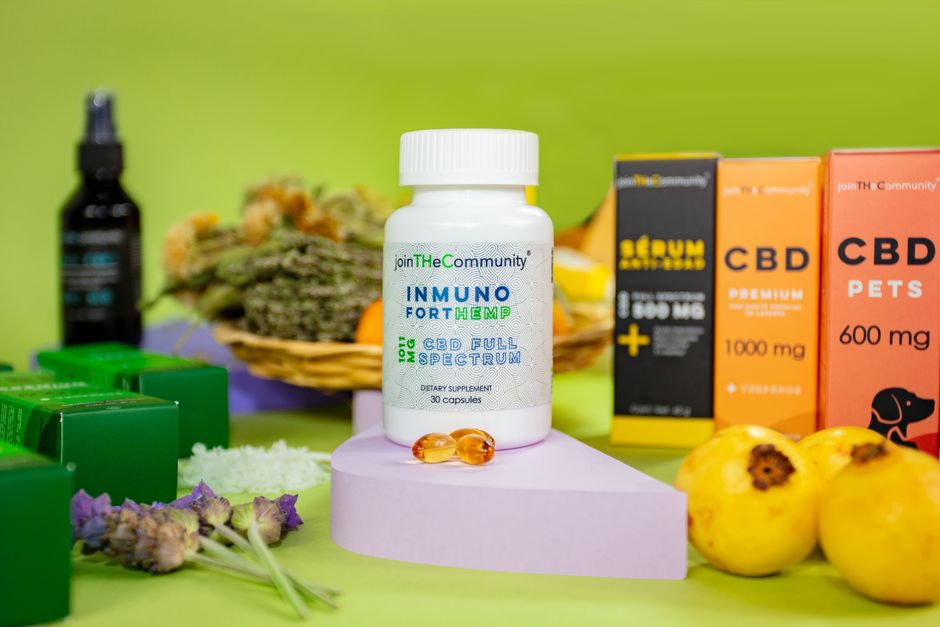
Full spectrum CBD oil contains cannabidiol along with a range of other compounds from the cannabis plant, including trace amounts of THC. The THC content in a legally sold full spectrum product in the United States cannot exceed 0.3 percent on a dry weight basis. That limit is set by federal law, not by the manufacturer. The effects people report from full spectrum CBD are often attributed to the combined presence of multiple plant compounds, though the strength of that evidence varies considerably depending on what effect is being studied.
What Is Full Spectrum CBD Oil?
Full spectrum CBD oil is an extract that retains the plant’s natural chemical profile rather than isolating a single compound. It typically contains CBD, trace THC, other cannabinoids like CBG and CBC, terpenes, and flavonoids.
This is different from CBD isolate, which is purified CBD alone, and broad spectrum CBD, which contains multiple cannabinoids but has THC removed or reduced to undetectable levels. The distinction matters because the three products are not interchangeable in terms of what they contain or what they may do.
Full spectrum oil is usually produced through extraction methods that preserve the plant’s compounds. It is then diluted into a carrier oil, often MCT oil or hemp seed oil, for dosing.
What Is the THC Content in Full Spectrum CBD Oil?
Federal law in the United States limits THC in hemp-derived products to no more than 0.3 percent by dry weight. This threshold comes from the 2018 Farm Bill, which removed hemp from the Controlled Substances Act when it meets that definition.
In practical terms, a 30 mL bottle of full spectrum CBD oil containing 1,500 mg of CBD might deliver a small number of milligrams of THC across the entire bottle. The exact amount depends on the product’s concentration and how much oil a person uses. At the legal limit, most full spectrum products contain only trace THC.
That said, “trace” does not mean zero. Some full spectrum products do contain detectable THC, and the amount can vary between batches and brands. Third-party lab testing is the only reliable way to know what a specific bottle contains.
This matters for several reasons. Some people are subject to drug testing for work, sports, or legal reasons. Repeated use of a full spectrum product, particularly at higher doses, has been reported to produce positive results on some THC screening tests. The risk is not the same for every product or every person, but it is not zero.
What Effects Does Full Spectrum CBD Oil Have?
The effects of full spectrum CBD oil fall into a few categories: effects that are well documented for CBD itself, effects that are widely reported by users but not firmly established in clinical research, and effects that are largely marketing claims.
Well-documented effects. Purified CBD has been studied extensively as a treatment for certain seizure disorders. A prescription CBD product is approved by the FDA for specific severe epilepsy syndromes in patients. This is the strongest evidence base for any CBD effect. Importantly, that approval is for an isolated CBD product, not a full spectrum oil.
CBD has also been studied for anxiety, sleep, and pain. The evidence for these uses is more mixed. Some studies suggest benefit in specific contexts, but study designs, doses, and populations vary widely, and results have not been consistent enough to establish CBD as a standard treatment for any of these conditions.
Reported but not firmly established effects. Many people who use full spectrum CBD report reduced anxiety, better sleep, or less discomfort. These reports are real, but self-reported effects are difficult to separate from placebo, which is powerful in this area. Placebo responses in pain and anxiety studies are consistently large.
The entourage effect. The idea that cannabinoids and terpenes work better together than in isolation is called the entourage effect. It is a popular concept and a common marketing angle. The honest position is that this is plausible but not proven in humans. Some laboratory and animal studies hint at interactions between compounds, but clinical trials directly comparing full spectrum CBD to isolate for specific outcomes are limited. No large human trial has confirmed that full spectrum CBD produces meaningfully different effects than isolated CBD for most conditions.




How Does Full Spectrum CBD Compare to Other CBD Types?
The main practical differences between full spectrum, broad spectrum, and isolate come down to what is in the bottle, not necessarily what it does.
- Full spectrum: Contains CBD, trace THC, other cannabinoids, and terpenes. THC is present at up to 0.3 percent by dry weight under federal law.
- Broad spectrum: Contains multiple cannabinoids and terpenes but THC is removed or reduced to undetectable levels.
- Isolate: Contains CBD only, typically 99 percent or higher purity.
For someone who needs to avoid THC entirely, isolate or broad spectrum is the safer choice. For someone interested in the potential entourage effect, full spectrum is the product that would theoretically provide it, though as noted, that effect is not firmly established.
Cost and dosing are also different. Because full spectrum products contain other compounds, the CBD concentration per milliliter may be lower than an isolate product of similar bottle size. This means comparing products by total CBD content alone can be misleading.
What Are the Risks and Side Effects of Full Spectrum CBD Oil?
CBD is generally considered well tolerated in the doses studied, but it is not without side effects. Reported effects include drowsiness, dry mouth, diarrhea, and changes in appetite. These are typically mild but can occur.
CBD interacts with certain medications. It is metabolized by the same liver enzymes that process many common drugs, including some anti-seizure medications, blood thinners, and others. This means CBD can raise or lower blood levels of those drugs, potentially causing problems. Anyone taking prescription medication should talk to a clinician before using CBD.
THC content adds another consideration. Even at trace levels, THC can cause impairment in sensitive individuals, and repeated exposure could matter for people who are drug tested. For pregnant or breastfeeding women, infants, and children, there are no established clinical guidelines for CBD use, and the safest course is to avoid it unless a clinician specifically recommends otherwise.
There is also the issue of product quality. CBD products are not uniformly regulated, and some have been found to contain less CBD than labeled, more THC than labeled, or contaminants. Third-party testing certificates are one way to check what is actually in a product, though even these are not a guarantee.
Does Full Spectrum CBD Oil Get You High?
At the legal THC limit of 0.3 percent, full spectrum CBD oil is unlikely to produce a high in most people. The amount of THC in a typical serving is very small compared to what is in cannabis products used for recreational purposes.
However, “unlikely” is not “impossible.” Some people report feeling mildly altered after using full spectrum products, particularly at higher doses. Individual sensitivity to THC varies widely. Someone who has never used cannabis may notice effects that a regular user would not.
The bigger practical concern for most people is not intoxication but drug testing. As noted, repeated use of full spectrum products has been reported to trigger positive results on THC screens in some cases.
What Should You Look for in a Full Spectrum CBD Product?
Given the lack of uniform regulation, a few things are worth checking before buying.
- Third-party lab results. These should show cannabinoid content and confirm the absence of contaminants like heavy metals, pesticides, and residual solvents.
- Clear THC disclosure. The product should state how much THC it contains, not just that it is “full spectrum.”
- CBD concentration. This tells you how much CBD is in each milliliter or serving, which is necessary for consistent dosing.
- Source and extraction method. This is less critical than testing but can indicate quality control.
None of these guarantees a product will work for any particular purpose. They simply reduce the risk of getting something different from what the label claims.
Frequently Asked Questions
How much THC is in full spectrum CBD oil?
Federal law limits THC in hemp-derived products to 0.3 percent by dry weight. The actual amount per serving depends on the product’s concentration and how much is used.
Can full spectrum CBD oil make you fail a drug test?
It is possible, especially with repeated use or higher doses, because full spectrum products contain trace THC. The risk varies by product, dose, and individual metabolism, so anyone subject to testing should be cautious.
Is full spectrum CBD better than isolate?
The evidence does not clearly show that full spectrum CBD is more effective than isolate for most conditions. The entourage effect is plausible but not firmly established in human trials.
Does full spectrum CBD oil get you high?
At legal THC limits, it is unlikely to produce a high in most people. However, individual sensitivity varies, and higher doses may cause noticeable effects in some individuals.
