
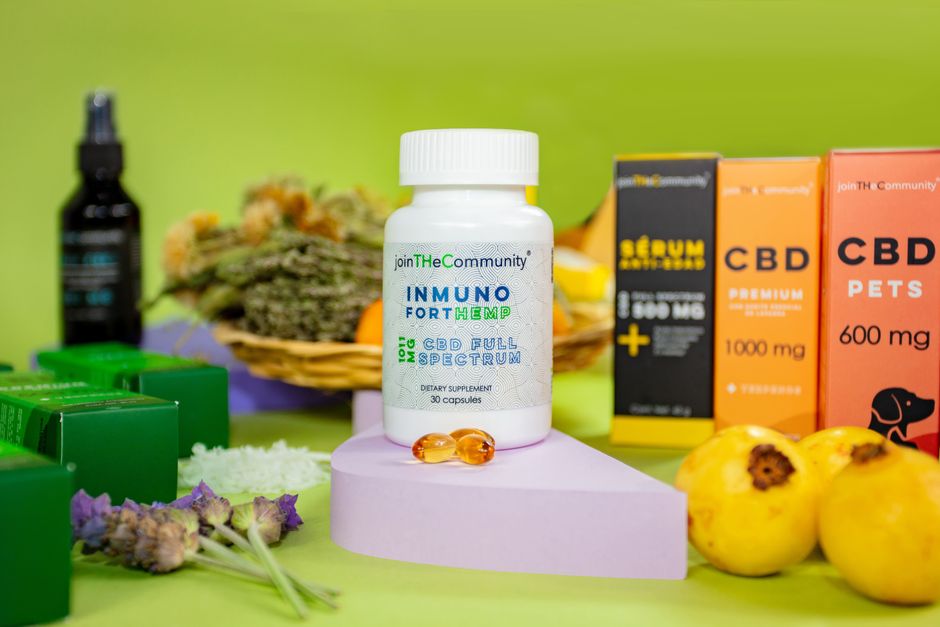
Full spectrum CBD is a cannabis extract that contains cannabidiol along with many other naturally occurring compounds from the hemp plant, including trace amounts of THC. Unlike CBD isolate, which is purified to contain only cannabidiol, full spectrum products keep the plant’s natural chemical profile largely intact. That difference matters because the other compounds present — terpenes, flavonoids, and minor cannabinoids — may influence how the product affects the body.
What Is Full Spectrum CBD?
Full spectrum CBD starts with hemp, a variety of Cannabis sativa bred to contain very low THC. The plant material undergoes extraction, typically using CO2 or ethanol, which pulls out cannabidiol along with hundreds of other molecules. The resulting extract is not refined down to a single compound.
What remains is a complex mixture: CBD as the dominant cannabinoid, smaller amounts of cannabichromene (CBC), cannabigerol (CBG), cannabinol (CBN), terpenes like myrcene and limonene, and flavonoids. Trace THC is also present, usually at concentrations at or below 0.3% on a dry weight basis. That threshold is the legal limit for hemp in the United States under federal law.
The term “full spectrum” is not a regulatory category. It is an industry descriptor. That means quality and actual composition vary widely between products. A label claiming full spectrum tells you the manufacturer’s intent, not a verified chemical profile. Third-party lab testing is the only reliable way to know what is actually in a bottle.
How Is Full Spectrum CBD Different From Isolate and Broad Spectrum?
The three main types of CBD products differ in what they contain.
- Full spectrum: Contains CBD, other cannabinoids, terpenes, flavonoids, and trace THC.
- Broad spectrum: Contains CBD and other cannabinoids and terpenes, but THC is removed or reduced to undetectable levels.
- Isolate: Contains only CBD, typically 99% or higher purity, with no other plant compounds.
The practical difference comes down to two things: whether THC is present at all, and whether the other compounds are present. For people who need to avoid THC entirely — because of drug testing, sensitivity, or personal preference — isolate or broad spectrum is the relevant choice. For those interested in the potential interplay of multiple compounds, full spectrum is the category they look at.
Price and dosing often differ too. Because isolate is a single compound, it is easier to standardize and measure. Full spectrum products vary more from batch to batch, which makes consistent dosing harder.
What Is the Entourage Effect and Does It Hold Up?
The entourage effect is the idea that cannabis compounds work better together than in isolation. The concept was proposed in the late 1990s by researchers studying the plant’s chemistry. The theory suggests that terpenes, flavonoids, and minor cannabinoids modulate or enhance the effects of the primary cannabinoids.
Here is where honesty matters. The entourage effect is a plausible hypothesis with some supporting laboratory and animal data. It is not established clinical fact. Human trials directly comparing full spectrum CBD to isolate on meaningful health outcomes are limited and have produced mixed results. Some studies suggest differences in absorption or effect; others find little to none.
What is reasonably well established is that CBD itself interacts with the body’s endocannabinoid system, though not primarily through the CB1 and CB2 receptors that THC binds. CBD has low affinity for those receptors directly. Its effects appear to involve other pathways, including serotonin receptors and enzymes that break down endocannabinoids. The precise mechanisms are still being worked out.
A non-obvious point: the presence of trace THC, even below the legal limit, can contribute to effects in some people. THC is psychoactive. At very low doses it is unlikely to produce a “high,” but it is not nothing, and it accumulates with repeated dosing in some individuals.




What Does the Evidence Show About CBD’s Health Effects?
This is the section where marketing claims and evidence diverge sharply.
The strongest evidence for CBD exists for specific, severe forms of epilepsy. A prescription CBD product has been approved by the FDA for certain seizure disorders, based on randomized controlled trials. That is a pharmaceutical-grade formulation, not an over-the-counter hemp product.
For most other uses, the picture is much less clear:
- Anxiety: Some small studies and reviews suggest CBD may reduce anxiety symptoms, but sample sizes are generally small, dosing varies, and results are not consistent enough to call this established.
- Chronic pain: Evidence is mixed. Some studies show modest effects; others do not. Most research has used different formulations and doses than what consumers buy.
- Sleep: Early research is suggestive but not conclusive. Many studies are small or short-term.
- Inflammation: Laboratory and animal studies show anti-inflammatory activity. Human clinical data are limited.
No clinical evidence currently confirms that full spectrum CBD outperforms isolate for any specific health condition in humans. The comparison is interesting scientifically but not settled.
It is also important to separate “CBD may help with X” from “this product treats X.” Most over-the-counter CBD products are sold as supplements, not drugs. They have not been evaluated by the FDA for safety or effectiveness for any condition.
Does Full Spectrum CBD Contain THC and Can It Cause a Positive Drug Test?
Yes, full spectrum CBD typically contains trace THC, usually at or below 0.3% by dry weight. That is the federal legal limit for hemp.
The question of drug testing is where this gets practical. Standard workplace drug screens detect THC metabolites, not CBD. Because full spectrum products contain some THC, repeated use can, in some people, lead to detectable levels. The risk depends on the product, the dose, the frequency of use, and individual metabolism.
Some people use full spectrum CBD daily for months and never test positive. Others do. There is no reliable way to predict this for a given person. If avoiding a positive test is essential, isolate or broad spectrum products — or products with verified zero THC — are the safer choice. Even then, contamination and labeling inaccuracy are documented problems in the CBD market.
What Are the Risks and Side Effects?
CBD is generally considered well tolerated in the doses studied, but “well tolerated” is not the same as “risk-free.”
Reported side effects include drowsiness, fatigue, diarrhea, changes in appetite, and dry mouth. These are usually mild.
More significant concerns:
- Liver effects: High doses of CBD have been associated with liver enzyme elevations in some clinical trials, particularly in the epilepsy studies. The relevance to typical consumer doses is not well established.
- Drug interactions: CBD can interfere with the liver enzymes that process many medications, including some blood thinners, anti-seizure drugs, and others. This is a real concern and worth discussing with a clinician.
- Pregnancy and breastfeeding: CBD is not recommended during pregnancy or breastfeeding. The evidence on safety in these populations is inadequate.
- Children: Outside of prescribed medical use under clinical supervision, CBD is not recommended for children. No clinical guidelines exist for general pediatric use of over-the-counter CBD.
Product quality is its own risk. Independent testing has repeatedly found that some CBD products contain less or more CBD than labeled, or contain contaminants like pesticides, heavy metals, or residual solvents. Full spectrum products are more chemically complex, which can make quality control harder.
How Do You Evaluate a Full Spectrum CBD Product?
Because the market is loosely regulated, the burden falls on the buyer.
Look for a certificate of analysis (COA) from an independent lab. The COA should show cannabinoid content, terpene profile if claimed, and testing for heavy metals, pesticides, microbials, and residual solvents. A COA that only shows total CBD is incomplete.
Check the THC content specifically. “Trace amounts” is vague. A number is better.
Consider the source. Hemp grown in the US is subject to some agricultural oversight, though not the same as pharmaceutical manufacturing.
Be skeptical of claims. If a product promises to treat a specific disease, that is a red flag. Legitimate CBD products do not make disease treatment claims unless they are FDA-approved drugs.
Frequently Asked Questions
What is full spectrum CBD?
Full spectrum CBD is a hemp extract that contains cannabidiol along with other cannabinoids, terpenes, and trace THC. It is distinct from isolate, which contains only CBD.
Will full spectrum CBD make you fail a drug test?
It can, because full spectrum products contain trace THC. The risk varies by product, dose, frequency, and individual metabolism, and cannot be predicted reliably.
Is full spectrum CBD better than CBD isolate?
The evidence is mixed and no large human trials have confirmed that full spectrum outperforms isolate for specific health conditions. The entourage effect is a plausible but not proven explanation.
Does full spectrum CBD get you high?
At legal hemp THC levels, it is unlikely to produce a noticeable high in most people. However, trace THC is psychoactive and can accumulate with repeated use in some individuals.
