
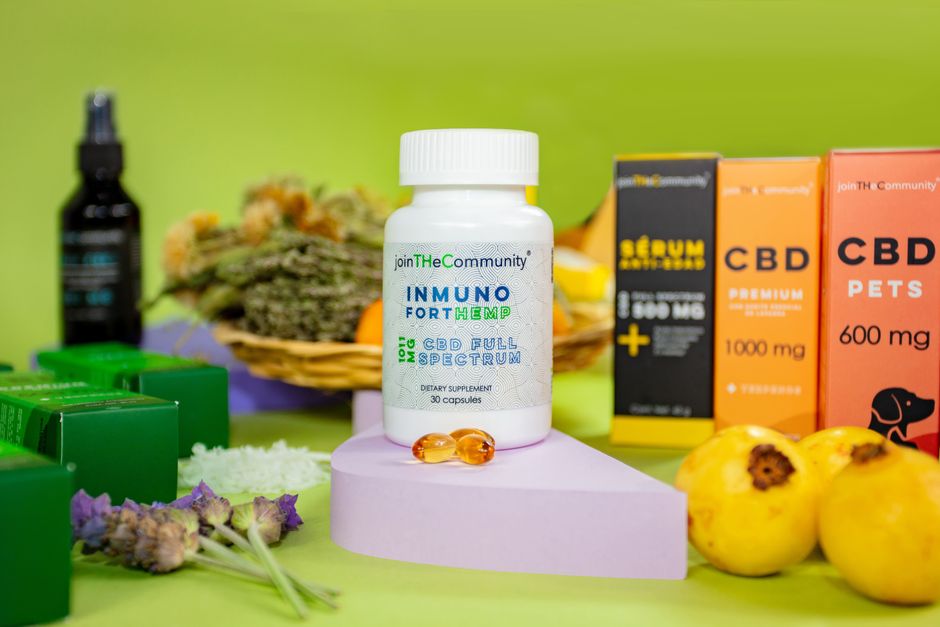
Full spectrum CBD is a cannabis extract that contains cannabidiol plus small amounts of THC and other plant compounds. The THC is usually present at very low levels, but it can be enough to show up on a drug test and, in some people, enough to cause mild effects. The main safety concerns are liver enzyme interactions with certain drugs, possible drowsiness, and uncertainty about what the label actually says is in the bottle.
CBD has become one of the most widely sold supplements in the United States. It has also become one of the most loosely regulated. That gap between popularity and oversight is the single most important thing to understand before using any CBD product, including full spectrum.
What Is Full Spectrum CBD?
Full spectrum CBD is an extract that keeps the plant’s natural chemical mix largely intact. It contains CBD as the main cannabinoid, plus trace amounts of THC, other minor cannabinoids like CBG and CBN, terpenes, and flavonoids.
The word “full” refers to that whole-plant profile. It does not mean the product is stronger or more medical. It means less has been stripped out during processing.
This is where the three main types differ:
- Full spectrum — contains CBD plus trace THC and the full range of plant compounds
- Broad spectrum — contains CBD and other plant compounds, with THC removed or reduced to undetectable levels
- CBD isolate — contains CBD only, with everything else removed
Federal law in the US allows hemp-derived products to contain no more than 0.3% THC by dry weight. That is a legal limit, not a safety threshold. A product can meet the legal definition and still contain enough THC to matter for a frequent user or a drug test.
What Are the Effects of Full Spectrum CBD?
The most commonly reported effects are mild calmness, reduced tension, and help with sleep. The evidence for these is uneven. Some clinical trials support CBD for specific seizure disorders. The evidence for everyday anxiety and sleep is much thinner and often comes from small studies.
CBD does not produce a high. It does not bind strongly to the same brain receptors as THC. What it does in the body is complex and still being mapped out.
The “entourage effect” is the idea that the plant’s compounds work better together than CBD alone. It is a popular marketing talking point. It is also not well established. Some laboratory and animal research suggests the compounds may interact. Human trials directly comparing full spectrum to isolate are limited, and results have been mixed. Treat claims that full spectrum is more effective than isolate as unproven rather than settled science.
One effect that is well documented: CBD can cause drowsiness, and it can interact with how the body processes other drugs.
How Much THC Is in Full Spectrum CBD?
Most full spectrum products contain only a small fraction of THC — often well under the 0.3% legal limit. The actual amount per serving varies widely between products and is often not clearly labeled.
That small amount matters more than people expect. A few things drive the risk:
- Dose size — taking a large serving of a low-THC product can mean more total THC
- Frequency — daily use allows THC to build up in the body over time
- Body weight and tolerance — the same dose affects people differently
- Product accuracy — some products contain more THC than the label states
Independent testing has repeatedly found that CBD products often do not match their labels. Some contain more THC than advertised. Some contain less CBD than claimed. Some contain no CBD at all. A widely cited analysis published in 2017 in the journal JAMA found that a large share of online CBD products were mislabeled. That finding is one reason third-party testing matters so much.
Can Full Spectrum CBD Make You Fail a Drug Test?
Yes, it can. This is one of the most practical and underappreciated risks of full spectrum products.
Standard workplace drug screens look for THC metabolites, not CBD. Because full spectrum products contain THC, regular use can produce a positive result even when you feel no effects. The risk grows with dose and frequency. It is not zero even at low doses.
If you are subject to drug testing for work, sports, or legal reasons, full spectrum CBD is a poor choice. Broad spectrum or isolate products carry less risk, though no CBD product can be guaranteed to test clean.
Is Full Spectrum CBD Safe?
For most healthy adults, short-term use of CBD appears to be reasonably well tolerated. That is the honest summary of the current evidence. It is not the same as saying it is proven safe for everyone.
Several concerns are well documented:
- Liver effects — CBD can raise liver enzymes in some people, especially at higher doses. The prescription CBD drug Epidiolex carries a boxed warning about liver injury, and monitoring is required. Over-the-counter doses are lower, but the risk is not zero.
- Drug interactions — CBD affects liver enzymes that process many medications, including some blood thinners, seizure drugs, and others. This is a real and clinically recognized interaction.
- Drowsiness — CBD can add to the effects of alcohol, sleep aids, and sedating medications.
- Pregnancy and breastfeeding — CBD is not recommended during pregnancy or breastfeeding. The evidence on safety in these groups is limited, and regulatory guidance advises against use.
Long-term safety data in healthy adults is limited. Most studies have been short. No large trials have followed everyday CBD users for years.
What Should You Check Before Buying Full Spectrum CBD?
Label accuracy is the biggest variable. Because CBD is regulated loosely as a supplement rather than as a medicine, what is on the bottle is not guaranteed to match what is inside.
A few checks are worth making:
- Third-party lab results — look for a certificate of analysis from an independent lab, not the manufacturer
- THC content — confirm the actual amount per serving, not just the percentage
- Dose per serving — compare products by milligrams of CBD, not by bottle size
- Batch testing — check whether the lab results match the specific batch you are buying
Talk to a pharmacist or doctor before combining CBD with any prescription medication. This is not a formality. The interaction risk is real and well documented.
How Does Full Spectrum CBD Compare to Other Types?
The choice between full spectrum, broad spectrum, and isolate comes down to trade-offs, not a clear winner. Each has a different risk profile.
| Type | Contains THC | Drug Test Risk | Other Plant Compounds |
|---|---|---|---|
| Full spectrum | Yes, trace amounts | Higher | Yes |
| Broad spectrum | Removed or minimal | Lower, not zero | Yes |
| Isolate | No | Lowest, not zero | No |
If avoiding THC is a priority — for work, testing, or personal preference — broad spectrum or isolate is the more sensible starting point. If you want the full plant profile and THC is not a concern, full spectrum is an option. Neither is inherently better. The evidence does not support one type as clearly more effective than another.
What Are the Limits of the Evidence?
It is worth being direct about what we do not know. CBD research is young. Much of what is sold today outpaces the science behind it.
The strongest evidence for CBD is in specific, treatment-resistant seizure disorders, where a prescription form is used under medical supervision. Beyond that, the picture is much less clear. Studies on anxiety and sleep exist but are often small, short, and inconsistent in their results.
Claims that full spectrum CBD treats pain, inflammation, or other conditions are common in marketing. Many rest on laboratory or animal data rather than large human trials. That does not make them false. It makes them unproven.
The most reliable position is this: CBD may help some people with some things, the evidence is strongest for a narrow set of conditions, and product quality varies enormously. Anyone selling certainty is selling more than the science supports.
Frequently Asked Questions
Does full spectrum CBD get you high?
No, not at the trace THC levels found in most products. The THC content is usually too low to produce a high, though very large doses or mislabeled products could cause mild effects in some people.
Can full spectrum CBD cause a positive drug test?
Yes, it can, because it contains trace THC that standard drug screens detect. The risk rises with higher doses and daily use, and no CBD product can be guaranteed to test clean.
Is full spectrum CBD safe to take with medications?
Not always. CBD can interact with how the body processes several prescription drugs, including some blood thinners and seizure medications, so check with a doctor or pharmacist first.
What is the difference between full spectrum and broad spectrum CBD?
Full spectrum contains trace THC along with the plant’s other compounds, while broad spectrum has THC removed or reduced to undetectable levels. Broad spectrum carries a lower drug-test risk but is not risk-free.
