
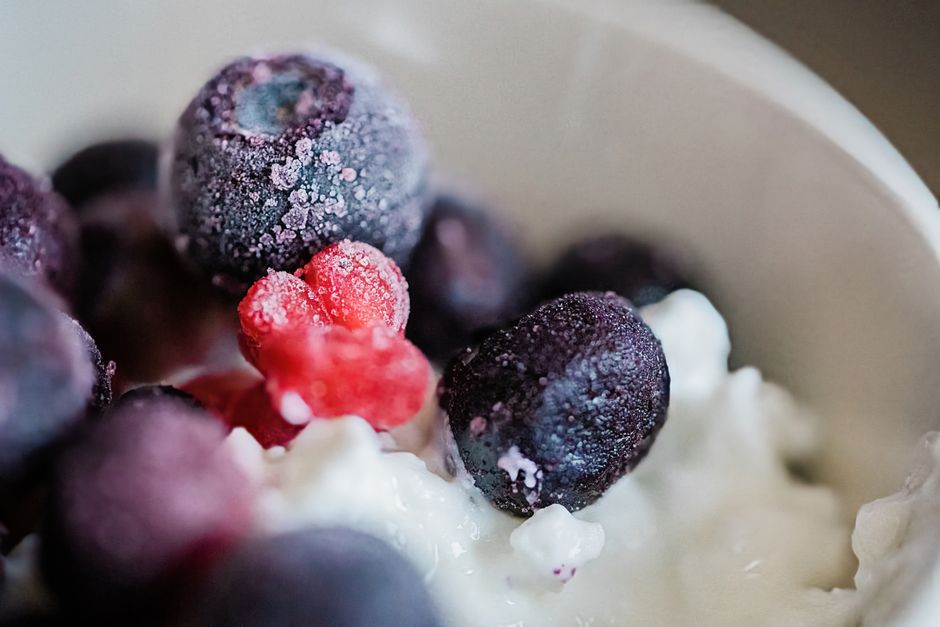
Frozen yogurt is a frozen dessert made from cultured yogurt or a yogurt-like base, sweetened and churned to a soft, scoopable texture. It contains live bacterial cultures in many products, though the amount varies widely by brand and by whether the product has been heat-treated after fermentation. It is not the same food as ice cream, and it is not automatically a low-calorie or “healthy” choice.
The name covers a wide range of products. Some are essentially soft-serve ice cream with a yogurt flavor. Others are genuinely fermented dairy with active cultures. Understanding which one you are eating matters more than the label on the cup.
What Is Frozen Yogurt and How Is It Made?
Frozen yogurt starts with milk that has been fermented by bacteria, usually strains such as Lactobacillus bulgaricus and Streptococcus thermophilus — the same starter cultures used for traditional yogurt. The fermentation thickens the milk and produces lactic acid, which gives yogurt its tang.
After fermentation, manufacturers add sugar, flavorings, and often stabilizers or emulsifiers. The mix is then frozen while air is whipped in, similar to how ice cream is made. The freezing step is what makes the final texture smooth rather than icy.
Here is where products diverge. Many commercial frozen yogurts are heat-treated after fermentation to extend shelf life or reduce the risk of spoilage. Heat treatment kills the live cultures. A product can still legally be called frozen yogurt, but it no longer contains active probiotics. If live cultures matter to you, look for a statement on the label confirming they are present.
The yogurt content itself also varies. Some products contain a small percentage of real yogurt mixed into a dairy base. Others are made almost entirely from fermented milk. There is no single standard recipe, which is why two frozen yogurts can differ enormously in nutrition.
Is Frozen Yogurt Actually Healthier Than Ice Cream?
Not necessarily. The assumption that frozen yogurt is a lighter, healthier version of ice cream does not hold up across the board.
Plain yogurt on its own is a genuinely nutritious food. It provides protein, calcium, and — in products with live cultures — beneficial bacteria. But frozen yogurt is not plain yogurt. It usually contains added sugar, and the freezing process does not remove calories or sugar.
Some frozen yogurts are lower in fat than ice cream because they are made with low-fat or nonfat milk. But lower fat often comes with more added sugar to compensate for taste and texture. A low-fat frozen yogurt can carry as much sugar as, or more than, a comparable serving of ice cream.
The honest position: frozen yogurt sits somewhere between ice cream and plain yogurt on the nutrition spectrum, and exactly where depends entirely on the specific product. Some are modestly lighter than ice cream. Some are nutritionally similar. A few are essentially dessert with a yogurt label. Reading the nutrition panel tells you far more than the product name does.
Does Frozen Yogurt Contain Live Probiotics?
Sometimes, but often not. This is one of the most misunderstood points about frozen yogurt.
Live probiotic cultures are sensitive to temperature. Freezing does not necessarily kill all bacteria, but it can reduce their numbers and their activity. Even in products that contain live cultures at the time of freezing, the count of viable bacteria can decline during storage.
Heat treatment after fermentation eliminates live cultures entirely. Many large commercial frozen yogurt brands use this step. The product still tastes like yogurt, but the bacteria are gone.
If you are eating frozen yogurt specifically for probiotics, the label is your only reliable guide. Look for an explicit statement that live and active cultures are present. Even then, the evidence that probiotic levels in frozen yogurt deliver meaningful health benefits is limited. Most research on probiotic health effects has used supplements or fresh fermented foods, not frozen desserts.
What Should You Look For on a Frozen Yogurt Label?
The nutrition and ingredient panels tell you what the front of the package will not. A few things are worth checking.
- Added sugar. This is often the biggest difference between products. Compare grams of added sugar per serving across brands.
- Live and active cultures. Look for a clear statement. If it is not there, assume the cultures may not be live.
- Serving size. Nutrition numbers are per serving, and a serving is often half a cup. A large self-serve cup can easily contain several servings.
- Protein content. Real yogurt contributes protein. Very low protein numbers can signal a product with little actual yogurt content.
- Ingredient list. Yogurt or cultured milk should appear early. Long lists of stabilizers and sweeteners suggest a more processed product.
One practical trap: self-serve frozen yogurt shops let you fill a large cup and add toppings. The nutrition information posted is usually per half-cup serving. A generously filled cup with toppings can multiply those numbers several times over, and it is easy to lose track of how much you have actually served yourself.
How Does Frozen Yogurt Compare to Ice Cream and Regular Yogurt?
The table below shows the general nutritional pattern across these foods. Exact values vary by product, so treat this as a guide to the typical differences rather than fixed numbers.
| Food | Typical fat | Typical added sugar | Live cultures | Protein |
|---|---|---|---|---|
| Plain regular yogurt | Varies (0% to whole milk) | None in plain | Usually yes | Moderate to high |
| Frozen yogurt | Often low | Often moderate to high | Sometimes | Low to moderate |
| Ice cream | Usually higher | Moderate to high | No | Low |
The clearest takeaway is that plain regular yogurt and frozen yogurt are not interchangeable. Plain yogurt is a protein-rich food with little or no added sugar. Frozen yogurt is a dessert. Treating it as a substitute for plain yogurt overstates what it delivers.
Is Frozen Yogurt Safe for Everyone?
For most healthy adults, frozen yogurt is safe to eat. The main considerations are the same ones that apply to any dairy dessert.
People with lactose intolerance may experience digestive symptoms from the lactose in dairy-based frozen yogurt. Lactose-free and plant-based versions exist, though plant-based products are not yogurt in the traditional sense and may not contain dairy cultures.
People with a milk allergy should avoid dairy-based frozen yogurt entirely, since it contains milk proteins. This is a different condition from lactose intolerance and carries a risk of serious reaction.
For people who are pregnant, very young children, older adults, and anyone with a weakened immune system, the general food safety principle is to be cautious with unpasteurized dairy. Most commercial frozen yogurt is made from pasteurized milk, which reduces this concern. If you are unsure about a specific product, the manufacturer or the shop can confirm.
Portion and frequency matter too. Frozen yogurt is a dessert, and it fits comfortably into most eating patterns when treated that way. The trouble comes when it is eaten frequently in large portions on the belief that it is a health food.
The Bottom Line on Frozen Yogurt
Frozen yogurt is a dessert that borrows the reputation of yogurt. Sometimes that reputation is earned — some products contain real fermented dairy and live cultures. Often it is not.
If you enjoy frozen yogurt, there is no reason to avoid it. Just read the label, watch the portion size, and do not count on it for probiotics or as a stand-in for plain yogurt. The nutrition panel will tell you what the product actually is.
Frequently Asked Questions
Is frozen yogurt healthier than ice cream?
Not always. Some frozen yogurts are lower in fat, but many contain as much added sugar as ice cream, so the two are often nutritionally similar.
Does frozen yogurt have live probiotics?
Only some products do. Many commercial frozen yogurts are heat-treated after fermentation, which kills the live cultures, so check the label for a live and active cultures statement.
Can you eat frozen yogurt if you are lactose intolerant?
Dairy-based frozen yogurt contains lactose and may cause symptoms. Lactose-free and plant-based options exist, though plant-based products may not contain dairy cultures.
How much frozen yogurt is a serving?
Nutrition labels typically list a half-cup serving. A large self-serve cup with toppings can contain several servings, so portion size is easy to underestimate.
