
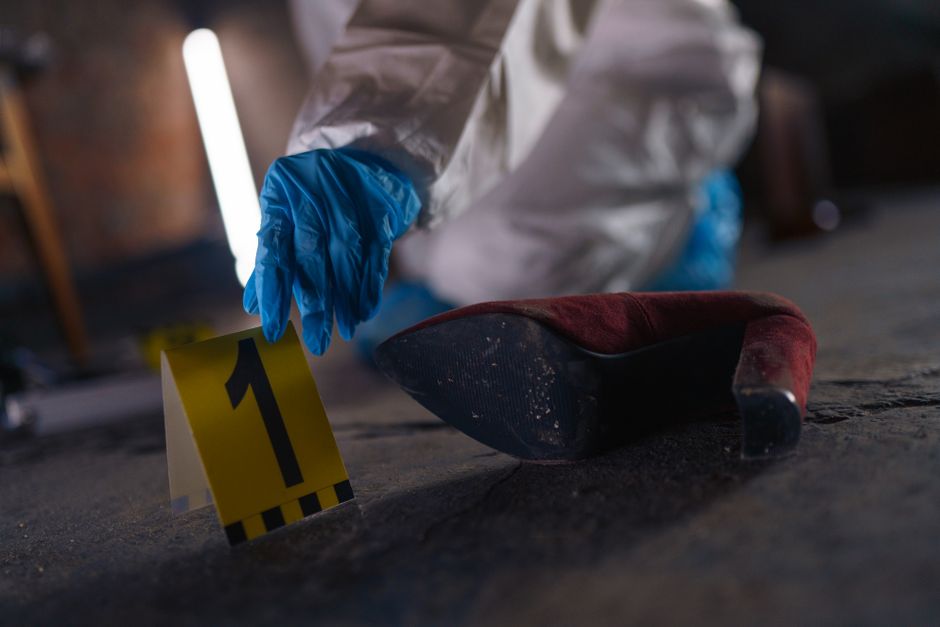
Forensic genetic genealogy is a technique that combines DNA analysis with traditional family history research to identify unknown people. It works by uploading a DNA profile from a crime scene or an unidentified body to a consumer genealogy database, finding distant relatives who share small amounts of DNA, then building family trees backward to narrow down who the unknown person might be. The method gained public attention in 2018 with the arrest of the Golden State Killer suspect, and it has since been used in hundreds of cases across the United States.
What Is Forensic Genetic Genealogy And How It Works?
Forensic genetic genealogy is the use of direct-to-consumer DNA databases and genealogical research methods to generate investigative leads in criminal cases and unidentified person cases. It is not the same as standard forensic DNA testing, and it does not produce a positive identification on its own.
The process starts with a DNA sample. In a criminal case, that sample usually comes from biological material left at a crime scene. In an unidentified person case, it comes from remains. A laboratory develops a DNA profile from the sample using a specialized test that reads hundreds of thousands of genetic markers — far more than the standard 20 or so markers used in conventional forensic DNA profiling.
That detailed profile is then uploaded to a public genealogy database such as GEDmatch or FamilyTreeDNA, where people who have taken consumer DNA tests can choose to share their results. The database compares the unknown profile against millions of others and returns a list of matches — people who share enough DNA to be relatives. Most matches are distant: third cousins, fourth cousins, sometimes more remote.
From there, a trained genealogist builds family trees for those matches, working backward through public records like birth certificates, obituaries, census data and marriage licenses. The goal is to find a common ancestor and then trace forward through that ancestor’s descendants until the pool of possible candidates narrows to a single person or a small number. Investigators then confirm that lead using a conventional DNA sample obtained through normal legal channels.
How Is It Different From Regular Forensic DNA Testing?
Standard forensic DNA testing is a comparison tool. It works only when investigators already have a suspect’s DNA to compare against a crime scene sample. If there is no suspect and no match in a criminal database, a standard profile sits unused.
Forensic genetic genealogy flips that. It does not need a suspect. It needs only a distant relative somewhere in a consumer database who has agreed to share their DNA. That is the core difference: standard testing confirms identity, while genetic genealogy generates leads.
The two methods also use different kinds of DNA data. Standard forensic profiles use short tandem repeats — a small set of highly variable markers that are excellent for matching one sample to another but carry little information about ancestry or family relationships beyond close kin. Genetic genealogy uses single nucleotide polymorphisms, or SNPs, spread across the genome. SNPs reveal ancestry, distant relatedness and physical traits in ways that standard forensic markers cannot.
One point worth clarifying: a genetic genealogy lead is not evidence of guilt. It is an investigative tip. Every identification still has to be confirmed through a conventional DNA sample, and that confirmation is what holds up in court.
Which Databases Are Used, and Who Can Access Them?
The databases used are consumer genealogy services, not criminal databases like CODIS, the FBI’s convicted offender system. The main ones have included GEDmatch and FamilyTreeDNA, which allow users to opt in to law enforcement matching. Some other major consumer testing companies have stated that they do not permit law enforcement access to their databases without a valid legal request such as a warrant or subpoena.
Consent is the central ethical issue. When you take a consumer DNA test, your results carry information about your biological relatives too — whether or not those relatives ever took a test themselves. A person who uploads their DNA to a sharing database can, in effect, expose distant cousins to investigative scrutiny without their knowledge.
Database policies have shifted over time in response to public concern. GEDmatch, for example, changed its terms in 2019 to require users to explicitly opt in to law enforcement matching, which sharply reduced the number of profiles available for that purpose. Policies at these companies continue to change, so anyone considering a consumer DNA test should read the current terms directly rather than rely on older reporting.
What Kinds of Cases Has It Solved?
The method has been applied most visibly to cold cases — homicides and sexual assaults that went unsolved for years or decades. The 2018 Golden State Killer case is the best-known example, and it demonstrated that a decades-old sample could still yield a workable lead.
It has also been used to identify unidentified remains, including long-unidentified homicide victims and people who died without documents. In these cases, the same process runs in reverse: instead of finding a suspect, genealogists work to name the deceased and locate living relatives.
Beyond cold cases, some jurisdictions have begun using the technique in active investigations and in cases involving unidentified living people. The scope of use is expanding, and reporting on the total number of cases resolved varies by source and by how cases are counted. What is clear is that the method has moved from a novel experiment to a tool used by a growing number of law enforcement agencies and volunteer genealogy groups.
What Are the Limits and Risks?
Forensic genetic genealogy is powerful but far from automatic. Many cases produce no usable lead at all. If the unknown person has no relatives in the relevant databases, or if those relatives’ trees cannot be reconstructed from available records, the trail stops.
Accuracy depends heavily on the genealogist. Building a family tree from distant matches involves judgment, and errors in historical records — misattributed parentage, incomplete records, adoption — can send an investigation in the wrong direction. A wrong lead can waste resources and, in the worst case, point toward an innocent person.
There are also privacy concerns that go beyond the person who took the test. The technique can place people under scrutiny because of who their relatives are, not because of anything they did. Civil liberties organizations have raised these concerns, and some legal scholars have questioned whether existing privacy law adequately covers genetic data shared for genealogical purposes.
The evidence base for the method’s reliability is still developing. There is no large body of peer-reviewed research establishing error rates for the full process — from profile upload through tree building to identification. What exists is a growing record of case outcomes and professional standards developed by practitioners. That is meaningful, but it is not the same as controlled validation.
How Has It Changed Investigations?
Forensic genetic genealogy has given investigators a way to work cases that previously had no path forward. Before it, a cold case with no database match and no suspect was effectively closed. Now there is sometimes a route, even if it is slow and labor-intensive.
The technique has also pushed privacy questions into public view. Consumer DNA testing grew rapidly with little discussion of how shared data might be used. The Golden State Killer case made that conversation unavoidable. Several companies tightened their policies, and some states have considered legislation governing law enforcement use of genealogical data.
For the public, the practical takeaway is straightforward. A consumer DNA test is not just a personal health or ancestry tool. It is a piece of information about your family that can be used in ways you may not anticipate. Reading the sharing and law enforcement policies before you upload is the most direct way to control that.
Frequently Asked Questions
Is forensic genetic genealogy the same as a DNA match in CODIS?
No. CODIS is a criminal offender database that matches crime scene samples to known profiles. Forensic genetic genealogy uses consumer genealogy databases to find distant relatives and build family trees, which generates leads rather than direct matches.
Can police access my DNA test results without my permission?
It depends on the company and its current policy. Some databases allow users to opt in to law enforcement matching, while others require a warrant or subpoena. Policies change, so check the current terms for any service you use.
How accurate is forensic genetic genealogy?
It can be highly effective when a usable distant match exists, but it is not a direct identification method. Every lead must be confirmed with a conventional DNA sample, and no large peer-reviewed studies have established overall error rates for the full process.
Does uploading my DNA affect my relatives’ privacy?
Yes. Your DNA results carry information about biological relatives who may never have taken a test. That is one of the main ethical concerns raised about consumer DNA databases and law enforcement use.
