

You look at a crowded room and somehow pick out your friend’s face. You read this page and the black letters stand out against the white background. This everyday mental skill is called figure-ground perception. In psychology, figure-ground perception is the ability to separate what stands out (the figure) from what recedes into the background (the ground). It is one of the first steps your brain takes to make sense of any visual scene. Without it, the world would look like a flat, confusing mess of colors and shapes.
What Is Figure Ground Perception In Psychology and Why Does It Matter?
Figure-ground perception is a fundamental part of how we see and understand our environment. The “figure” is the object your attention focuses on. The “ground” is everything else behind or around it. This separation happens almost instantly and without conscious effort in most people. It allows you to navigate a busy street, read a book, or find your keys on a cluttered counter.
Psychologists first studied this concept in the early 20th century as part of Gestalt psychology. The Gestalt researchers noticed that the human brain does not just record visual information like a camera. It actively organizes what it sees into patterns and structures. Figure-ground organization is one of the core principles they identified. Research published in Psychological Review has shown that this ability is present in infants as young as a few months old, suggesting it is a built-in feature of our visual system.
When this process works well, you barely notice it. When it breaks down, the world can become confusing or overwhelming. This is why understanding figure-ground perception matters for mental health and daily function.
What Does Research on Figure Ground Perception Actually Show?
Research has consistently shown that figure-ground perception is not a single skill but a collection of processes in the brain. Brain imaging studies, including those using fMRI, have found that different areas of the visual cortex handle different parts of this task. One area identifies edges and boundaries. Another area decides which side of the boundary is the figure and which is the ground.
A well-known study from the University of California, Berkeley found that the brain uses several cues to make this decision. Smaller areas tend to become the figure. Symmetrical shapes are more likely to be seen as figures. Objects that are lower in the visual field are often perceived as the figure. These cues work together quickly and automatically in most people.
However, research also shows that figure-ground perception can be slower or less accurate in certain conditions. For example, a 2019 study in Frontiers in Psychology found that older adults take longer to separate figure from ground in complex visual scenes. The difference was small but consistent. This suggests that this basic perceptual skill can change with age.
Can Figure Ground Perception Be Affected by Mental Health Conditions?
Yes, evidence indicates that figure-ground perception can be altered in several mental health conditions. This is not about poor eyesight. It is about how the brain processes visual information differently.
People with schizophrenia often show differences in figure-ground perception. Research published in Schizophrenia Bulletin found that individuals with schizophrenia are less able to use context to decide what is figure and what is ground. They may focus on small, irrelevant details instead of the main object. This can make social situations and daily tasks more difficult.
Autism spectrum disorder is another area where figure-ground perception can differ. Some studies suggest that autistic individuals may be better at noticing small details in the ground that others miss. This can be a strength in certain tasks, like finding a hidden object. But it can also make busy environments overwhelming because too much information competes for attention.
Anxiety and depression may also play a role. Some research suggests that people with high anxiety tend to focus more on threatening figures in a scene, even when those figures are not the main object. This bias can keep the brain in a state of heightened alertness. It is important to note that these differences are not deficits in every case. They are variations in how the brain organizes visual information.



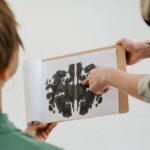

How Is Figure Ground Perception Assessed in Clinical Settings?
Psychologists and occupational therapists use specific tests to measure figure-ground perception. These tests help identify if someone has trouble with this basic visual skill. The most common assessment is the Figure-Ground subtest of the Test of Visual Perceptual Skills (TVPS). In this test, a person is shown a target shape and then asked to find that same shape hidden within a complex background of overlapping lines and shapes.
Another widely used tool is the Motor-Free Visual Perception Test (MVPT). It assesses visual perception without requiring the person to use motor skills like drawing. This is helpful for people who have physical disabilities. The test presents a series of images where the person must identify which shape is different or which figure stands out from the background.
These tests are typically used by occupational therapists, neuropsychologists, and school psychologists. They are not diagnostic on their own. But they provide valuable information about a person’s visual processing abilities. Poor performance on these tests can indicate a need for further evaluation or specific interventions.
What Can You Do to Support Healthy Figure Ground Perception?
For most people, figure-ground perception works fine without any special effort. But if you or someone you know struggles with it, there are practical strategies that can help. These are not cures. They are ways to make daily life easier.
Start by reducing visual clutter. A clean, organized space makes it easier for the brain to pick out the figure from the ground. Keep countertops clear. Use solid colors for walls and furniture instead of busy patterns. When reading, use a bookmark or a piece of paper to cover the rest of the page. This helps your brain focus on one line of text at a time.
Use contrast to your advantage. High contrast between the figure and the ground makes separation easier. For example, use a dark cutting board when chopping light-colored vegetables. Use a white plate on a dark tablecloth. These small adjustments reduce the mental effort needed to see clearly.
For children who struggle with figure-ground perception, occupational therapy can be very effective. Therapists use activities like puzzle solving, hidden picture games, and sorting tasks to build this skill. A 2021 review in the American Journal of Occupational Therapy found that structured visual perception training improved figure-ground skills in children with developmental delays. The improvements were modest but meaningful for daily function.
Common Misconceptions About Figure Ground Perception
There are several misunderstandings about figure-ground perception that deserve clarification. One common myth is that it is the same as attention. It is related to attention, but they are not identical. Figure-ground perception is a visual processing skill. Attention is the ability to focus on something over time. You can have good figure-ground perception but poor attention, or vice versa.
Another misconception is that figure-ground perception problems are always a sign of a serious condition. This is not true. Many people have mild difficulties with this skill without having any diagnosed disorder. It can simply be a personal variation in how the brain processes visual information. Stress, fatigue, or lack of sleep can also temporarily reduce figure-ground perception in anyone.
Some people believe that figure-ground perception can be drastically improved through brain training games or supplements. As of 2026, there is no clinical evidence that any specific game or supplement significantly improves this basic perceptual skill in healthy adults. General physical exercise, good sleep, and managing stress are more likely to support overall brain function than any targeted product.
| Situation | What You Might Notice |
|---|---|
| Reading | Losing your place on the page, skipping lines, or needing to use a finger to track words |
| Cluttered spaces | Difficulty finding a specific item on a messy desk or in a crowded drawer |
| Social settings | Trouble focusing on one person’s face in a group or in a busy background |
| Sports or driving | Slower reaction to a ball moving against a patterned background or a pedestrian in traffic |
When Should You Seek Professional Help?
If figure-ground perception difficulties are causing real problems in your daily life, it may be worth talking to a professional. An occupational therapist is the most common specialist for this issue. They can perform a formal assessment and recommend specific strategies or exercises.
You should consider seeking help if you or your child frequently bumps into things, has trouble reading despite good eyesight, or feels overwhelmed in visually busy environments. These problems can affect school performance, work productivity, and social confidence. A professional evaluation can rule out other causes and provide targeted support.
It is also important to rule out vision problems first. An eye doctor can check for issues like amblyopia (lazy eye) or strabismus (crossed eyes) that can affect figure-ground perception. Once vision is corrected, if problems continue, then a psychological or occupational therapy evaluation makes sense. The National Institutes of Health recommends a comprehensive eye exam for any child showing signs of visual processing difficulties before assuming a cognitive issue.
Frequently Asked Questions
What is figure ground perception in simple terms?
It is the brain’s ability to separate an object you are focusing on from the background around it, like seeing a bird against a cloudy sky.
Can figure ground perception be improved?
Yes, with practice and specific activities like puzzle solving and hidden picture games, especially in children, though improvements in adults are generally modest.
Is figure ground perception the same as attention?
No, they are related but different. Figure-ground perception is a visual processing skill, while attention is the ability to focus on something over time.
What causes poor figure ground perception?
Causes can include developmental differences, certain neurological conditions, vision problems, or simply fatigue and stress in otherwise healthy individuals.
